Clara’s Verdict
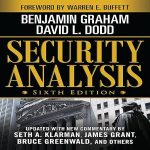
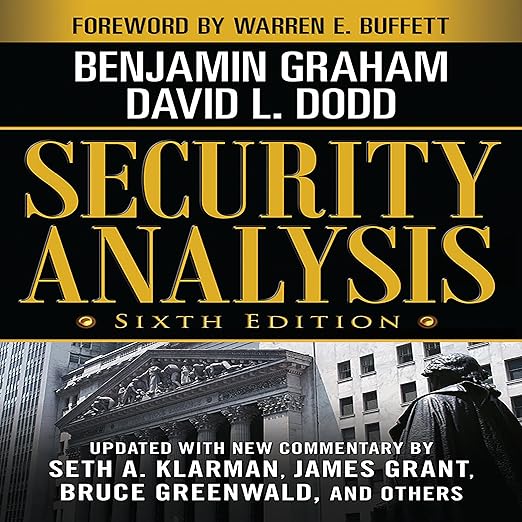
Most books described as “essential” in any field have been read by considerably fewer people than the description implies. Security Analysis by Benjamin Graham and David L. Dodd is a genuine exception – it has actually shaped the thinking of generations of serious investors since 1934, and Warren Buffett’s foreword to this sixth edition, in which he reveals he has read the 1940 masterwork “at least four times,” tells you everything you need to know about its standing in financial literature. Scott R. Pollak’s narration of this sixth edition runs to over thirty-two hours – a formidable commitment – but for serious students of investing, it is time spent with one of the foundational documents of modern financial thought, substantially enhanced by contemporary commentary.
I should be transparent: this is not a book for casual listeners or those seeking investment entertainment. It is a textbook in the truest sense, and it will defeat anyone who approaches it passively. Approached actively, with attention and ideally a notepad, it is extraordinary.
About the Audiobook
This sixth edition is based on the classic 1940 version of the text – broadly considered the definitive expression of Graham and Dodd’s value investing methodology – and is enhanced with essays and commentary from some of the most respected names in contemporary investment management. Seth Klarman, Howard Marks, Roger Lowenstein, Bruce Greenwald, Bruce Berkowitz, James Grant, and others contribute sections explaining why Graham and Dodd’s principles remain not merely relevant but foundational across market conditions, geographies, and asset classes that the original authors could not have imagined.
The core of Graham and Dodd’s argument is the systematic distinction between investment and speculation, and the careful, disciplined analysis of financial statements as the basis for identifying securities that trade below their intrinsic value. The methodology is labour-intensive and intellectually demanding – there are no shortcuts, no tips, no formulas that bypass genuine understanding. But it provides a framework for thinking about financial markets that has proven remarkably robust over nine decades, surviving crashes, booms, and the complete transformation of the instruments available. The commentary sections bring the text into productive dialogue with modern markets, making the historical material feel alive and contested rather than merely antiquarian. A PDF companion is included in the Audible library, useful for charts, tables, and financial examples.
Honest caveats apply: some sections are dense with period-specific examples and references to legislation long since repealed or superseded. These passages require patience. The reward for that patience is access to a way of thinking about value and risk that has generated more sustained investment success than any comparable framework.
The Narration
Scott R. Pollak handles the demanding material with considerable professionalism and evident care. Financial texts of this complexity – dense with numerical examples, comparative analytical frameworks, and extended passages of reasoning about corporate structure and valuation – are notoriously difficult to narrate engagingly. Pollak keeps the delivery measured and clear, which is the correct call for material that genuinely requires active concentration. He is not a showy narrator, and this is entirely appropriate: the text is the point. Over thirty-two hours, the consistency of his pace and tonal reliability is itself a significant achievement. The listener trusts him, which matters enormously over that duration.
What Readers Say
The audiobook carries a 4.7-star rating, with the small sample size reflecting the book’s specialist audience rather than any lack of enthusiasm among those who engage with it. UK reviewers are emphatic. A long-term investment professional described it as “a must-read both as a textbook and a practical guide for serious securities analysis professionals,” regretting not having encountered it earlier in their career. Another called it “THE classic – not a classic, THE classic,” and praised the “rock solid” thinking behind Graham’s framework for separating genuine investment from speculation. A third simply wrote: “Every investor should read it.” The one recurring caveat is that the book will defeat casual readers – it is long, demanding, and highly detailed. Nobody disputes its value; they dispute only its accessibility to the uncommitted.
Who Should Listen?
Security Analysis is essential listening for anyone serious about value investing, whether working in financial services, managing their own portfolio with genuine intellectual rigour, or studying finance at an advanced level. If you have read Graham’s more accessible The Intelligent Investor and found yourself wanting more depth, more mechanism, and more rigour, this is the natural and necessary next step. Buffett read it at least four times, beginning in his early twenties. He turned out all right. The investment of time is considerable; the return, for those who make it seriously, appears to be durable.
Listen on Audible UK: Get Security Analysis on Audible UK. Also available on Kobo, Scribd, and Storytel.