Clara’s Verdict
I came to Tall Oaks backwards — having already listened to We Begin at the End and All the Colours of the Dark, both of which established Chris Whitaker as one of the most distinctive voices in contemporary crime fiction. Encountering the debut novel after the later work is an odd but revealing experience. The confidence is already there. The instinct for character is already there. What you feel in Tall Oaks is an author finding the pitch of his voice in real time, which gives it a particular energy that the more assured later novels, for all their superiority in craft, cannot quite replicate — the rawness of a talent discovering its full range.
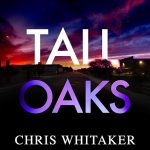
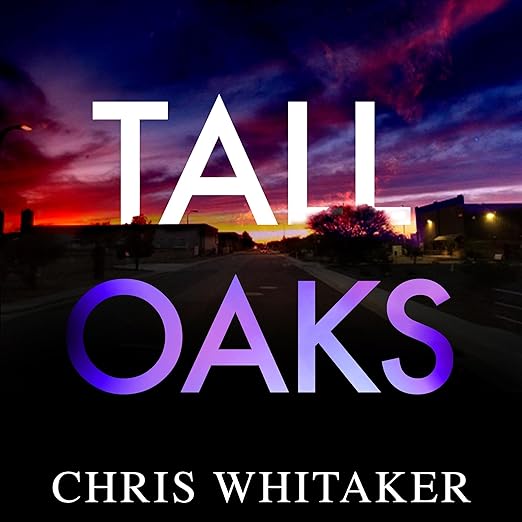
Published originally in 2016 and now re-released through Zaffre in a new audiobook edition in March 2026, this introduces the small California town of Tall Oaks through the disappearance of three-year-old Harry Monroe — and through the sprawling cast of characters whose lives are simultaneously illuminated and implicated by the search that follows.
About the Audiobook
Jess Monroe, Harry’s mother, is the emotional anchor of the novel — a woman trying to lead the search for her own child while being consumed by grief and self-destructive behaviour that others struggle to interpret charitably. But Whitaker’s real interest is the community around her: the neighbours who offer sympathy while concealing histories, the detective managing the investigation against his own limitations, the various townspeople whose seemingly ordinary lives turn out to contain secrets that the disappearance begins to loosen. This is crime fiction in the tradition of literary small-town character study rather than procedural thriller — closer in spirit to Kate Atkinson than to Harlan Coben, though it deploys the twists and the revelatory final act that the latter’s readers expect and get.
One reviewer notes the sheer density of the cast as a mild structural challenge: at a certain point in the middle of the book, there are almost too many characters to track without the visual anchoring a physical page provides. That is a genuine audio-specific consideration for a novel this populated. The final twist, however, receives consistent praise as devastating and completely earned — the kind of ending that recontextualises everything that came before and sends you mentally back through the earlier chapters looking for what you missed.
The Narration
Jeff Harding is an experienced British narrator with particular strength in character work. The challenge in a novel like Tall Oaks — with its large cast, shifting perspectives and tonal range from dark humour to genuine grief — is maintaining differentiation and consistency across nine and a half hours. Harding manages this well. The core characters feel distinct without the narrator making theatrical choices that would undercut the naturalistic register Whitaker works in. The small-town American setting, which could easily tip into caricature under a less careful performer, is handled with appropriate restraint. The balance between the book’s considerable darkness and its moments of mordant humour is one of Whitaker’s most distinctive qualities, and Harding finds the right pitch for both.
What Readers Say
The six Audible reviews available at the time of writing are pointed and largely enthusiastic. One reviewer, having already loved Whitaker’s later work, calls him a born storyteller and describes the management of the large cast as masterfully handled with plenty of twists. Another notes it as a great debut that reads with the accomplishment and finesse of a much more established writer. A third describes it as intricate, atmospheric and with great, engaging characters that they felt real investment in. The one note of caution — the large character count becoming briefly confusing — is specific and honest rather than a dealbreaker, and is worth factoring into your listening approach.
Who Should Listen?
Tall Oaks is for readers who found We Begin at the End or All the Colours of the Dark and want to understand where that voice came from, or for those encountering Whitaker for the first time who want to see a major talent in its earliest form. It is also a strong recommendation for listeners who enjoy literary crime fiction with real character depth and a twist that genuinely delivers rather than feeling manufactured. The nine-and-a-half-hour runtime is well-paced and does not outstay its welcome. Those looking for a traditional procedural will find this more literary and less plot-mechanical than they might expect.