Clara’s Verdict
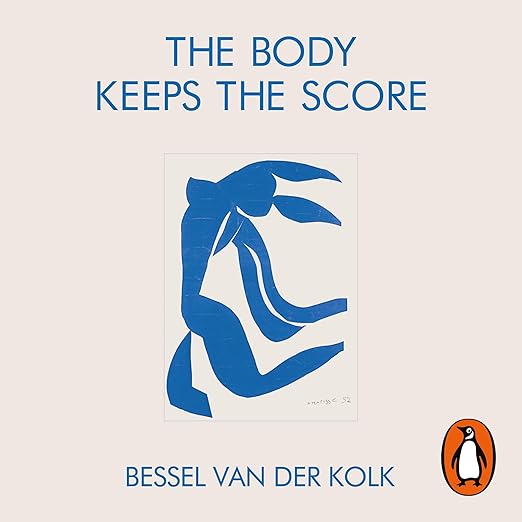
I first encountered The Body Keeps the Score not as a book recommendation but as something a therapist mentioned in passing, almost as an aside: if you really want to understand what we are doing here, read van der Kolk. That kind of endorsement from a clinical professional is worth more than any bestseller list position, though this book has those too, over three million copies sold and a sustained presence on charts that began years after its initial publication. The reason for that longevity is not difficult to identify once you are an hour into the audiobook: Bessel van der Kolk writes about trauma with the authority of someone who has spent decades in clinical practice, combined with a genuine urgency about reaching a non-specialist audience. The combination is rare and it shows on every page.
This is a book that changes how you understand human behaviour, not just the behaviour of people who have experienced obvious, named trauma, but behaviour in general. Van der Kolk’s central argument is that trauma leaves physical traces in the body and the nervous system, traces that conventional talking therapy often fails to address. That is, by now, a well-known claim. In 2019, when this Penguin audiobook edition was released, it was still genuinely radical in mainstream discourse, and the fact that it has remained on bestseller lists for years since suggests it is reaching people who need it rather than simply preaching to the converted.
About the Audiobook
Published by Penguin in October 2019, this audiobook edition runs to sixteen hours and sixteen minutes, a substantial commitment that reflects the scope of van der Kolk’s project. The book is organised across four broad parts: the discovery and history of trauma research; the neuroscience of how trauma rewires the brain and body; the limitations of conventional treatment approaches including talk therapy and medication; and an exploration of alternative therapies including EMDR, yoga, theatre, and neurofeedback. The case histories throughout are detailed and humanising without being exploitative, and van der Kolk is careful to show patients as full people rather than symptoms.
The book draws on van der Kolk’s work with veterans, survivors of childhood abuse, and victims of accidents and natural disasters. Its interdisciplinary reach, spanning neuroscience, psychoanalysis, attachment theory, and body-based therapies, makes it comprehensive in a way that more specialised texts cannot be. Tara Westover, whose own memoir Educated deals with childhood trauma, called it the trauma Bible, and it is hard to argue with that assessment. For anyone who has navigated emotional neglect, a chaotic childhood, or any form of significant loss, the book offers both understanding and, crucially, direction toward approaches that actually work.
The Narration
Sean Pratt narrates, and his track record with scholarly nonfiction is impeccable. Listeners familiar with his work on long-form academic texts will find his approach here characteristically assured. He brings a steady, professional clarity to van der Kolk’s prose that serves the material well; this is not a book that benefits from dramatic inflection, and Pratt wisely keeps his performance in service of the text rather than inserting himself between the reader and the content. The sixteen-hour runtime could feel exhausting with a less disciplined narrator; Pratt’s consistency makes it feel measured and purposeful. He handles the clinical case histories with appropriate gravity, and the more hopeful passages, the descriptions of patients finding movement, connection, and agency again, with a lightness that earns the emotional weight behind them.
What Readers Say
The Audible UK edition carries a 4.7 rating from 81 listeners, which is as close to consensus as this kind of nonfiction gets. Max M called it the greatest book he had ever read, describing it as a lifetime of knowledge from a practising clinician that can be applied directly to your own life. That sense of personal application, the book reaching down into individual experience rather than remaining at a theoretical remove, comes up repeatedly across reviews. Bob, reviewing in late 2025, emphasised its practical dimension: it helps you develop language to describe how you feel and understand what is going on in your body. One reviewer offered perhaps the most precise account of the book’s ideal audience: if you struggle with anxiety, panic attacks, or find yourself constantly ruminating and self-sabotaging, this is the most important book you will read. The book’s rare achievement is that it works simultaneously as a clinical reference, a self-help text, and a work of compelling narrative nonfiction.
Who Should Listen?
Anyone who has experienced trauma, or who lives alongside, works with, or treats people who have, will find this essential listening. The book is particularly valuable for people in therapy who want to understand the physiological underpinnings of what their therapy is attempting, and for people who have found conventional talking therapy insufficient on its own. It is challenging in places: the case histories are sometimes harrowing, and the neuroscience requires sustained attention. But van der Kolk writes to be understood, not to impress, and Sean Pratt’s narration makes the sixteen hours feel earned rather than endured. At 4.7 from 81 listeners, the consensus is consistent and well-founded. Listen on Audible UK.