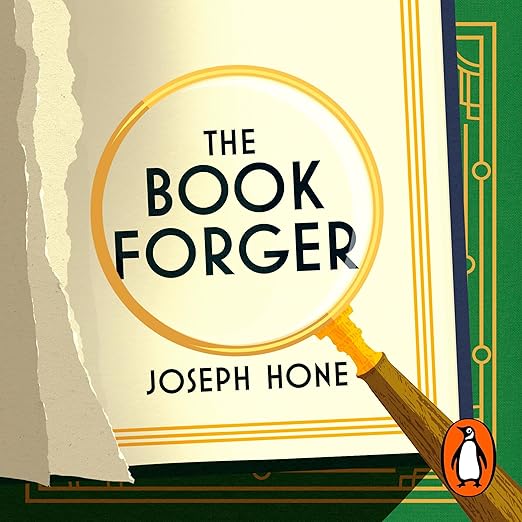
Clara’s Verdict
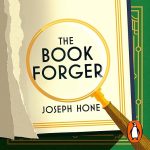
As someone who spent over a decade in publishing – reading manuscripts, arguing about first editions, attending the kind of literary lunches where provenance comes up rather more often than is probably healthy – I find the world of rare books irresistible. Joseph Hone’s The Book Forger drops us into 1930s London’s bibliophilic underworld and delivers one of the most enjoyable true-crime narratives I’ve encountered in years.
Thomas James Wise was, by the early twentieth century, one of the most celebrated collectors in the English-speaking world. He was also, it turned out, a forger of breathtaking audacity. The story of how two young booksellers – using detective methods borrowed directly from the Sherlock Holmes stories that had entranced the era – exposed him is riveting from first chapter to last. Hone tells it with the confidence of a novelist and the discipline of a rigorous historian. The result is an absolute treat.
About the Audiobook
Published by Penguin Audio and running just over ten hours, The Book Forger tells the true story of the unmasking of Thomas James Wise, a man who had spent decades fabricating pamphlets, forging publication dates, and selling them to collectors and institutions on both sides of the Atlantic. His victims included some of the most distinguished literary names of the Victorian and Edwardian eras.
The two young men who brought him down – Alfred Pollard and John Carter, one a dishevelled former communist, the other a detective fiction enthusiast – applied forensic paper and typographical analysis to cast-iron suspicion. Their methods presage modern forensic bibliography. Hone reconstructs the period with precision and affection, grounding the investigation in the cultural context of 1930s literary London without allowing atmosphere to slow the pace.
What elevates the book beyond mere true crime is its attention to Wise himself – a man who forged not just rare pamphlets but an entire public identity, erasing a working-class background to claim a status the literary establishment would never otherwise have granted him. There is genuine psychological depth here alongside the detective story.
The Narration
Thomas Judd narrates with a quality ideally suited to the period setting. He captures the slightly formal register of 1930s literary London without making it feel stiff, and handles the investigative sequences – which build genuine procedural tension – with well-judged pacing. At ten hours, the book never drags; Judd’s ability to vary his rhythm across Hone’s two connected narrative strands keeps the momentum alive throughout.
What Readers Say
The book holds a 4.1 rating from 62 reviews. One UK reviewer called it “a remarkable true story extremely well told by a first-rate writer and researcher,” praising Hone’s ability to turn bibliographic detection into a fast-paced narrative. A reviewer described it as “absolutely fascinating” and essential for bibliophiles. A particularly thorough review called it “a gripping detective story that should appeal even to those who would not normally be interested in tales of crime or in the world of books.” Several readers specifically praised the historical reconstruction of the period.
Who Should Listen?
Anyone with a love of books – their history, their production, their cultural weight – will find this captivating. It will delight fans of true crime, literary history, and Victorian-era detective stories alike. If you loved The Feather Thief or any of Mark Pendergrast’s investigations into institutional deception, this is absolutely for you. It would also make wonderful listening for anyone who has ever handled an old volume and wondered about its history.
Get your copy on Audible UK: Listen to The Book Forger on Audible UK.