Clara’s Verdict
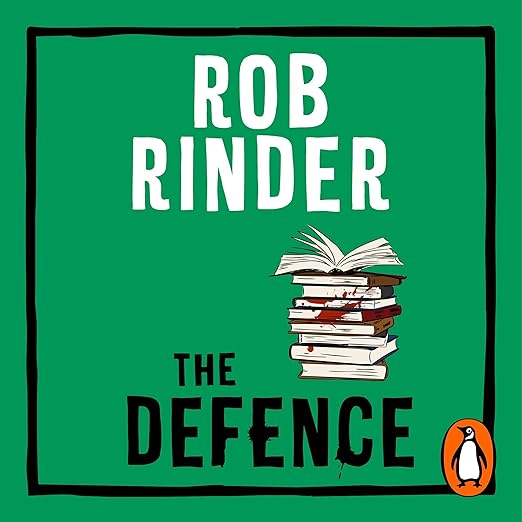
A former MP turned wellness guru lowers himself into an architectural copper tub at the launch of a bath salt sold on a promise to reverse ageing, in front of a room full of influencers, and dies. I defy anyone to hear that sentence and not want the next eleven hours. Rob Rinder has written a murder mystery that is very funny about a specific and deserving target, and then, underneath the satire, a properly constructed courtroom puzzle.
The Defence sits near the top of the Audible UK charts at the moment and the reason is the balance of the two. The wellness-industry material could easily have swamped the mystery, and Rinder keeps the plot mechanics honest throughout: the poisoning is solvable, the suspects have real motives, and the case Adam Green mounts is one you can follow and argue with. Eleven hours and thirty-eight minutes, read by Josh Dylan.
About the Audiobook
Published in audio by Penguin on 18 June 2026. The dead man is Adrian Wells. The bath salt was poisoned. Jules, the assistant who put up with him for years, becomes the obvious suspect and then the prime one. Barrister Adam Green is handed the defence and rapidly establishes that the queue of people who wanted Wells gone was rather longer than one assistant, which is where the pleasure of the book begins.
A word about the series. The listing bills this as the newest entry in a number one bestselling series, but supplies no series name and no volume number, which is unhelpful if you like to start at the beginning of things. What I can tell you from the book itself is that Adam Green arrives with history attached: relationships and a professional reputation that the novel assumes rather than explains. It reads perfectly well on its own and you will not be lost, though you will occasionally sense that a scene is landing harder for people who have met these characters before.
The praise on the listing comes from good judges of the form. Steve Cavanagh, who knows a legal thriller when he sees one, calls it “Hugely enjoyable!”. Tom Hindle offers “Ridiculously entertaining”, and Heidi Perks contributes the most useful blurb of the three, “I did not want it to end”. The Daily Mail’s line about “Strong storytelling with a murder mystery at its heart” is closer to the truth of the thing than any of them, because it identifies the order of priorities correctly. The jokes are the surface. The mystery is the structure.
The Narration
Josh Dylan is named on the listing itself, with credits including Mamma Mia, Noughts + Crosses and The Buccaneers, and the casting tells you what kind of book Penguin believes this to be. Not a grim procedural. Something with charm and pace and a light hand on the satire.
He is very good on the wellness crowd. The influencer voices are the easiest thing in this book to overdo and Dylan mostly resists, letting the absurdity sit in what people say rather than in how he says it, which is considerably funnier. Adrian Wells is given exactly the kind of soothing, monetised sincerity the character requires. Where Dylan is strongest, though, is in the legal sections, where he changes gear noticeably and stops performing altogether. Cross-examination is dialogue with a scoreboard attached, and it needs clarity above everything: who asked what, who hesitated, what the answer cost the person giving it. He delivers those exchanges cleanly and lets the pauses do the damage. Across the full run of the recording he never once tips the comedy into farce, which is precisely the discipline this book required.
What Readers Say
More than twelve hundred ratings, averaging 4.7, is a very healthy position for a book barely six weeks old. Maurice Moses gives the most representative response, praising a plot that “moves along so quickly” and characters who “feel real and well written”, and making the point I think is key to the book’s success: “The twists caught me off guard more than once, which does not happen often.”
Judith Barnett, at four stars, enjoyed “all its twists and turns” and intends to recommend it onward, which is the sort of unspectacular endorsement that actually predicts sales. I should add one practical warning. Among the five-star responses there is one that cheerfully gives away rather more about how the ending works than I would want to know in advance, so if you are the sort of listener who reads reviews before starting, skim with care. It is also worth noting that most of the written feedback addresses Rinder’s novel rather than Dylan’s reading of it, so on the narration you are largely taking my word for it.
Who Should Listen?
Courtroom mysteries with a comic surface are a narrow and much-loved field, and this is a good one. It suits listeners who want their crime fiction sharp rather than bleak, who enjoy watching a professional be quietly competent, and who have an appetite for seeing the wellness industry taken apart by somebody with a forensic turn of mind. It is also an excellent commuting listen, because the chapters are short and the plot restates its own stakes often enough that you can lose ten seconds to a station announcement without penalty.
It will not satisfy anyone who wants a murder to hurt. Nobody in this book grieves for very long, the tone stays bright even when the subject is a poisoning, and that consistency is a deliberate choice rather than a failure of nerve. Come for the wit and the puzzle, and Rinder delivers both with more craft than the premise lets on.