Clara’s Verdict
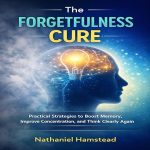
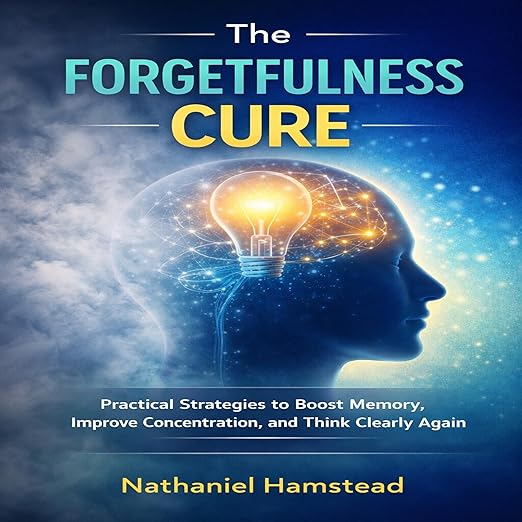
There’s a particular kind of anxiety that descends when you walk into a room and cannot remember why you’re there – or when a familiar name hovers just out of reach for what feels like an embarrassingly long time. Nathaniel Hamstead’s The Forgetfulness Cure begins precisely here, with the fear that these moments represent something ominous. Its central argument is reassuring without being dismissive: in many cases, forgetfulness in modern life is not decline. It’s overload. That distinction matters enormously, and Hamstead unpacks it with care and without condescension.
This is a short listen – just over an hour – but it is dense with practical insight. Hamstead is clearly drawing on genuine familiarity with the literature on attention, stress, and memory formation. The tone is compassionate rather than hectoring, which in the self-help genre is rarer than it ought to be. This is a book for people who want to feel less frightened about their own minds.
About the Audiobook
The Forgetfulness Cure proceeds from a clear and well-supported premise: attention is the gateway to memory. When attention is compromised – by chronic stress, anxiety, sleep deprivation, digital distraction, or simple exhaustion – memory formation suffers. Fix the attention problem and the memory problem often resolves itself. This sounds deceptively simple, but Hamstead does the work of explaining the underlying mechanisms with enough clarity that you understand why it works, not just that it does.
The book moves through a well-organised sequence of chapters: how modern life makes forgetfulness feel catastrophic even when it isn’t; the specific ways stress and anxiety block recall; the often-underestimated role of sleep and fatigue; daily habits that strengthen concentration; nutrition, hydration, and movement as supports for brain energy; focus training for a distracted age; and a thoughtful final section on staying sharp across the lifespan. It’s thorough for its length, and Hamstead is careful to note what constitutes normal variation and what might warrant a conversation with a doctor. The book makes no overblown promises, which in itself inspires a degree of trust.
The Narration
B Fike reads the audiobook, and the delivery is well-suited to the material. The pace is steady and unhurried – important for a book that asks you to absorb and reflect on practical advice rather than simply follow a narrative. Fike’s tone is calm and grounded, avoiding both the theatrical urgency that sometimes afflicts self-help narration and the soporific flatness that occasionally plagues purely instructional titles. Given the subject matter, a narrator who actually sounds like a composed and focused person is the right choice.
What Readers Say
The Forgetfulness Cure is a recent release – published in February 2026 – and formal reviews have yet to accumulate on Audible. That’s not unusual for newer self-published titles. The book speaks for itself: the synopsis outlines a genuinely practical programme, and the author’s approach is grounded rather than gimmicky. Readers who have been frustrated by more sensationalist “fix your brain” titles will likely find this a refreshing and more honest alternative.
Who Should Listen?
This is for anyone who has found themselves increasingly worried about episodes of forgetfulness and wants a rational, evidence-informed explanation before jumping to alarming conclusions. It’s particularly useful for people in demanding professional roles, parents managing multiple competing responsibilities, or anyone navigating high levels of stress. It is also worth considering if you’ve already read more comprehensive works on attention and focus – this is a lean, purposeful listen rather than a deep dive, and its hour-plus running time makes it easy to fit around a busy schedule.
Listen to The Forgetfulness Cure on Audible UK – find it here.