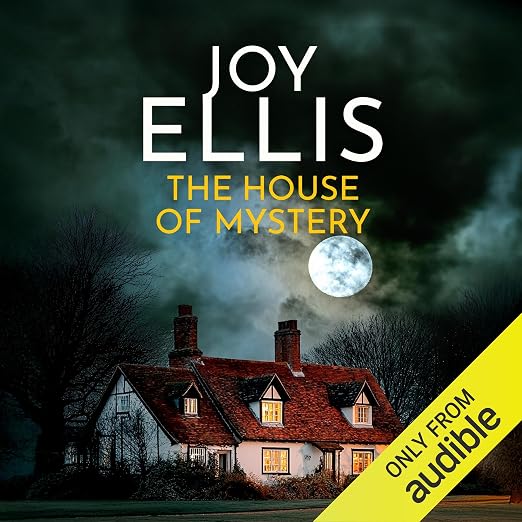
Clara’s Verdict
The opening image of this book is one of the best I have met in British crime writing this year. At dawn, on an empty stretch of country road, somebody finds a dead teenage boy. The police get there and he is gone. What remains is the blanket that had been laid over him, and a witness who will not budge from the account given. No body, no blood, no explanation.
Joy Ellis writes procedurals, so the genuinely interesting thing about the Ellie McEwan books is how far this one sits from that register. This is the third in the series, and it is a police investigation conducted alongside a healer who reads auras. That will be a deal breaker for some readers and I understand why. It is also, handled as carefully as Ellis handles it, the most distinctive work she has done.
Thirteen hours and seventeen minutes, narrated by Sophie Rundle, sitting on a 4.3 average across a very large body of ratings and holding a firm position in the Audible UK charts as I write. That is a substantial listener base for a series sitting so awkwardly between genres, and the reviews suggest her existing readers have been willing to follow her somewhere strange.
About the Audiobook
Detective Bob Foreman has two problems and no evidence for either. There is the vanished body, with a witness whose account cannot be shaken and a scene that yields nothing forensic. And there is a second missing boy, last spotted on a moonlit towpath and never seen again. Two disappearances, no physical trace and conflicting accounts make a fairly merciless starting hand for any detective.
Running against that are two children whose abilities the book declines to explain away. Harry is five and draws the cockpits of wartime bombers with an accuracy that should be impossible, every dial and lever in its correct place. Christopher is eight and writes in his sleep, producing disturbing warnings and repeated references to somewhere called the Eleventh House. Those two threads are why Foreman eventually goes to Ellie McEwan, and why the book stops behaving like a procedural.
Ellis brings the strands together around an isolated mansion deep in the Surrey woods, which supplies the title. What I admire about the construction is that the supernatural element is never allowed to be a shortcut. Ellie’s gift, which the book describes as reading the coloured energy that reveals a person’s true nature, gives her information about character rather than about facts. She can tell Foreman what somebody is. She cannot tell him where the body went. That distinction keeps the detective work honest, and it is the reason the series holds together for readers who would normally have no patience with any of this.
The Narration
Sophie Rundle is an inspired piece of casting, and the reason is tonal rather than technical. A book that asks you to accept aura reading inside a murder investigation is permanently one wrong inflection away from silliness. Rundle’s delivery is level, grounded and faintly wary, and she declines every invitation to make the strange material sound strange. Harry’s drawings and Christopher’s night writing are reported in exactly the same steady voice as the forensic dead ends, which is right, because that is how the characters themselves experience them.
Thirteen hours is a long stretch and the book carries a large ensemble: Foreman and his officers, Ellie and her team, two small boys and a mansion’s worth of history. Rundle differentiates without caricature. The children in particular are handled with care, played as children rather than as uncanny devices, which matters enormously given what the plot asks of them.
If I have a criticism it is that the unhurried quality serving the supernatural material so well also flattens the pace a little through the middle stretch, where the investigation stalls by design. That is a fair reflection of the writing rather than a failure of the reading, but a listener hoping for propulsion should know the tempo stays measured from beginning to end.
What Readers Say
More than five thousand ratings averaging 4.3 is a genuinely reliable signal. The most useful of the written responses reaches for a word I suspect a great many readers land on with this series: different.
“I’ve really enjoyed this series, something a bit different but still full of mystery and suspense.”
Karen H. goes on to make the point I think is central to the appeal, which is that every member of the group has a particular talent and that the combination makes a formidable team. She also names the genre question head on, describing the pleasure of dipping into a bit of fantasy now and again. Another reviewer, briefer than most, gives four stars with only two observations: “Good story.” and “Unusual topic.” A third confirms that the twist lands and hopes for more of Ellie and Michael, which tells you where reader loyalty in this series actually sits.
What strikes me about the visible feedback is how little dissent there is in it. Nobody calls the book badly made, and even the briefest review, the one awarding four stars rather than five, registers no complaint beyond calling the topic unusual. That is a warm reception, though it also means these reviews will not tell you much about who dislikes this series or why.
Who Should Listen?
Crime readers with an open mind about the supernatural will get the most out of this, and so will anyone who enjoys an investigative team whose members are genuinely differentiated rather than interchangeable. It also works well for listeners who like a long, immersive case they can live inside for a fortnight of dog walks.
Two groups should think twice. Purists who want their detection strictly evidential will find the aura reading an intrusion no matter how carefully Ellis handles it. And anyone arriving here should know this is book three of the Ellie McEwan series. The case resolves on its own terms, but the team has been assembled across the earlier volumes and the relationships pay off in proportion to what you have already read. Begin at the beginning if you have the time, and this one will be considerably richer for it.