Clara’s Verdict
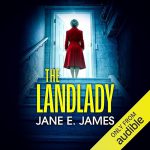
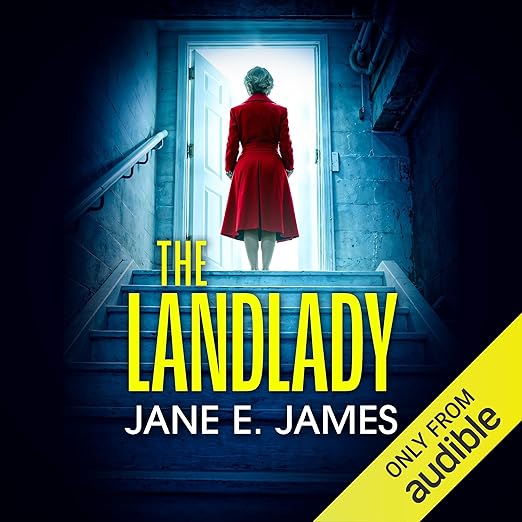
The Landlady audiobook has one of the better hooks in a crowded field. A woman and her five-year-old daughter move onto a quiet country farm, into a small cottage that looks like the answer to everything, having come there directly from a women’s refuge. Their landlady has exactly one rule: no male visitors. Jane E. James understands that the power of that setup lies not in the rule but in the position of the person forced to accept it. Somebody with options would simply leave. This woman has none, and the seven hours and fifty-seven minutes that follow are built entirely on that fact.
It is an uneven piece of work and also, in its best passages, a genuinely effective one. James is very good indeed at the specific dread of being a guest in somebody else’s property, where every small intrusion is deniable and complaining would cost you the roof over your head. She is less good at the back half, where the plot machinery takes over and the plausibility that made those early sections so uncomfortable begins to slip away from her.
About the Audiobook
Rose Cottage is presented as perfect, and Mrs Skinner greets her new tenants with a bone-crushing hug, homemade cakes, freshly baked bread and cheese. She seems nice, motherly even. The rule arrives afterwards, which is exactly the right order for it, because by the time it is stated the alternative has already been established as a refuge and refusing is not genuinely available to anybody.
Then the accumulation begins. Mrs Skinner’s son watches the young mother a little too closely. Her lipstick disappears. Lily wakes screaming that a stranger has been in her room. And when she asks about the previous tenant, the one who vanished and left every stick of her furniture behind, the landlady smiles and offers the reassurance she always offers, which is that she only wants to keep them safe. That detail about the abandoned furniture is the finest thing James does here, because of how much work it performs inside one short clause.
Audible Studios released it on 7 May 2026 and it has been on the Audible UK chart ever since. The publisher positions it for readers of Freida McFadden, Steena Holmes, Valerie Keogh, T.M. Logan, Lisa Jewell and Shalini Boland, which is a wide net but broadly honest about where the book actually sits. No series attaches to it. Just under eight hours puts it at the standard length for the form, and it moves quickly enough that the running time never becomes an issue in itself.
The Narration
One name is credited on this recording, Alasdair Simpson, and the book is narrated in the first person by a young mother. That is an unusual enough combination that I would recommend playing the sample before you commit, not because a single narrator cannot cross that gap, but because the match between a voice and a first-person protagonist is a matter of individual tolerance and you will know within two minutes whether it works for you.
What the performance does well is Mrs Skinner. The landlady has to be simultaneously warm and wrong, and the reading gives her a hospitable brightness that never quite modulates when it ought to, so that her reassurances land as slightly off in a way you cannot immediately account for. That effect is difficult to produce deliberately, and it is the reason the early chapters unsettle as effectively as they do.
Lily is handled with restraint, which I appreciated a great deal. Child characters in thrillers are frequently over-performed to the point of distraction, and the five-year-old here is played straight, with the screaming scenes underplayed rather than milked for effect. Across nearly eight hours the pacing stays steady and the diction is clear throughout, and if the emotional range proves narrower than the book’s later escalations really require, that is a limitation rather than a flaw.
What Readers Say
At 4.2 from 1,411 ratings, this sits a shade below where the genre usually settles, and I do not think that number should put you off so much as calibrate you before you start. The reviews are largely positive, but the enthusiasm arrives with a recurring qualification, and it is that qualification the average is reflecting.
New author to me, but would read more, plenty of twists
Lazaroo’s short review carries on to note that the story is a little unrealistic while the characters remained compelling anyway, and that exact combination appears repeatedly across the review pile. People enjoy the book and they notice the seams in it at the same time. Another reviewer, rosie, kept things brief and generous, saying she enjoyed it from start to end and loves psychological thrillers, which is a useful indicator of the audience it is landing with.
Annie was the most enthusiastic of the three, reporting that she got totally engrossed in it and calling it a very good story. What none of the reviewers discuss in any detail is the narration itself, and that is a gap worth naming: the written feedback on this listing concerns the story almost exclusively, so you will not find much guidance there on whether the recording suits you. On this particular title, the sample is your best available tool.
Who Should Listen?
Domestic thriller regulars will know within twenty minutes whether this is their sort of thing, and most of them will stay. The refuge backstory gives the setup a weight that a straightforward tenant-and-landlord premise would never carry on its own, and the first half in particular pulls off the genre’s central trick better than average, making an ordinary living arrangement feel like a trap without a single overtly threatening event occurring.
Set it aside if implausibility spoils a book for you, because the reviewers who flag it are not being unfair and the last two hours ask a good deal of their audience. Set it aside also if you are sensitive to domestic abuse and coercive control, which shape the protagonist’s history quite as much as her present circumstances. And because the narration pairing is an unusual one, treat the sample as compulsory rather than optional on this title in particular.