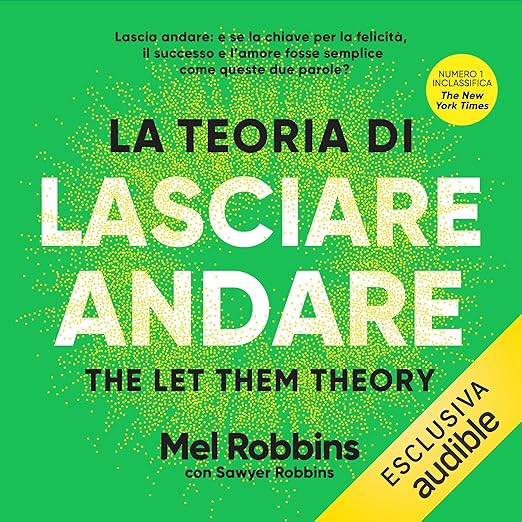
Clara’s Verdict
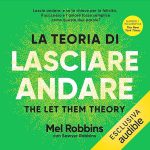
Two words are asked to carry an entire book here, and the strange thing is that they very nearly manage it. Let Them: let other people hold their opinions, stage their dramas and pass their judgements, and stop spending your finite energy trying to manage any of it. Mel Robbins builds The Let Them Theory on that single hinge, and the honest surprise is how much useful territory one idea covers once it is applied to work, love, friendship and self-worth. The central reframe, that the problem is not you but the power you keep giving away, lands with real force, particularly if you are a habitual manager of other people’s weather.
The equally honest caveat: this is one tool examined for ten hours and thirty-eight minutes. Robbins reinforces rather than complicates as she goes, and whether that feels like patient coaching or a chorus on repeat depends entirely on your appetite for reinforcement. Mine wobbled somewhere past the halfway mark; yours may hold.
What This Edition Is and Who It’s For
This is the audio edition of Robbins’s motivational blockbuster, published by Audible Studios on Christmas Eve 2024, a release date I find quietly funny given how many family gatherings could use its advice within the hour. It arrives billed as a number one bestseller with the New York Times, the Sunday Times, Amazon and Audible, and it extends the no-nonsense, science-backed approach, as the publisher has it, that made The Mel Robbins Podcast a global concern.
There is no series to track and no prerequisite listening. What you get is a single portable principle worked through the places most of us leak energy: other people’s opinions, other people’s choices, other people’s chaos. It is self-development at its most practical and least academic, aimed squarely at the overwhelmed rather than the theoretical.
The Narration
No narrator is credited on this listing, so let me speak to the listening experience rather than to a name. The writing works in direct address, you and your life are its constant subject, and that register translates naturally into audio: the effect is less like being read to and more like being talked to, firmly and warmly, by someone entirely convinced you are capable of more than you currently believe.
At a little over ten and a half hours, it is best taken in deliberate sittings, a chapter with your morning coffee, rather than left running as background. Motivational material evaporates when half-heard, and this one keeps asking you to pause and apply those two words to whatever is currently driving you spare.
What Readers Say
On this listing the book holds a 4.6 average from 27 ratings, a strong score from a still-modest crowd. No written reviews are attached, so I cannot quote a single listener and will not pretend to. The bestseller banners come from the publisher rather than from the ratings panel, so I would treat the 4.6 as the more grounded signal: early listeners are largely persuaded, with the small sample as the honest caveat.
Who Should Listen?
This one is for the people-pleasers, the fixers and the ones silently drafting other people’s apologies: if you exhaust yourself managing reactions you cannot control, the central reframe alone justifies the running time. It also suits listeners who arrived via the podcast and want the argument laid out in full, connected form, and anyone who prefers plain speech to academic hedging.
Skip it if the motivational register makes you itch, if you want peer-reviewed depth rather than coaching, or if you already live serenely by this principle and need no ten-hour reminder. And if repetition in self-help genuinely grates, take my earlier caveat as fair warning rather than as a dare.
I finished it muttering the two words at the traffic, which suggests Robbins has done exactly what she set out to do.