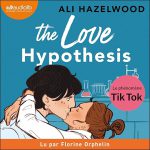
Clara’s Verdict
Nearly eighty-three thousand ratings is not a figure anyone argues with, and this novel has earned its 4.4 the hard way, by being the book a very large number of readers hand to a friend. What interests me more than the number is the specific thing it does well, and the author of The Unhoneymooners put it better than I am going to. This is contemporary romance’s unicorn, “the elusive marriage of deeply brainy and delightfully escapist”. The academic setting here is not a costume. It is where the tension comes from.
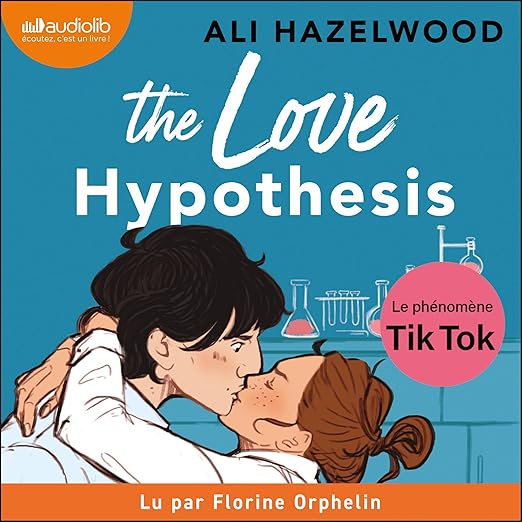
Eleven hours and fifty-one minutes, read by Callie Dalton, published by Little, Brown Book Group on 30 September 2021. This edition adds an exclusive bonus chapter written from Adam’s point of view, which matters more in audio than it might on the page. A romance that stays with Olive throughout keeps the other half of the relationship deliberately opaque, so a late switch of viewpoint is a genuine event rather than a bonus feature.
About the Audiobook
Olive Smith is a third-year doctoral candidate who does not believe in lasting romantic relationships. Her best friend Anh does, and persuading Anh otherwise was never going to be easy, because, as the description notes drily, scientists require proof. So Olive panics and kisses the first man she sees.
That man is Adam Carlsen, whom the copy introduces as a young hotshot professor and a well-known ass. He agrees to keep her charade secret and to be her fake boyfriend, and the arrangement holds until a large science conference goes badly wrong. The book’s opening epigraph is Olive’s own hypothesis, stated in the language of a research proposal: based on the available information and the data hitherto collected, the further she stays away from love, the better off she will be. Anyone who has read a romance before knows how that hypothesis is going to test.
What lifts this above its premise is the setting, and the reviewers are clear about why. One writes that Olive, a doctoral student in biology, “shows us the ups and downs of being a woman in STEM” and that her career is genuinely on the line, which is the structural reason the fake relationship carries risk rather than only embarrassment. A professor and a doctoral candidate is a power difference a novel has to handle rather than ignore, and the copy puts Olive’s professional standing at stake rather than only her pride. The listing gives no series name, so treat it as a standalone.
The Narration
Callie Dalton has all of it, and the assignment is more demanding than a light contemporary romance sounds. The book stays with Olive throughout, in a register that is self-deprecating, quick and defended, and the comedy runs on timing rather than on situation. A reader who plays the anxiety straight loses the jokes; a reader who plays it for laughs loses the reason we care about her. The best test in a sample is not the meet-cute but a scene where Olive is being wry about something that is actually frightening her, because that double register is where the book lives.
The second question is Adam. In a recording with one narrator and one perspective, the love interest exists only as Olive sees him and is voiced by the same performer, and Adam is written as forbidding before he is written as anything else. He has to sound genuinely unapproachable early on or the turn does not land, and he has to manage that without tipping into a caricature of gruffness. Nearly twelve hours is a long time to sustain that balance, and the added chapter at the close asks Dalton to give him a full interior voice after a whole novel of hearing him only from outside.
What Readers Say
The written responses are almost embarrassingly warm, and their consistency is the point. One reviewer calls it enchanting and delightfully funny and credits the “witty banter, endearing characters, and the perfect blend of humor and heart”. Another lost a night’s sleep to it and lists exactly what did the damage: the academic setting, the endearingly awkward moments, “the witty and cheeky banter, the CHEMISTRY!” That reader had gone in nervous because of the hype and came out converted, which is the most useful sentence on the whole page for anyone currently hesitating for the same reason.
The dissent is small and specific. A four star reader calls it an easy read, well written, and thinks the ending could have been better handled. That is the only substantive criticism anywhere in the three responses, and it is a fair one to weigh, since a fake-dating plot has to resolve a deception and the resolution is structurally the hardest part of the shape.
One caveat about the numbers. All three reviews describe reading rather than listening, and the very large rating count belongs to the novel across its editions rather than to this recording specifically. The 4.4 tells you the book works. It tells you nothing about Dalton, so sample before you commit.
Who Should Listen?
Fake dating, a science conference that goes badly wrong, and a professor the copy calls a well-known ass who turns out to be something else: if that sentence made you smile, the book delivers all three without irony and does it for nearly twelve hours. It is a particularly good fit for anyone who has spent time inside a university and wants a romance where the professional stakes are drawn as stakes rather than used as set dressing.
Where I would hold back is on two points. Anyone who wants dual narration or a dual point of view will find one voice and one perspective for the whole novel, with the single late exception of the bonus chapter. And anyone uneasy about a romance that crosses an academic rank should know the book takes that dynamic on directly rather than avoiding it, which is to its credit, but it is the engine of the whole book.