Clara’s Verdict
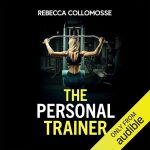
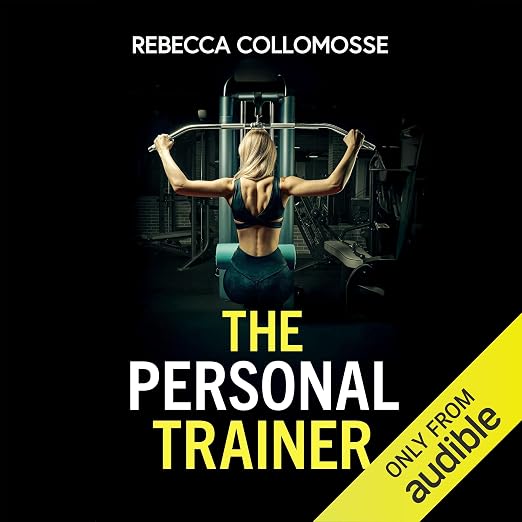
I have a low tolerance for domestic thrillers that open with a woman being told she is imagining things, mostly because I can usually see the ending from the first chapter. The Personal Trainer got past that guard, and it did so by being cleverer about where it points your suspicion than the premise suggests. Rebecca Collomosse sets up Claudia, the relentlessly positive trainer with the golden hair and the constant check-in messages, as the obvious threat. Then she spends nine hours making you wonder whether the obvious threat is the point at all.
It is currently one of the titles holding a place in the Audible UK charts, and the reason is not hard to identify. This is a very efficiently built book: nine hours, one narrator, one first-person voice, no subplot that fails to pay for itself. Rosalind Lailey reads it, and a great deal depends on her.
About the Audiobook
Audible Studios released this on 2 July 2026 and it runs a neat nine hours. The Personal Trainer is a standalone, which is worth saying plainly given how much of this genre now arrives as book four of something. Our narrator is engaged to Seb, the man who, in the listing’s phrasing, “made me believe in love again” after what happened to her first husband. Everyone tells her she is rushing. His teenage daughter has not come round. She hires a personal trainer to get in shape for the wedding, and Claudia arrives with workouts, meal plans and a warmth that feels like rescue.
Then Claudia is at the gym, in the local park, outside the house. Seb says she is imagining it. And then a photograph of Seb’s dead wife turns up in the kitchen, a photograph he swears he has never seen before, and Claudia’s car sitting out in the dark beyond the window. Collomosse is playing a double game that the listing itself flags without spoiling: the real danger may not be the woman standing in the driveway, and the phrase “someone much closer to home” is doing a lot of quiet work.
One point of housekeeping for anyone comparing notes before they commit. The audiobook was published on 2 July 2026, but several of the written responses on the listing are dated weeks earlier, in May and late June. Those readers met the novel in another format first. It does not diminish the quality of their feedback, but it does mean that almost everything you can read about this book concerns Collomosse’s plotting rather than Lailey’s reading of it.
The Narration
Nine hours inside one woman’s head is a specific and unforgiving assignment. No second point of view to cut to, no ensemble to hide behind, and a suspense mechanism that depends entirely on the listener staying on the narrator’s side while she becomes progressively harder to reassure. Rosalind Lailey has to be sympathetic and unreliable at once, and she cannot signal which she is doing at any given moment.
She manages it by underplaying. The paranoia is delivered in the same measured, reasonable register as the wedding planning, which is the right instinct, because a narrator who starts sounding frightened tells the listener what to think two hours before the text does. Her Claudia is the more visible achievement. Gleaming teeth and relentless positivity are exactly the sort of thing that invites a broad comic villain reading, and Lailey declines the invitation. Her Claudia is genuinely likeable, genuinely encouraging, and only unsettling in retrospect, which is far harder to sustain than menace. No listener has written about the narration directly, so what you have here is my assessment rather than a consensus, but this is careful, disciplined work on material that would have tolerated something much coarser.
What Readers Say
The rating sits at 4.3 from over six hundred and fifty ratings, which for a domestic thriller of this vintage is a solid, believable figure rather than an inflated one. The written responses are short and consistent, and they converge on one thing above all: the ending.
I really enjoyed this book, it kept me gripped right up to the last page. What an amazing ending too, totally unexpected.
That is D K Timmis, and a second reader independently calls it “a delicious twist of an ending”. When two people pick out the final turn as the detail worth mentioning in a handful of sentences, that is usually a reliable signal, and it matches my experience of the book. A third response amounts to “Good read” and nothing more, which is its own kind of endorsement. The 4.3 rather than a 4.6 suggests a minority who found the middle stretch familiar, and I have some sympathy with them. The surveillance beats between the second and third act do exactly the work you expect them to do. The destination is better than the route.
Who Should Listen?
If you have ever come out of a psychological thriller feeling you spotted the twist at the halfway mark, this is a reasonable bet. Collomosse’s misdirection is built around a character the reader is invited to distrust from the moment she appears, which frees the actual mechanism to operate somewhere else entirely. It suits anyone who likes their suspense domestic, contained and fast, and it works particularly well in audio, because the first-person present tense keeps you locked into the immediate moment rather than letting your eye wander ahead down the page.
Give it a miss if stalking narratives are difficult territory for you, because the watching is persistent and the doubt sown from inside the relationship is the more uncomfortable of the two threats. And if you want prose you can savour, look elsewhere. This is functional, propulsive writing built to serve a mechanism. On its own terms, the mechanism is a good one and nine hours is exactly as long as it needed.