Clara’s Verdict
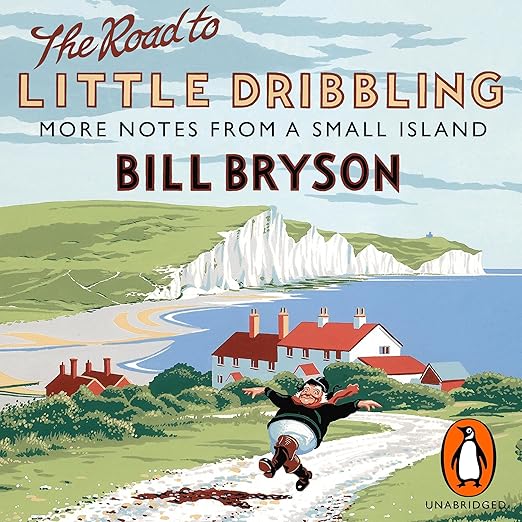
Bill Bryson is one of those writers whose relationship with Britain has always been paradoxically clearer than that of most people who were born here. He arrived from Iowa, fell in love with a country that baffled and delighted him in equal measure, and has spent decades performing that bafflement for the rest of us with such affection that it functions almost as a service to the nation. The Road to Little Dribbling was published in 2015 to mark the twentieth anniversary of Notes from a Small Island, his first extended British travelogue and still, by many measures, the definitive one. This follow-up traces what he calls the Bryson Line, from Bognor Regis to Cape Wrath, through parts of Britain that do not feature heavily in the usual tourist itinerary.
There is a more curmudgeonly note here than in the original, and several reviewers have picked up on it fairly. But Bryson at sixty-three making mild complaints about parking, litter, and the inexplicable persistence of certain British frustrations is still funnier than most writers at their best. The affection for Britain underpins everything, and that affection is the book’s moral centre. The landscape, the history, the cream teas, the particular British combination of genuine eccentricity and stoic competence: it is all present and accounted for.
About the Audiobook
Published by Penguin Audio in October 2015 and running to thirteen hours and fifty-six minutes, this audiobook covers Bryson’s journey through Britain two decades after Notes from a Small Island, noting what has changed and what has stubbornly refused to. The structure follows the Bryson Line, which he invents specifically for this book as a geographical and temperamental guide through the country. Along the way there are digressions on British history, architecture, natural history, and the national gift for making things unnecessarily complicated when they do not need to be.
The download includes a PDF map of the Bryson Line, a useful companion for listeners who want to follow the geography, and original music written and performed by Richard Digance, inspired by the book. Both are thoughtful additions that reward the audiobook format specifically. The book sits in the same tradition as the original, comic travel writing with a genuine scholarly underpinning, but it is worth managing expectations: this is a companion to Notes from a Small Island, not a replacement for it. Listeners who have not read the original will find this a richer experience if they do so first, not because the backstory is necessary but because the accumulation of observations across both books produces a portrait of Britain that neither alone quite achieves.
The Narration
Nathan Osgood narrates, and his work here is the kind of performance that makes you forget you are listening to a narrator rather than Bryson himself. Osgood has perfected a delivery that captures Bryson’s written voice: the slightly puzzled Midwestern bewilderment modulated by decades of British residency, the timing on comic observations, the genuine warmth that breaks through the mock-outrage. At nearly fourteen hours, maintaining that voice without allowing it to become a caricature is a genuine achievement, and Osgood manages it throughout. He handles the passages of historical reflection with the same ease as the comic set-pieces, and that tonal range is exactly what Bryson’s prose demands from any narrator attempting to honour it.
What Readers Say
With a 4.4 rating from 19 Audible listeners and enthusiastic UK reviews, the audiobook has found exactly the audience it deserves. One reviewer called it brilliant, hilarious, and informative, classic Bryson, acknowledging the slight curmudgeonly note while insisting it does not diminish the overall achievement. Another offered the most measured assessment: Bryson on average form, which is to say still informative, entertaining, and funnier than most, while noting some duplication of material from the original and other books. A reader who has worked through every Bryson book reported full satisfaction, finding that it fully lived up to expectations. An American reviewer placed it alongside Paul Theroux’s bleaker take on Britain and found it an essential counterargument, a useful framing for anyone wondering how it sits in the broader landscape of British travel writing.
Who Should Listen?
Fans of Notes from a Small Island have a clear reason to be here, and the book rewards them well. General Bryson readers will find the familiar pleasures fully present: the observations, the history, the comedy, the affection. For listeners who have never encountered his work, the original is a slightly better entry point, but this is a satisfying companion and Nathan Osgood’s narration makes thirteen hours pass with surprising speed. The PDF map is worth downloading for the geographical context, and the Digance music adds a pleasant period-appropriate texture to the listening experience. For listeners outside the UK who approach it as a travel companion rather than a comedy of national recognition, the book offers a surprisingly detailed and affectionate introduction to a country that resists easy summary, told by someone who has spent twenty years trying to understand it. Listen on Audible UK.