Clara’s Verdict
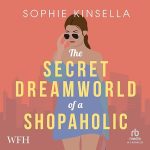
I first read Sophie Kinsella’s Shopaholic in my early twenties, in a paperback borrowed from a colleague at the publishing house where I was working, and I remember laughing out loud on the Tube and getting disapproving looks from the man in the seat across. I went back to it this week in the Nell Hudson audiobook edition to see how it holds up. The answer is: extraordinarily well. It is still funny, still embarrassingly recognisable in all the wrong ways, and still built around a comic character so precisely observed that she has outlasted the cultural moment that produced her.
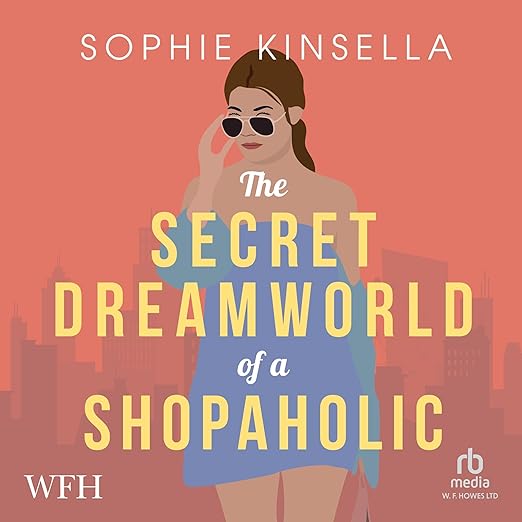
This is Book 1 of the Shopaholic series, published by W. F. Howes Ltd in a 2024 edition running to 9 hours and 45 minutes. Rated 4.4 from 5 listeners in this format, the novel itself has decades of reader response behind it in print.
About the Audiobook
Published on 14 March 2024, this edition gives us Rebecca Bloomwood in full: the financial journalist who writes about money management while hiding her Visa bills under the bed, the woman whose commitment to not shopping results in elaborate new purchases, and the person whose attempts to Make More Money consistently make things considerably worse. The comic architecture is meticulous. Kinsella constructs disaster out of small self-deceptions that compound, and the pacing is very precisely calibrated so that each escalation lands with maximum absurdity.
What the novel is actually about, beneath the comedy, is the gap between the person you present to the world and the person you know yourself to be. Rebecca is not stupid; she is extremely good at rationalisation. Every reader who has ever told themselves that a purchase was an investment, or that one more thing will be the last thing, recognises the internal logic. The book is a comedy of self-knowledge, and that is why it resonates so widely and so persistently decades after its original publication.
The original UK publication predates the film adaptation, which relocated the setting to New York and altered the plot considerably. The audiobook returns to the British original, complete with high street shops, department stores, and a bank manager whose letters escalate in tone with beautiful comic precision. Listeners who know only the film will find this a genuinely fresh experience.
The Narration
Nell Hudson is very well cast here. She finds the right register for Rebecca, pitched somewhere between manic optimism and genuine panic, and she commits fully to the comic timing that the material demands. The internal monologue sections, where Rebecca talks herself into each new purchase with baroque reasoning, are handled with particular skill. Hudson does not wink at the absurdity; she plays it straight, which makes it funnier.
She manages the emotional shifts deftly too. There are moments in the novel where Rebecca’s financial situation becomes genuinely frightening rather than merely farcical, and Hudson transitions between modes without disrupting the comedic tone that governs the book overall. For a novel that reads as a first-person diary, the narrator’s performance is load-bearing in a way that omniscient-narrator fiction often is not. Hudson carries the weight well throughout the nearly 10-hour runtime.
What Readers Say
The reviews in this edition are brief but warm. One listener described it as laugh out loud brilliance and praised the diary-style format that gives direct access to Rebecca’s internal world. Another admitted to being thoroughly unlike the protagonist but finding the book thoroughly enjoyable regardless, noting the universal horror of brown envelopes dropping through the letterbox. A reader who came to the audiobook after the film noted that the plots diverge quite early, which makes the book feel fresh rather than redundant for anyone who knows the adaptation well.
The international reach of the reviews is telling. French and American responses appear alongside British ones, which reflects the novel’s global reach. One French reviewer wrote that the situations are tellement droles and that she found herself recognising something of her own experience in Becky, which speaks to how universal the comedy’s core mechanism really is.
Who Should Listen?
It is also worth noting that the novel was first published in 2000 and has been in print continuously ever since. Its longevity is not an accident. Kinsella identified something in the relationship between shopping, self-esteem, and the performance of competence that remains as relevant in 2024 as it was at the turn of the millennium, and possibly more so. The proliferation of online retail, buy-now-pay-later schemes, and the constant stream of algorithmically targeted product recommendations has made Rebecca Bloomwood’s predicament structurally easier to fall into than ever before.
Ideal for fans of light comic fiction who enjoy first-person comedy with a strong, distinctive voice. Also recommended for listeners who came to Kinsella through the film and want to experience the original British version. Those who enjoy Helen Fielding’s Bridget Jones will find similar pleasures here, though Becky is a more purely comic creation and the novel is less interested in romantic melancholy. Listeners who find consumerism as a comedy subject tiresome, or who prefer morally complex protagonists, may find the material thin. Start with Book 1; the series builds steadily.
The Secret Dreamworld of a Shopaholic is available on Audible UK. Listen on Audible UK