Clara’s Verdict
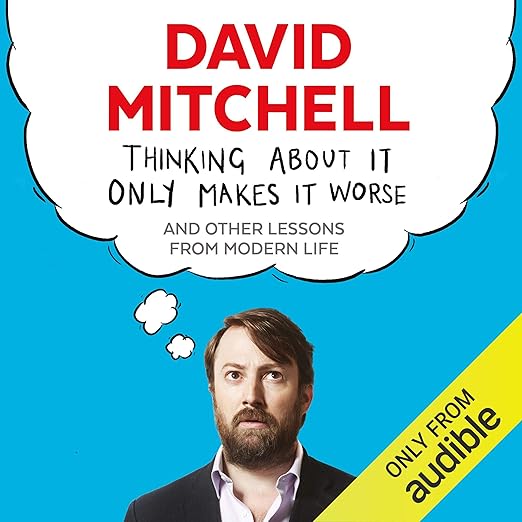
David Mitchell, the comedian and writer rather than the novelist of the same name, occupies a very precise niche in British cultural life: the intelligent grump, the man who finds the modern world not entirely to his satisfaction and is extremely good at explaining why, in complete sentences, at some length. Thinking About It Only Makes It Worse is a collection of newspaper columns written over approximately five years, gathered and read by Mitchell himself for Audible Studios. It arrived in 2019 and remains a solid example of the form, even if the passage of time has softened some of its edges in ways that are inevitable with collected journalism.
I find Mitchell genuinely funny. His television appearances on programmes like Would I Lie to You and 8 Out of 10 Cats have made him a fixture of British panel comedy, and his particular flavour of articulate exasperation, the sense that the world is not what it should be and that Mitchell is personally aware of this in more detail than most, translates well to audio. Whether that quality sustains nine hours and ten minutes is a slightly different question from whether it works in a single episode.
The Problem with the World, at Length
The title captures the thesis neatly: applying rational thought to the various absurdities of modern life tends to make things feel worse, not better, and yet Mitchell cannot stop himself. The columns range widely: Ryanair and its particular relationship with its customers; Richard III both as a historical figure and as a cultural site; Downton Abbey and what it says about British nostalgia; UKIP in its pre-Brexit iteration; the question of why so many films and television programmes are remakes or sequels rather than original ideas; phone etiquette; the social dynamics of swearing and the asterisks that substitute for it in print.
The structural problem with collected columns as audiobooks is the problem of time. These pieces were written for immediate publication, responding to specific moments in specific cultural conversations. Reading Ryanair columns in 2026 is a different experience from reading them in 2012 or 2015. The airline has changed, the cultural conversation has moved, and the specific outrage Mitchell was expressing has been succeeded by different specific outrages. Mitchell is clever enough that the individual observations often retain their wit past their original context, but the cumulative effect across nine hours is of a man responding to a world that has since moved on in various ways. Several reviewers have flagged this, and it is a fair and honest point about the format rather than about Mitchell’s writing.
The Voice in Your Ear
Mitchell narrating his own work is the only option that makes sense here, and Audible Studios made the right call in recording it this way. His written voice and his spoken voice are essentially identical, which is not always true of writer-narrators. The slightly strangled quality of his comic delivery, the way he allows sentences to build toward their own internal absurdity before deflating them with a particularly precise word, works in audio exactly as it does on screen. One reviewer described listening to it as being exactly like sitting with a friend who mumbles about the world together with you, and there is genuine truth in that formulation. The informality of Mitchell’s written voice becomes even more present when you hear it in his actual intonation and rhythm.
Audible Studios has produced this cleanly. No ambient noise, no production fussiness. Just Mitchell, slightly outraged, very funny, occasionally wrong about things in interesting ways.
What Readers Say
Only two Audible UK ratings average 3.9 stars, which is a genuinely inadequate sample for drawing conclusions. The five written reviews offer more texture. Annie gave five stars and described the book as making her “laugh about a world that was and is pretty gruesome.” Galning, at four stars, appreciated Mitchell’s perspective while correctly noting the inevitable dating of column collections. Tim Higgins gave the most useful characterisation of the intended audience: not for those who object to Mitchell’s “slightly glass half empty, cynical view of the world,” but rewarding for those who find that quality entertaining. Dilly Grimwood described giving it as a gift to a friend who read both Mitchell collections during a delayed journey home and “much enjoyed” both. That is exactly the right listening context.
Who Should Listen?
This is for confirmed David Mitchell enthusiasts who want more of what they already enjoy, delivered in his own voice. It works best in short sessions: a column or two in commute-sized doses rather than as a sustained binge. Treat it more like a radio programme than a narrative audiobook, and the experience rewards that approach considerably. The dating of some material is real, but Mitchell’s voice and perspective have an enduring consistency that makes much of it feel timeless despite the specific references.
If you have never encountered Mitchell’s comedy, his panel show appearances are a better introduction to whether his particular register works for you. If you already enjoy him, this delivers precisely what you expect.