Clara’s Verdict
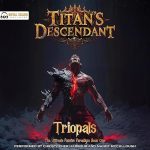
The LitRPG cultivation genre has generated an enormous quantity of audiobook content in recent years, and a great deal of it blurs into a paste of chosen ones, tournament arcs, and power progressions that escalate beyond all narrative consequence. Titan’s Descendant, book one of Triopals’s The Ultimate Passive Paradigm series, distinguishes itself from this crowded field through a central power system that is genuinely clever. The protagonist’s flaw – an abysmal energy absorption rate that makes him the weakest disciple in his sect – becomes the source of his strength in a way that has actual internal logic. That’s not nothing in a genre where “the protagonist is secretly special for reasons the narrative has to work hard to justify” is the default starting position. At nearly 18 hours and with a 4.6 rating from 455 listeners, this one has clearly found its audience.
About the Audiobook
Nathan has spent two years at the absolute bottom of his cultivation sect’s rankings. Cursed with an energy absorption rate so catastrophically low that expulsion is imminent, his dream of returning to Earth to help his ailing mother is on the verge of dying with it. Then, on the day before everything falls apart, his dormant system awakens – granting him the Passive Paradigm, a unique power that inverts his flaw. Rather than absorbing energy actively, Nathan grows through endurance: through surviving damage, through persisting when others would quit, through the accumulation of hardship rather than its avoidance. The worse things get, the stronger he becomes.
What follows is a conventional underdog arc, but executed with more wit and structural care than the genre typically manages. The tournament sequences are well-paced, the forest section that dominates the second half is genuinely tense, and the antagonists have comprehensible motivations rather than simply existing to provide obstacles. Nathan is a likeable protagonist – stubborn without being irritating, clever without being infallible. He makes mistakes, and the mistakes have consequences, which is more than can be said for many characters in this genre.
The cultivation world-building has enough internal consistency to generate genuine suspense: the question of how Nathan’s passive accumulation intersects with the active power systems of the stronger disciples around him is one the book takes seriously and explores with care. The cultivation-meets-Western-progression blend feels fresher than the standard xianxia template, and the system design is interesting enough to generate real strategic problems rather than functioning purely as a power fantasy delivery mechanism. Fans of Brandon Sanderson’s Cradle series or Jason Anspach’s He Who Fights with Monsters will find comfortable points of reference alongside genuine novelty. The final act pushes the power escalation into territory that one reviewer felt stretched plausibility slightly, which is a fair note – but genre veterans will likely take it in their stride.
The Narration
Christopher Harbour’s narration serves the material well across nearly 18 hours. He finds Nathan’s voice convincingly – the frustration of prolonged failure, the dawning confidence of someone beginning to understand their own power – and handles the broader ensemble with clarity that prevents the large cast from blurring together. The combat sequences are delivered with appropriate urgency, and the pacing across a long running time remains consistent. A solid performance that amplifies the story rather than calling attention to itself.
What Readers Say
Early listeners have been markedly enthusiastic. One UK reviewer described it as “fun, engaging, and hard to put down,” praising the depiction of a desperate protagonist given one last chance. Another highlighted the blend of eastern and western cultivation elements as a particular strength: “all the fun of system rolls and random skills with that taste of eastern and western cultivation spliced in one – definitely recommend.” A third called it “fanfreakingtastic” with “wonderful characters.” The primary reservation, from a reviewer who gave four stars, concerns the overpowered protagonist tendency and the final act’s stretch into implausibility. That’s a legitimate critique, but one most genre regulars will weigh against the considerable pleasures of what comes before it.
Who Should Listen?
The series title – The Ultimate Passive Paradigm – is a slightly awkward piece of genre nomenclature, but it captures something genuine about what makes the book distinctive: it is a story about a character whose power comes from accepting difficulty rather than transcending it, which is a more interesting premise than most of its competition can offer.
Essential for LitRPG and progression fantasy enthusiasts, particularly those drawn to the cultivation subgenre. Fans of Cradle, He Who Fights with Monsters, or Korean web-novel adaptations in a more Western idiom will find the tonal balance familiar and the central power system more inventive than most. Also works well for younger adult listeners who enjoy high-stakes tournament narratives with a hero who earns his victories through genuine suffering rather than narrative convenience. This is the first book in the series, and it ends with the promise of considerably more story to come. Available on Audible UK.