Clara’s Verdict
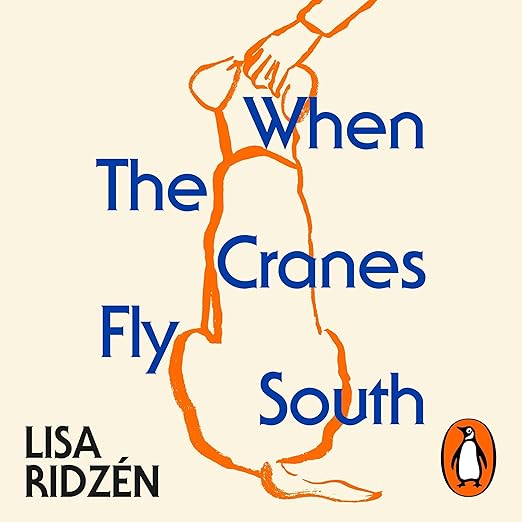
There is a category of novel that announces itself immediately as the kind of book that will be pressed into hands and recommended in hushed, slightly urgent tones. When the Cranes Fly South, Lisa Ridzen’s debut, shortlisted for the Waterstones Debut Fiction Prize and a Waterstones Book of the Month, belongs firmly in that category. I finished it on a grey Tuesday morning and found myself sitting quietly afterwards in a way that good short novels sometimes demand. Richard Osman describes it as heartbreaking and funny and beautiful and wise. Fredrik Backman says you will want to buy twenty copies and give them to everyone you love. Jacqueline Wilson calls it the most moving book she has ever read. That is a considerable weight of endorsement for a slim novel about an elderly Swedish man, his dog, and his estranged son.
Bo is eighty-nine, living in a small rural village in northern Sweden, his days structured around visits from his care team, phone calls with his best friend Ture, and the companionship of his dog Sixten. When his son insists the dog must be removed, Bo resolves to resist. The novel moves between Bo’s present and his memories, and the emotional architecture it builds is, it turns out, exactly what Backman and Osman said it was.
About the Audiobook
The Penguin production runs seven hours and twenty-three minutes and was released in May 2025. The novel was originally published in Swedish in 2024 and this is the English translation. Ridzen’s background is not in literary fiction in the traditional sense; this is a debut, and the writing has the quality that some debuts possess of being unburdened by accumulated technique, arriving instead with something more direct and clear-eyed. The themes of ageing, autonomy, the relationship between parents and children, and what we leave unsaid carry no sentimentality in Ridzen’s hands.
One reviewer notes that the care home visits, the records kept by carers, and the institutional language around Bo’s deterioration are rendered with an accuracy that feels drawn from close observation rather than imagination. Those who have watched a parent or grandparent navigate this stage of life will recognise the texture immediately.
The Narration
Ifan Huw Dafydd narrates the English-language production. He is a Welsh actor with considerable audio and screen experience, and his delivery suits the novel’s pace and register: unhurried, precise, capable of holding the delicate balance between the book’s comedy and its grief. The internal monologue structure of a first-person elderly narrator requires a voice that can carry authority and vulnerability simultaneously, and Dafydd manages this throughout.
What Readers Say
The twelve Audible ratings average 4.4, and the written responses are notably specific in their emotional detail. One reviewer, entering their seventieth year, approached the book with apprehension about its subject matter and found it neither mawkish nor overly sentimental. Another connects the care team visits directly to their own experience of a parent’s decline. A third calls it so sad but ultimately uplifting. The reading community consensus is that this is a book that moves people without manipulating them, which is the harder achievement.
Who Should Listen?
Readers who respond to novels that deal honestly with ageing and mortality without turning away from the difficulty, and who find books like Fredrik Backman’s A Man Called Ove or Gail Honeyman’s Eleanor Oliphant is Completely Fine emotionally satisfying rather than uncomfortably close. Those who prefer plot-driven fiction may find the quiet domestic scale frustrating. Anyone who has navigated the late stages of a parent’s life will find recognition here. This is the kind of novel that changes shape slightly depending on the reader’s own age and circumstance.