Clara’s Verdict
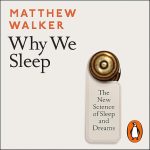
I have a vivid memory of listening to the opening chapters of Why We Sleep on a late-night walk, the particular absurdity of being told, in authoritative scientific detail, how badly I was damaging myself by not being in bed. Matthew Walker’s book arrived in 2017 to a reception that was part admiration, part alarm, and part genuine behavioural change: people began going to bed earlier, taking sleep more seriously, reconsidering their caffeine habits. As a piece of popular science that actually changed what people do, it ranks alongside works like Michael Pollan’s In Defence of Food or Robert Sapolsky’s Why Zebras Don’t Get Ulcers in its practical reach beyond the educated general reader.
The book is not without its critics. Some researchers have questioned the precision of certain statistics, particularly the bold causal claims about sleep deprivation and mortality risk. Walker has acknowledged some overstatements in subsequent commentary. But the book’s central argument, that we are systematically undervaluing sleep and that the consequences are serious and wide-ranging, remains well-supported by the broader scientific literature. The audiobook’s persuasive power is formidable regardless of the occasional overreach, and the overall effect on listener behaviour is, by the evidence of reader responses, real.
About the Audiobook
Published by Penguin in December 2017, this audiobook runs to thirteen hours and thirty-one minutes and covers the full scope of Walker’s research: what sleep is and why it evolved; what happens neurologically during different sleep stages including REM and deep slow-wave sleep; how dreams function and what purpose they may serve; the effects of caffeine, alcohol, and prescription sleep medication; the relationship between sleep deprivation and every major health condition including Alzheimer’s, cancer, obesity, and depression; and the structural sleep deprivation built into modern working patterns and school start times. The book includes a bonus PDF of graphs and diagrams, worth downloading alongside the audiobook for listeners who want to return to specific data points.
Walker is Director of the Center for Human Sleep Science at UC Berkeley, and the book is written from that position of institutional authority combined with a genuine talent for translation. He is not writing for scientists; he is writing for the person who keeps hitting snooze and wants to understand what that is actually costing them. The science is dense in places but always explained, and the cumulative effect is a reframing of sleep not as a passive waste of time but as an active biological process that sustains almost every function the body and mind perform.
The Narration
John Sackville narrates, and he is an excellent match for Walker’s prose. Sackville has a BBC-adjacent register, composed, authoritative, with the kind of precise diction that makes scientific information feel trustworthy rather than overwhelming. For a thirteen-hour nonfiction audiobook that moves through neuroscience, epidemiology, and evolutionary biology, a narrator who keeps the listener feeling oriented and confident is essential, and Sackville does exactly that. He handles Walker’s more alarming passages, the statistics on sleep deprivation and disease, without tipping into sensationalism, and he brings genuine warmth to the book’s more practically hopeful sections. This is the kind of narration that makes a demanding audiobook feel like an extended, intelligent conversation rather than a lecture.
What Readers Say
The Audible UK edition carries a 4.6 rating from 33 listeners, strong and consistent. J. Drew called it amazing, observing that Walker reveals why the process that occupies a third of our lives is so essential to everything else. The reviewer Barcelonski offered the funniest and most accurate summary in the batch: a book about sleep so compelling that every time he opened it in bed, he put it down and fell asleep instead, an irony Walker might appreciate. Ollie Wanjohi’s four-star review noted one key concept, adenosine buildup and the mechanism of sleep debt, as genuinely transformative for understanding his own patterns. The occasional critical voice concerns a damaged physical copy, entirely irrelevant to the audiobook experience. The consensus across serious listeners is that this earns its considerable reputation.
Who Should Listen?
Anyone who has ever thought of sleep as a luxury or an indulgence should treat this as corrective listening. It is particularly valuable for people in demanding professional environments where staying up late is worn as a badge of commitment; Walker dismantles that cultural mythology with considerable force. Parents of school-age children will find the sections on adolescent sleep biology and school start times especially important. The audiobook suits both cover-to-cover listening and selective dipping: the chapters are thematically self-contained enough that returning to specific sections is entirely practicable. The bonus PDF is worth downloading alongside. The book’s argument, that sleep is not a passive state but an active biological process as essential as food or water, is one that most listeners will find difficult to dismiss and even harder to stop thinking about on the morning commute home from a late shift. Listen on Audible UK.