Clara’s Verdict
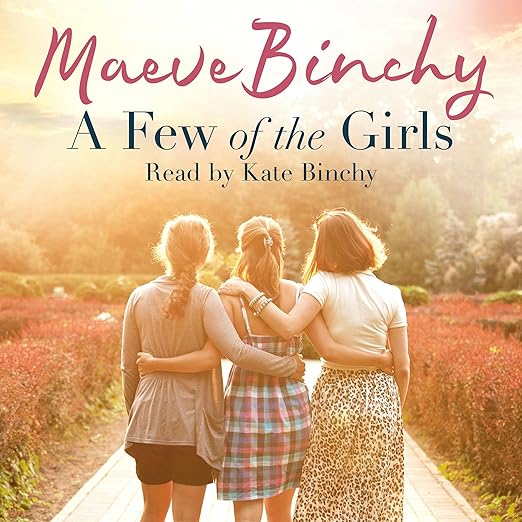
Maeve Binchy remains one of the great Irish storytellers of the twentieth century – warm, perceptive, entirely without pretension about the lives she chose to write about, and possessed of a structural instinct for the short story that her more celebrated novels sometimes obscured. A Few of the Girls is a generous anthology that ranges across her career, from early magazine pieces to her later work, and while it is not the place to begin with Binchy – Circle of Friends or Tara Road would serve better as introductions – it is a rich companion for those who already love her. The fact that it’s read by Kate Binchy, her niece, adds a layer of intimacy to the listening experience that no professional narrator could replicate.
About the Audiobook
The collection covers a wide range of periods and settings, mostly Irish but applicable – as one perceptive reviewer noted – to “any country and any age.” Binchy’s recurring themes are here in abundance: the unsuitable love affair, the female friendship tested and gradually renewed, the dream quietly deferred and occasionally, unexpectedly rescued, the particular texture of Irish social life across several decades of rapid cultural change. Some stories are overtly nostalgic, looking back at an Ireland of earlier decades with the mixture of affection and clear-eyed distance that characterised her best work. Others are sharper, more contemporary, demonstrating the range she had that her reputation for comfort sometimes obscures.
Binchy was explicit in interviews about her relationship to storytelling and to Ireland: “The Irish do love telling stories, and we are suspicious of people who don’t have long, complicated conversations.” A Few of the Girls is that spirit distilled into anthology form – a book that assumes conversation is the natural unit of human experience, and that the best thing a story can do is honour the complexity of ordinary lives. At twelve and a half hours, this is a substantial collection – longer than many novels – which means it sustains extended listening without the episodic quality becoming wearying. The stories vary in length and tone, which actually helps: you can dip in and out, or commit to sustained listening, and either approach rewards.
The collection comes with an introduction read by Gordon Snell, Binchy’s husband, which gives it a pleasingly personal framing and reminds you of the very particular literary partnership that produced this body of work. For those who have worked through the novels, this is an invaluable companion. For newcomers, it offers a representative survey of her gifts while perhaps obscuring her full scope.
The Narration
Kate Binchy reading her aunt’s work is an unusual and genuinely moving circumstance. There is an authority and intimacy in her performance that no professional narrator could replicate – these are stories she grew up around, from a writer she knew personally, and you sense that in every reading choice. Her voice has a natural musicality that suits the Irish cadences of the prose, and she handles the range of registers across the collection with ease: the tender moments, the comic ones, the quietly devastating ones that arrive without warning. This is one of those audiobooks where the narration becomes so integral to the experience that separating the two seems impossible, and inadvisable.
What Readers Say
UK readers have given the collection a 4.0 rating, with most landing between four and five stars. One listener wrote of “Irish warmth all the way through,” calling it an ideal gift for Binchy readers and noting that even stories previously encountered in magazines are worth revisiting in this collected form. Another compared the stories to Aesop’s fables – “they always had a moral” – which captures something accurate about Binchy’s structural instincts and her faith in the value of small, clear lessons drawn from ordinary experience. A more critical voice felt “all the stories were the same,” which is fair as a note about the register Binchy worked in, though perhaps not the strongest argument against a writer’s consistency. The strongest endorsements come from those who found the format ideal for evenings when you want something that holds together without demanding sustained concentration.
Who Should Listen?
Essential for existing Binchy readers, and a gentle introduction for those who find her novels’ length daunting. Also recommended for listeners who appreciate the Irish short story tradition – Colm Tóibín, Claire Keegan, William Trevor – though Binchy’s register is considerably warmer and less austere than those writers, which is not a criticism but a description. Perfect for evenings when you want something simultaneously comforting and unsentimental: a combination Binchy achieves more reliably than almost anyone. Also an excellent choice for listeners who are new to audiobooks and want something forgiving of attention that comes and goes.
Listen on Audible UK: Get A Few of the Girls on Audible UK. Also available on Kobo, Scribd, and Storytel.