Clara’s Verdict
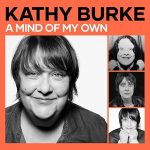
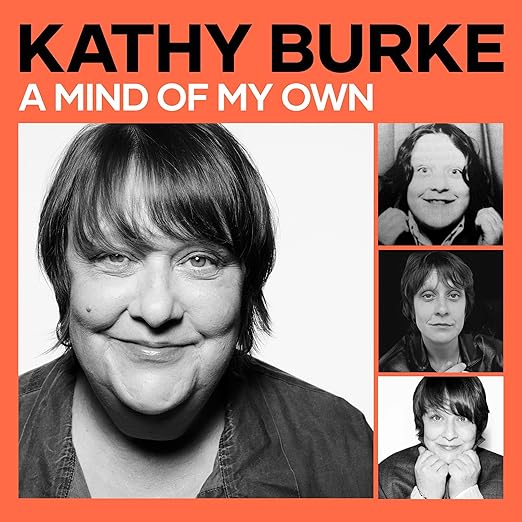
I grew up watching Kathy Burke and never quite worked out where the performance ended and the person began. That is, it turned out, precisely the point. A Mind of My Own, her memoir published by Simon and Schuster Audio UK in October 2025, answers that question with the same unstudied candour that has always set Burke apart from her contemporaries. This is the account of a woman who was never going to be the person anyone else wanted her to be: not the industry, not her class, not the expectations that surrounded a feral, motherless kid roaming an Islington estate in the 1970s.
What makes the audiobook genuinely special is that Burke reads it herself, and her voice, familiar, dry, and entirely without pretension, turns the memoir into something closer to a long conversation with a friend who happens to have had one of the more remarkable careers in British entertainment. Caitlin Moran’s description in the Times Magazine gets it exactly right: this is a book about starting work at seventeen, winning at Cannes, accidentally taking some of Shaun Ryder’s crack, and attempting to set fire to a woman’s arse, all told with the same level-headed frankness.
About the Audiobook
Burke’s memoir covers her Islington childhood, and specifically the Anna Scher Theatre, the institution that changed the course of her life and gave her access to a world she had no right to expect. From there she traces her rise through British television and film: the Harry Enfield characters, Gimme Gimme Gimme, the role in Nil by Mouth that earned her a BAFTA and took her to Cannes. But A Mind of My Own is less interested in career chronology than in the texture of a life lived with particular values: blunt honesty, genuine warmth, and a refusal to take herself too seriously while taking her work completely seriously.
The memoir is also, by all accounts, the story of a class and a generation. Burke writes about being a woman in British entertainment at a particular moment when the rules were unwritten and the obstacles were real. She is not angry about this in any simple way. She is too clear-eyed for grievance. But she does not pretend it was straightforward either. The 9 hours and 30 minutes of runtime gives the memoir room to breathe without overstaying its welcome. The Audible UK rating of 4.6 reflects an enthusiastic early response, with readers consistently noting that the book rewards both sequential reading and the kind of dipping in and out that the chapter structure supports.
The press response has been strong and specific. The Guardian called it “vivid, bright and beautiful.” Miriam Margolyes said she wished she had written it. Jo Brand called it glorious. These are not publicist-assembled endorsements; they read like the genuine responses of people who know Burke and found themselves moved by a memoir that is both funnier and more affecting than they expected.
The Narration
Kathy Burke reading Kathy Burke is the only possible version of this audiobook. Her voice carries everything the memoir needs: the comic timing, the sudden shifts into unexpected tenderness, the Islington cadences that no hired narrator could convincingly replicate. Several readers of the print edition noted that they could hear her voice in their heads while reading. The audiobook simply makes that experience literal.
The self-narration does not feel like a performance. It feels like someone talking you through their life with the lights on, no vanity applied. There are moments, particularly in the sections about her early career and the people who shaped it, where Burke’s delivery carries a weight that print alone cannot transmit. This is one of those cases where the audiobook format does something the physical book genuinely cannot.
What Readers Say
Listener response has been uniformly warm. One reviewer described a Sunday afternoon spent intending to dip in and emerging hours later, thoroughly absorbed, noting in particular the Cannes story, which by all accounts earns its reputation as the memoir’s comic centrepiece. The consensus across UK readers is that the first half, covering the Islington years, the Anna Scher Theatre, and the early career, is the stronger section, with the later chapters occasionally losing some of the biographical specificity that makes the opening so vivid. But even reviewers who note that qualification find the overall experience “funny, touching and real.” One reader who described themselves as familiar with Burke’s work called it “a brilliantly adventurous life told with all the honesty and giggles you would expect from Kathy,” and praised it for reminding them to follow instincts, have courage, and not take life too seriously.
Who Should Listen?
Essential for anyone who grew up with Kathy Burke’s work and wants to understand the person behind it. Also strongly recommended for listeners interested in working-class British women’s experiences of the entertainment industry, told without bitterness and with considerable wit. If you came of age watching Smashie and Nicey or Gimme Gimme Gimme, this will feel like a reunion. If you have never encountered Burke before, start here. It is an excellent introduction to one of this country’s most distinctive voices, and it will leave you wanting to go back and watch everything she has ever made.