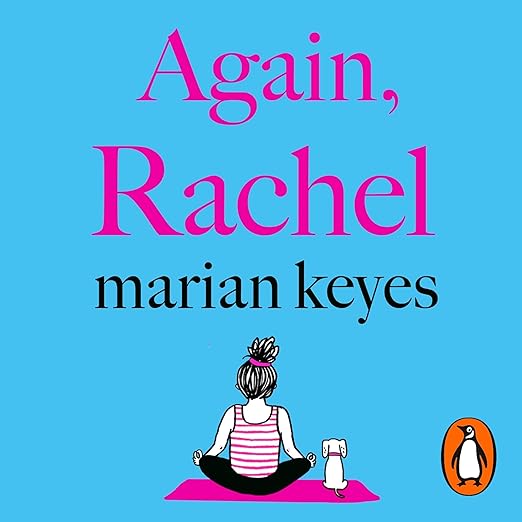
Clara’s Verdict
Twenty-five years is a long time to wait for a sequel, and the pressure on Again, Rachel must have been considerable. Rachel’s Holiday is one of those novels that lodged in people’s emotional furniture at a formative age – a book that many readers of a certain generation would describe as having changed how they understood both addiction and the possibility of recovery. Readers carry an almost proprietary affection for it, and for Rachel Walsh as a character. Keyes knew this, and she knew that the question was not simply whether she could write another book about Rachel but whether there was something genuinely new to say about her.
What she has done is something rather shrewd. She has aged Rachel with her, given her a genuinely new situation to navigate, and resisted completely the temptation to simply revisit what worked before. This is a novel written by a more experienced, more technically assured author than the one who wrote Rachel’s Holiday – and it shows in every chapter. It’s also somewhat sadder, which is almost certainly the right call.
About the Audiobook
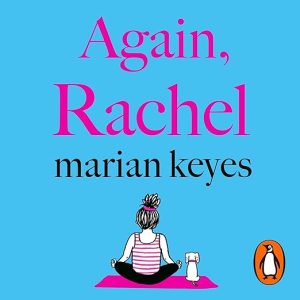
Again, Rachel is the seventh book in Keyes’s Walsh Family series, returning to Rachel Walsh some twenty-five years after her stint in the Cloisters rehabilitation centre that formed the basis of the original novel. She is now, impressively, a functioning adult: a skilled and well-regarded addiction counsellor, a woman with a stable long-term relationship, a gardener. Her only surviving bad habit is a fondness for expensive trainers. Her life, by the standards of a Keyes protagonist, is essentially sorted.
Then an ex reappears. Not just any ex – the one who complicated everything at the worst possible moment – and Rachel’s certainties begin, slowly and then less slowly, to dissolve. The novel is simultaneously a direct sequel, catching up with the entire Walsh family in the present day (all the beloved chaos of sisters and parents and interminable family gatherings is intact and funny), and a quieter, more interior book than its predecessor. Keyes is interested here in a question that doesn’t have an easy answer: whether recovery is ever actually complete, or whether the patterns of the past simply wait for the right conditions to resurface.
The Walsh family ensemble is deployed with Keyes’s characteristic generosity – Claire, in particular, gets substantial and satisfying space in this instalment – and the addiction counselling material introduces a layer of professional observation that adds texture and occasional darkness to what might otherwise default to familiar lightness. The sessions between Rachel and her clients are some of the novel’s finest passages. This edition includes a bonus Q&A between Marian Keyes and Graham Norton, which is as warm and funny as you’d expect.
At seventeen and a half hours, this is Keyes at her most expansive. The length reflects genuine narrative ambition – this is not a holiday read in the lightweight sense but a fully realised, emotionally complex novel that happens to be compulsively readable throughout.
The Narration
Marian Keyes reads her own work here, and the experience is one of the more intimate in recent audiobook production. Keyes is a gifted public speaker and natural storyteller – her live events, her social media presence, and her media appearances have always demonstrated a quality of direct, unguarded address to an audience – and she brings all of that to the narration. The Walsh family voices have an authenticity that only their creator could bring; she knows, instinctively and precisely, how these people sound in their own heads.
The seventeen-plus-hour runtime is demanding, and Keyes sustains it admirably throughout. The tonal shifts between comedy and genuine emotional weight are handled with the sureness of someone who has lived with these characters for a quarter of a century and knows exactly where each of them keeps their private grief.
What Readers Say
Audible UK listeners have given this a 4.6 rating from 16 reviews. The response is largely enthusiastic, with longstanding fans describing the return to Rachel’s world as genuinely satisfying rather than nostalgic. One reader described it as “every bit as brilliant as you’d hope”; another found the addiction counselling material “incredibly interesting” in a way that went beyond entertainment. The minority view holds that the original cannot quite be surpassed – but even that reviewer found the sequel “absolutely fantastic.” Several note the emotional range, using words like “sad,” “uplifting,” and “funny” in close proximity, which is precisely the combination Keyes herself would reach for in describing her own work.
Who Should Listen?
The obvious starting point: read or listen to Rachel’s Holiday first, if you haven’t. The sequel rewards familiarity with the characters and the events of the original. The wider Walsh Family series spans seven books – you needn’t have read them all, but the more of the family you know, the richer the experience of returning to them will be.
Beyond the established readership: this is an excellent choice for anyone interested in contemporary women’s fiction that takes emotional complexity seriously alongside its comedy. Keyes has always done this better than the genre’s general reputation would suggest, and this novel makes the argument for her abilities as forcefully as anything she’s published.
Listen on Audible UK: Get Again, Rachel by Marian Keyes on Audible UK. Also available on Kobo, Scribd, and Storytel.