Clara’s Verdict
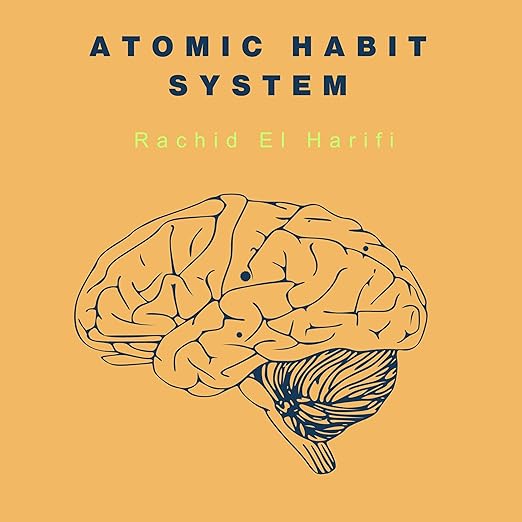
The habits genre is extraordinarily crowded, and any new entrant has to contend immediately with the long shadow cast by James Clear’s Atomic Habits – a book so thoroughly dominant in this space that a title like Atomic Habit System inevitably invites direct comparison and the question of what it adds to a conversation that has been going for years at considerable volume. Rachid El Harifi’s book covers broadly the same territory as Clear’s landmark 2018 work: habit loops, identity-based change, environmental design, the compounding of small improvements over time, and the distinction between motivation-dependent willpower (unreliable, erratic, subject to depletion) and systems that work automatically and independently of how you feel on a given morning. The difference between the two books is one of depth and scope: El Harifi’s audiobook runs to exactly one hour; Clear’s runs to just over five.
That is not necessarily a criticism. There is a real and underserved audience for condensed frameworks that distil the key principles of habit science into a format you can absorb in a single sitting, and a well-executed hour-long overview has genuine utility as an orientation document, a portable refresher, or a starting point before committing to longer treatment of the subject.
About the Audiobook
The book’s framework draws on research-backed habit science – the familiar territory of cue-routine-reward loops, the importance of reducing friction in the path to desired behaviours, the role of environment design in automating positive action and making the right choice the easy choice, and the distinction between relying on willpower and building systems that don’t require it. The specific claims in the synopsis – building habits that compound over time, using behavioural psychology to break bad patterns, mastering the feedback loop that drives sustainable change – are drawn from the same scientific literature that underpins most serious habit writing, including BJ Fogg’s Tiny Habits, Charles Duhigg’s The Power of Habit, and Clear’s more recent synthesis of the field.
The identity-based change element – the idea that lasting habit change requires a fundamental shift in how you see yourself, not merely a change in what you do – is particularly closely borrowed from Clear’s framework, where it is a central organising principle around which the entire book is structured. Whether El Harifi adds a genuinely distinct perspective on this concept or offers a thoughtful translation of existing science into fresh language is a question the absence of listener feedback makes impossible to answer with confidence at this stage.
The Narration
Jimmy Trisler narrates. For a one-hour personal development audiobook aimed at professionals and anyone looking to improve their daily routines, Trisler’s delivery is appropriately direct and energetic – the register that the habits and productivity genre typically calls for and that listeners in this space have come to expect from quality productions. The short runtime means there’s no room for the pacing to drag or for the listener’s attention to wander, and Trisler keeps the material moving at a clip that feels purposeful without being rushed. Clean, competent, and well-suited to the content. Nothing in the performance will distract you from the information being delivered, which is exactly what’s wanted from narration in this genre.
What Readers Say
No listener reviews are available on Audible UK at the time of writing. This is a March 2026 independent release from a self-published author, and no early audience feedback has appeared yet. For a title in this genre, the absence of reviews is a meaningful data point worth weighing alongside other factors – established habit and productivity audiobooks from Clear, Fogg, or Duhigg carry thousands of ratings that provide social proof and calibration for the listener. The absence of any such signal for a new entrant in the same space means the listener is taking quality on faith. Caveat emptor applies here; sampling the opening before purchasing is strongly advisable.
Who Should Listen?
Atomic Habit System is most useful for listeners who want a compact, structured overview of habit science without committing to a longer text – perhaps as a refresher before returning to more detailed material, as a starting point before reading Clear or Fogg more thoroughly, or as a portable framework to revisit briefly during a commute. It is not a substitute for the more developed treatments of this subject, and anyone who has already read Atomic Habits by James Clear will find the core content recognisably familiar. The one-hour runtime is the defining feature of the listening experience: approach it as a well-organised summary rather than an original contribution, and you’ll get appropriate value from it.
The strongest case for a book like this is that the habits and productivity literature has an accessibility problem for some readers – the full-length treatments, however excellent, require a sustained investment that some listeners aren’t ready to make until they’ve been convinced the subject is worth their time. A well-constructed one-hour overview can function as that conviction, and that is a genuine and useful function to serve in the market.