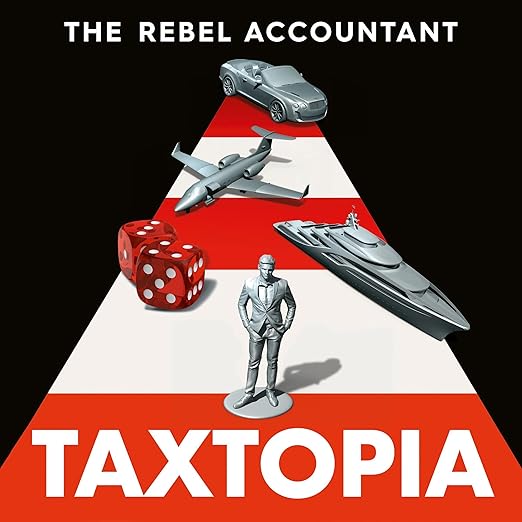
Clara’s Verdict
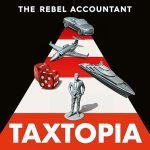
The anonymous author of TAXTOPIA writes under the pseudonym The Rebel Accountant, which sets appropriate expectations: this is a book written by an insider who has decided that transparency is more valuable than career advancement in a profession that profits from complexity and opacity. What distinguishes it from the usual expose-of-the-wealthy genre is that it is genuinely funny – dryly, sometimes sardonically funny – and that it treats the reader as someone capable of understanding the mechanics it describes rather than merely being outraged by them.
I came to this with the professional scepticism I apply to any book promising revelations about how the system works, and found myself genuinely engaged. The range of examples – from the Duke of Westminster to multinational coffee exporters – illuminates a global architecture of legal avoidance that is considerably stranger than any conspiracy theory. What distinguishes TAXTOPIA from the more earnest entries in this genre is the author’s willingness to be funny about it – to treat the absurdity of, say, buying a yacht as a tax planning strategy as the material for comedy rather than outrage alone.
About the Audiobook
The book is structured around the author’s professional journey: from naive new hire who assumes that tax compliance is the only game in town, through successive revelations about how the ultra-wealthy and major corporations actually operate, to a final section of radical – and largely sensible – proposals for simplification. Each stage of the journey introduces new mechanisms: offshore holding structures, intellectual property transfers, the curious fact that Switzerland is the world’s largest coffee exporter despite growing none.
The author’s central argument is not that tax avoidance is merely the work of greedy individuals but that the system was designed with these outcomes in mind – that complexity is a feature, not a bug, because complexity benefits those with the resources to navigate it. This is a stronger and more interesting argument than simple class warfare, and it is made with enough specific evidence to be convincing. At eleven and a half hours, the audiobook covers substantial ground without ever becoming a lecture.
The Narration
James Lailey narrates for Monoray, and his delivery suits the material well. The book’s register is that of a very articulate professional being candid over a very good dinner, and Lailey captures that quality – dry, confident, with an eye for the absurd detail. He handles the explanatory sections, which could become dry in less capable hands, with enough variety to keep the mechanics interesting rather than tedious.
At just over eleven hours, the recording is well-paced. The material never demands the kind of dramatic intensity that some narrators might impose inappropriately, and Lailey’s restraint serves both the comedy and the serious argument equally well. Several listeners have reported laughing out loud during sections that a less skilled narrator would have delivered as earnest exposition.
What Readers Say
The Audible response has been enthusiastic across over six hundred reviews averaging 4.5/5 from 635 listener ratings. Good vibes called it “10/10 – great insight into how the rich get richer. Not a tax manual, unless you are a millionaire” – which is perhaps the most accurate single-sentence summary available. Annette, writing in October 2024, noted that it will “change your perspective on certain taxes and empower you to make better financial decisions.”
Tom’s review captured both the book’s pleasures and its purpose: “a true eye-opener into the real world of tax, not the mainstream party-line, full of real-world examples broken down into terms that everyone can understand.” JR added the vital information that they “laughed out loud so many times,” which no one ordinarily expects from a book about taxation. The request for a sequel appears in multiple reviews.
Who Should Listen?
The anonymous authorship is worth addressing directly: it is not a gimmick. Given the content of the book – a detailed account of legal but ethically questionable practices carried out for real clients by a real professional – the decision to publish anonymously is entirely understandable, and does not diminish the credibility of the material. If anything, the willingness to expose this world at professional risk adds to the book’s authenticity. The author’s voice throughout has the specific confidence of someone describing their own experience rather than speculating about other people’s.
Anyone who pays taxes – which is to say, anyone who is not wealthy enough to avoid them – will find this book illuminating and possibly infuriating in a productive way. Particularly valuable for readers interested in economic inequality, the politics of fiscal policy, or simply the mechanics of how the global financial system operates in practice rather than in theory.
It also works very well as a gift for anyone who suspects the game is rigged: this book explains exactly how it is rigged, with chapter and verse. Listen on Audible UK.