Clara’s Verdict
The conversation around fast fashion has been running for well over a decade now, and there is a genuine risk, at this point, that another book on the subject feels like preaching to a choir that has already bought its organic cotton tote, filled it with capsule wardrobe staples, and knows the difference between Tencel and virgin polyester. The category is oversaturated in a way that is almost too on-the-nose given its own subject matter about the problem of too much.
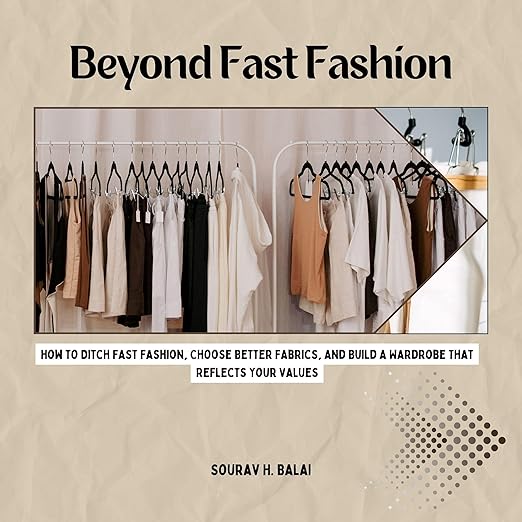
What Beyond Fast Fashion by Sourav H. Balai attempts – and largely achieves within its 71-minute runtime – is a shift in register that separates it from the more polemical and guilt-driven entries in the genre. This is not primarily a book about the environmental devastation wrought by the global fast fashion industry, though that context is present and acknowledged. It is a book about the personal experience of building a wardrobe that actually functions: aesthetically coherent, practically sustainable, and aligned with your actual values rather than with a seasonal trend cycle that resets every few months and ensures you are permanently slightly behind. Published in March 2026 by the author, narrated by Gordon Webster. No Audible UK ratings yet at the time of writing.
About the Audiobook
Balai organises the book around a clear progression from diagnosis to action. The opening establishes what he calls the problem of trend-driven buying – the way fast fashion’s relentless cycle creates a perpetual state of wardrobe inadequacy, where nothing you own feels quite right for this particular season, and the solution always conveniently involves buying something new that will itself be inadequate in six months. From there, the book moves into practical work that the genre often promises and less often delivers with genuine specificity: conducting a wardrobe audit honestly, understanding natural and sustainable fabrics (organic cotton, linen, wool, hemp, Tencel), building a capsule wardrobe of genuinely timeless pieces, and developing smart garment care techniques that extend clothing lifespan significantly rather than marginally.
The concept of the capsule wardrobe is not new – Donna Karan was articulating it in the 1980s, and it has been revived and reframed in various guises ever since – but Balai situates it within slow fashion’s more recent ethical vocabulary in a way that connects personal style choices to supply chain consequences without becoming hectoring or self-righteous about it. The book’s central argument – that sophistication and sustainability are not opposites but inseparable qualities, that the most elegant wardrobes are also the most considered ones – is the kind of reframing that either strikes a listener as obvious or as genuinely illuminating, depending on where they are starting from. For those in the latter camp, this may be one of the more useful hours they invest this year.
The Narration
Gordon Webster brings a composed, competent delivery to the material – the kind of narration that serves the text without drawing attention to itself, which is precisely what practical nonfiction of this kind requires. Nothing in his performance competes with the content for the listener’s attention. Webster’s clear diction makes the practical sections – fabric identification, care techniques, wardrobe audit methodology – easy to follow without note-taking, which matters in an audiobook format where you cannot flip back to a diagram or refer to a table when you need to check something.
What Readers Say
No Audible UK reviews have accumulated for this March 2026 release at the time of writing. The book will find its audience among listeners already engaged with the sustainable fashion conversation who want practical tools rather than further moral persuasion – those who have already been convinced that something needs to change and now want to know what, specifically, to actually do. It will also suit those approaching slow fashion as a concept for the first time who want a structured and jargon-free entry point rather than a manifesto. Whether word-of-mouth drives discovery will depend significantly on how well Balai’s practical frameworks perform in actual wardrobes and closets – the most convincing endorsement for a book like this is always a listener who changed how they shop and noticed the difference.
Who Should Listen?
This is for anyone who has stood in front of a wardrobe full of clothes and felt they had nothing to wear, and traced that feeling – however vaguely – to the pattern of impulse purchasing and seasonal trend-chasing that produced a wardrobe with no coherent identity and no clear sense of what it is actually for. It will suit listeners interested in sustainable living who want the fashion chapter handled with genuine practical depth rather than environmental guilt alone. At 71 minutes, it is the kind of audiobook you can absorb during a single commute and carry directly into your next serious attempt at sorting through what you own and why. Listen on Audible UK