Clara’s Verdict
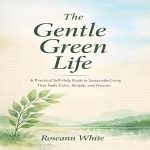
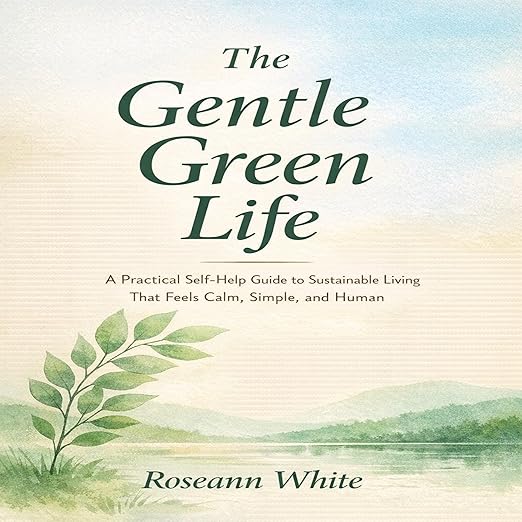
I have a particular wariness towards sustainability self-help, a genre that has a tendency to weaponise good intentions against the reader. The eco-shame spiral – the feeling that every plastic wrapper is a personal moral failure, that every supermarket choice is a referendum on your character – is something many people know intimately, and it is rarely helped by books that pile on the aspirational pressure while making a show of compassion. So I approached Roseann White’s The Gentle Green Life with some scepticism, and I was quietly glad to find something rather calmer than I had feared.
White’s central argument is one that deserves saying plainly: you do not have to be perfect to be useful, and perfectionism in sustainability is not just psychologically harmful, it is practically counterproductive. A person crushed by eco-guilt stops trying entirely; a person who makes imperfect progress makes actual progress. That argument – progress over perfection – is not original, but White applies it with specificity to the green living context in a way that most comparable books do not. The fact that the whole thing runs to only 1 hour and 14 minutes means the message is delivered without overstaying its welcome, which is its own form of respect for the reader’s time.
About the Audiobook
Self-published by Roseann White and released in February 2026, The Gentle Green Life is a short-form personal development title at just 1 hour and 14 minutes. It carries no Audible UK rating yet – the title is too recent for a meaningful review count to have accumulated. The book is not part of a series, and no companion material or downloadable booklet is mentioned. Given its brevity, it is better understood as an extended essay than a comprehensive manual; White covers eco-shame, gentle approaches to food and waste, the case for buying less, and the argument that sustainability should support your wellbeing rather than drain it.
The genre sits at the intersection of personal development and environmental living, which means it will find readers both from the self-help shelf and from the green lifestyle reading community. White writes explicitly for real people with real limits – for busy, tired, or overwhelmed seasons of life – and that stated scope is consistently honoured throughout the text. This is not a book that will tell you to make your own laundry detergent or track every gram of packaging waste; it is a book about releasing the pressure that comes from thinking you should, and about recognising that the shame spiral itself is an obstacle to action rather than a motivator of it.
The Narration
B Fike narrates, and in a title this brief, the narrator’s tone sets almost everything. Fike delivers a warm, unhurried performance that matches the book’s ethos well – this is not the brisk productivity-podcast voice that dominates much personal development audio, but something more considered and deliberate. Whether it will work for every listener depends on how you respond to a pace that is consciously slower than the norm, but given that the explicit argument of the book is against rushed, pressurised approaches to living sustainably, the narration’s tempo is at least philosophically consistent with the content. It is the kind of performance that rewards listening without distraction rather than as background audio.
What Readers Say
No Audible UK reviews have been posted at the time of writing. The book was released in early February 2026 and has not yet accumulated listener feedback. This is not unusual for a short, self-published title with a narrow topic and no major publisher’s promotional infrastructure behind it. The absence of reviews makes it genuinely difficult to assess how the book is landing with its intended audience, and prospective listeners should factor that uncertainty into their decision. The sample audio on the Audible page and the clarity of the synopsis are the most reliable guides available.
Who Should Listen?
This works best for listeners who already care about sustainability but find the discourse exhausting – the preached-at, never-good-enough feeling that trails much environmental communication, online and off. It is also a reasonable introduction for someone curious about green living but put off by the perfectionism and self-righteousness of zero-waste culture. At under 80 minutes, it asks very little of your time and makes no demands of your lifestyle beyond a mild reframing of your existing approach.
Do not come expecting a practical manual with specific product recommendations, data-heavy arguments about environmental impact, or a prescriptive lifestyle programme. This is reflective and tonal rather than instructional. Those seeking concrete, step-by-step lifestyle change guides – detailed advice on composting, reducing plastic, ethical sourcing, or calculating your carbon footprint – will want something denser and more specific. But as a brief, compassionate argument for doing what you can rather than agonising over what you cannot, and for recognising that sustainability practised imperfectly and sustainably is worth more than sustainability pursued perfectly and abandoned, it fills its lane with quiet competence.