Clara’s Verdict
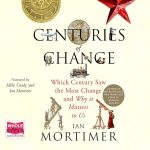
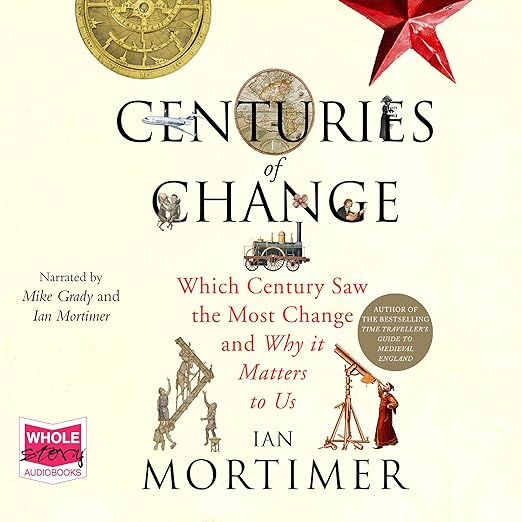
I was about four hours into Centuries of Change when I realised I had missed my stop. This is the kind of history book that ambushes you: it presents itself as entertainment, as a kind of intellectual parlour game in which Ian Mortimer asks which century produced the most significant change for Western civilisation, and then proceeds to argue the case rigorously enough that the game becomes scholarship before you have noticed the transition. The Black Death versus the female vote. The Industrial Revolution against the Internet. Mortimer is genuinely good at this.
The book moves century by century from the eleventh to the twentieth, each chapter making the case for that period’s transformative significance before Mortimer renders his verdict. His medieval expertise is well known from his time-traveller’s guides to various periods, and several reviewers note that the early chapters, covering the eleventh and twelfth centuries, carry particular authority. What is striking is how effectively he rehabilitates the so-called dark centuries from their reputation as mere absence of progress.
About the Audiobook
The W. F. Howes production runs sixteen hours and thirty-nine minutes and was released in March 2015. The book was published in 2014, and the slightly older date means it does not account for the digital transformations of the past decade, but the framework it establishes is durable enough to apply beyond its publication window. The structure is genuinely accessible: Mortimer is a working historian who also writes popular history, and he has a rare gift for making structural argument feel like narrative. You do not need specialist knowledge to follow the reasoning.
The scope is Western history rather than global history, which Mortimer acknowledges as a limitation. Those looking for a genuine world history should supplement this with something like David Christian’s Maps of Time, but within its stated frame, the book is thorough and ambitious.
The Narration
Mike Grady narrates throughout. Grady brings a measured, authoritative delivery to the material that suits the essay format well. History audiobooks benefit from narrators who can make structured argument feel conversational rather than lecturing, and Grady manages this effectively. The sixteen-hour runtime is sustained without the pacing becoming monotonous, which is a real technical achievement for a book that spends considerable time on dry structural analysis.
What Readers Say
The forty-six Audible ratings average 4.6, and the written responses are enthusiastic in a way that suggests genuine intellectual stimulation rather than mere entertainment. One reviewer describes the experience of being prompted to seek out further reading on the subjects Mortimer raises, which is the best possible endorsement for a popular history book. Another, who approaches the book as someone with a fading recall of historical detail, finds Mortimer’s guided structure particularly useful. A four-star review notes that the book inspired them rather than completed their knowledge, which again seems entirely appropriate for a work that is explicitly making arguments rather than providing comprehensive coverage.
Who Should Listen?
History enthusiasts who enjoy argument-driven popular history rather than straight narrative will find this particularly rewarding. Those who prefer their history chronological and comprehensive may find the contrastive framework slightly artificial, but for listeners who enjoy having their assumptions challenged about which periods matter and why, Mortimer’s approach is invigorating. The sixteen-hour runtime makes it well suited to commuters or those who listen to non-fiction in long sessions. Some prior familiarity with the broad sweep of Western history helps, but is not strictly required.