Clara’s Verdict
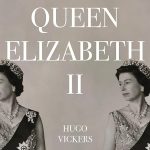
Hugo Vickers has spent sixty years in close proximity to the British royal family – as biographer, commentator, and what might fairly be described as the most informed outside observer of the institution in living memory. The Financial Times has called him the most knowledgeable royal biographer on the planet, which is the kind of endorsement that usually makes me reach for the small print. But in Vickers’ case it is genuinely difficult to dispute. When he writes about Queen Elizabeth II, he is not a journalist reconstructing events from press cuttings and secondhand sources – he is someone who watched, listened, and took careful note over decades in a way almost no other living writer has done.
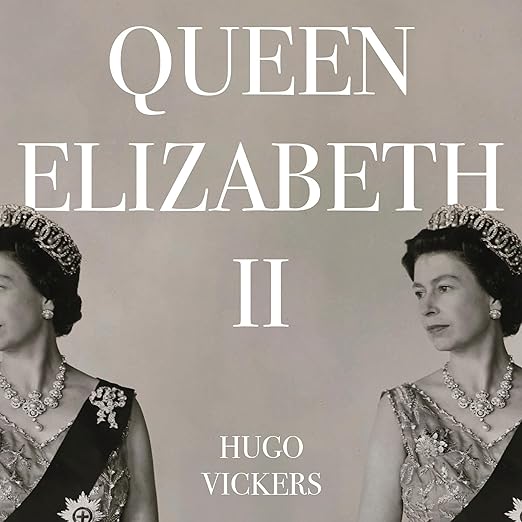
This biography, named a book to watch in 2026 by both the Times and the Telegraph, arrives from Hodder and Stoughton with Vickers himself narrating. The book draws on never-before-seen sources and personal recollections, and Vickers promises to decode what he calls hidden patterns in the late Queen’s behaviour – the ways in which a famously self-contained person signalled her actual feelings within the constraints of a role that required near-permanent public composure. That is a tantalising proposition for anyone who has long wondered what lay beneath one of the most opaque public personas of the twentieth century.
About the Audiobook
Vickers opens with Elizabeth’s childhood – a period he characterises as supremely happy – before tracing the shadow that descended with the death of George V and the abdication of Edward VIII. These events, which arrived in her life before she had turned ten, are presented not as mere historical backdrop but as formative pressures that shaped how a quiet, self-contained child began to understand the particular weight of her destiny. The girl who had expected to live a relatively private aristocratic life – perhaps even to marry a country gentleman and raise horses in peace – instead found her life irrevocably altered by her uncle’s decision to choose love over duty.
The biography follows her through the remarkable 75-year reign that began in 1952, covering decades of political upheaval, family tragedy, and the transformation of Britain and the Commonwealth during which she presided with what Vickers calls steadfast, conciliatory calm. The famous vow she made on her 21st birthday – to dedicate her whole life to the service of the Commonwealth and its peoples – is treated not as rhetorical flourish but as a genuine governing principle that Vickers traces through her specific actions and decisions across seven decades of public life. At 10 hours, the audiobook is substantial without being exhausting, and the richness of Vickers’ access and observation means the material justifies every minute. Published in 2026 by Hodder and Stoughton, this is billed as Vickers’ most incisive work to date – the culmination of six decades of close observation distilled into a single biographical account.
The Narration
Vickers narrating his own biography is not merely appropriate – it is essential to the experience. He speaks in the measured, precise cadences of someone who has spent a lifetime choosing words carefully, and there is an intimacy to the delivery that no hired voice actor could replicate. When he describes a personal recollection – something observed at a formal occasion, a private exchange remembered over years – you feel the weight of a relationship with the subject that no amount of archival research alone could produce. His tone is neither reverential to the point of hagiography nor detached in the manner of academic distance. It occupies a rare middle register that honours the woman as she was while remaining honest about the institutional pressures that shaped her. For a 10-hour biography, that tonal consistency is what holds everything together and what makes it a pleasure to spend time with.
What Readers Say
This title is newly released in 2026 and has not yet accumulated a body of listener reviews on Audible UK. Given the combination of Vickers’ long-established reputation, the endorsements from two of Britain’s most serious newspapers, and the Hodder and Stoughton imprint, it is positioned as a significant biographical event rather than a commemorative publishing exercise produced to meet demand around anniversaries and anniversaries. Readers of Vickers’ previous work – including his biography of Cecil Beaton, his account of the late Queen Mother, and his extended study of royal ceremonial – will come with strong expectations, and on the basis of what this audiobook promises to deliver, those expectations seem well-founded. Reviews will accumulate quickly given the level of public interest in any serious new biography of Elizabeth II.
Who Should Listen?
This is an audiobook for anyone with a serious interest in modern British history, the monarchy, or the inner life of one of the twentieth century’s most enigmatic public figures. It will suit listeners who found other royal biographies either too reverential or too sensationally personal – Vickers operates in neither register. Those who prefer accessible popular biography over dense academic text will find the writing intelligent without being academic. The self-narration makes it particularly suited to listeners who want to feel they are receiving the account from someone with genuine firsthand knowledge. Listen on Audible UK