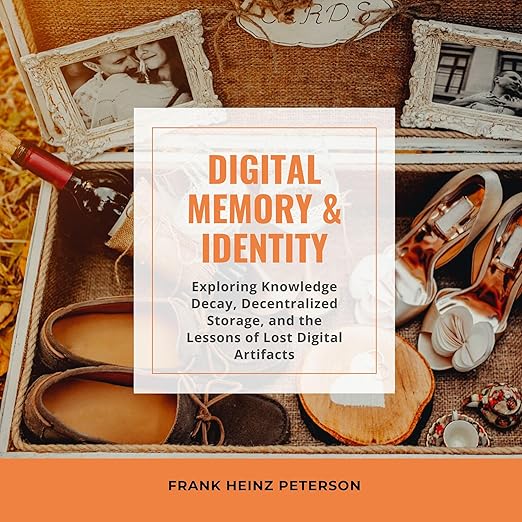
Clara’s Verdict
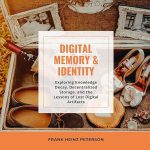
I came to Digital Memory & Identity on a grey weekday afternoon, the kind of day when you find yourself scrolling through old photographs stored somewhere in a cloud folder and wondering, not for the first time, what actually happens to them when a platform decides to close. Frank Heinz Peterson asks exactly that question and pursues it with a seriousness that most technology primers never bother with. At just over an hour, this is a tight, purposeful listen rather than a sprawling survey, and that brevity turns out to be a virtue. Peterson is not interested in frightening you; he is interested in making you think clearly about something most of us prefer to defer.
The central argument, that our collective assumption of digital permanence is an illusion we have agreed to sustain because the alternative is uncomfortable, is not especially new. What makes Peterson’s treatment worthwhile is that he grounds it in concrete phenomena rather than vague anxiety. Bit rot, link rot, platform dependency, obsolete file formats: these are not abstract threats operating at some future distance. They are happening quietly, right now, to files you almost certainly care about.
About the Audiobook
Published in March 2026 by the author, Digital Memory & Identity runs to an hour and ten minutes. That runtime positions it closer to an extended essay than a conventional audiobook, and the writing reflects that register: reflective, analytical, occasionally lyrical when describing what it actually means to lose access to a photograph or a piece of creative work that existed only in one corner of the internet and is now simply gone.
Peterson organises his argument in two movements. The first is diagnostic. He examines how digital storage has come to dominate both personal and cultural memory, then systematically dismantles the assumption that dominance entails durability. The disappearance of GeoCities, the death of Flash-based interactive art, the inaccessibility of early email archives: these are not footnotes in a history of technological progress. They are genuine cultural losses, and Peterson is right to treat them as such. The most affecting passages are those that sit with the psychological dimension of digital loss rather than treating it as merely a technical failure. When a platform closes and takes fifteen years of someone’s creative work with it, something happens to identity that is hard to quantify and very real to the person experiencing it.
The second movement is constructive. Peterson introduces what he calls active digital stewardship, walking listeners through redundancy strategies, open file formats, metadata enrichment, cold storage, and the 3-2-1 backup philosophy in language that is genuinely accessible rather than patronisingly simplified. The 3-2-1 rule, three copies, on two different storage types, one stored off-site, is presented not as an anxiety management technique but as a basic act of care for the things you have made and the memories you want to keep. The shift from diagnosis to remedy feels earned rather than bolted on, and by the close of the audiobook you have something practical to take away.
Peterson also addresses decentralised storage strategies and the broader principle of knowledge decay, the idea that access to information erodes not only through catastrophic events but through the slow accumulation of small technological changes that make previously accessible material progressively harder to reach. That framing, loss as drift rather than as event, is the book’s most interesting contribution.
The Narration
Gordon Webster reads the material with measured authority. His delivery is unhurried, which suits a text that asks you to sit with uncomfortable ideas rather than rush past them. Webster has a slightly formal register that may feel a touch dry to listeners who prefer more expressive narration, but it matches Peterson’s essayistic tone well and keeps the focus on the argument rather than the performance. There is no theatrical embellishment here, and none is needed. The prose is doing its own work, and Webster respects that. For a self-published audiobook with a single narrator and no supporting cast, the production quality is clean and professional.
What Readers Say
No listener reviews are available at the time of writing, which is unsurprising for a March 2026 release with limited catalogue exposure. That absence makes it harder to calibrate expectations around audience response, but the material itself is coherent and the production is solid. If you are the kind of reader who picks up Evgeny Morozov or spends time with Cory Doctorow’s writing on digital rights, you will likely find Peterson operating in the same broad territory, if at a shorter and more introductory length. The book does not have the argumentative depth of those writers, but it has a clarity they sometimes sacrifice in the pursuit of comprehensiveness.
Who Should Listen?
This one is well matched to anyone who keeps important files in cloud storage, runs a small creative practice, or simply spends a significant portion of their life online and has never properly confronted the question of what happens when the platforms they depend on change or disappear. It is not aimed at IT professionals who already have backup regimes in place; it is aimed at the thoughtful non-specialist who suspects there is a problem but has never had it laid out with this kind of clarity. At just over an hour it is a commitment of almost nothing, and the return on that time is a genuinely altered relationship with how you store and protect your own digital life.