Clara’s Verdict
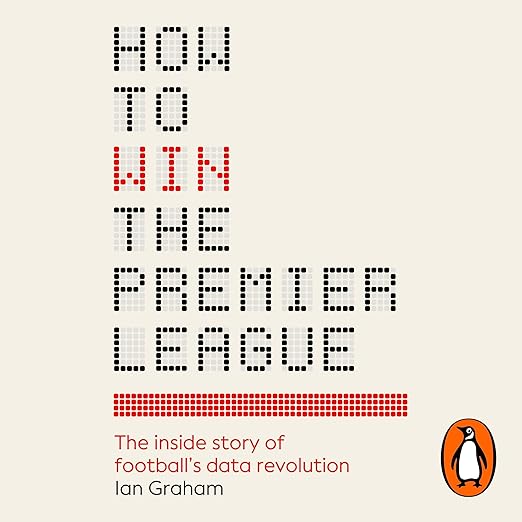
Football books fall into two categories: the ghostwritten memoir that tells you nothing you didn’t read in the tabloids, and the rare work that genuinely changes how you understand the game. Ian Graham’s How to Win the Premier League belongs firmly in the second camp. Graham spent over a decade as Liverpool FC’s Director of Research, the quiet architect of a data revolution that helped shape one of the greatest periods in the club’s modern history – including their first league title in thirty years. This is his account of how it happened, and it is, as Daniel Finkelstein put it in a blurb I don’t usually trust, “the best book on football I have ever read.”
I’m not a diehard football supporter, which may actually be why this book worked so well on me. Graham writes with the precision of a scientist and the storytelling instinct of someone who has spent years convincing sceptics that spreadsheets and pitch intuition are not enemies. By the end, I genuinely saw the game differently. That’s a rare achievement.
About the Audiobook
Graham’s story begins not at Anfield but at Tottenham Hotspur, where he first tried to persuade a football club that data could give them a meaningful competitive edge. The resistance he encountered – from coaches, scouts, managers – reads almost comically now, given how mainstream sports analytics has since become. His move to Liverpool, and the subsequent appointment of Jürgen Klopp in 2015, forms the centrepiece of the book, and Graham is forensically clear about what the data said and what it could not say.
Along the way, he tackles some fascinating questions. What actually constitutes a home advantage, and what did a season played entirely behind closed doors reveal about it? Why might the widely accepted GOAT in football not be who you think? How should a club weigh possession statistics against actual goal probability? The book’s strength is that Graham never loses sight of the human dimension – Klopp’s arrival, Mohamed Salah’s signing, the emotional texture of a title run – while being rigorously honest about the limits of what any model can predict. Published in 2024 by Penguin Audio, this is the Sunday Times Bestseller and Book of the Year according to multiple publications.
The Narration
Daniel Hawksford narrates, and he does the job cleanly and with intelligence. This is the kind of book that could easily become dry – lots of statistics, conceptual explanations, model-building – and Hawksford keeps it moving without oversimplifying. He doesn’t perform the material so much as present it with calm confidence, which suits Graham’s measured, academic-but-accessible tone perfectly. At nine hours and thirty-one minutes, it covers a lot of ground, and the pacing feels right throughout. There are no moments where you feel the author has indulged himself at the listener’s expense.
What Readers Say
How to Win the Premier League has attracted 806 ratings averaging 4.4 out of 5, which is a strong score for a non-fiction sports title. One reviewer described it as providing “a fascinating peek into the strategies and behind-the-scenes intricacies of elite football,” noting in particular its exploration of tactical and mental dimensions. A Manchester United supporter admitted he had been braced for Liverpool-centrism and found his fears “completely unfounded” – the book’s first third contextualises the author’s career before broadening into insights applicable to the sport as a whole. “It has made me watch football in a totally different way,” he wrote. Another reviewer praised it as “food for thought” for anyone interested in transfers and the inner workings of elite clubs.
Who Should Listen?
Obviously recommended for football enthusiasts – especially those interested in the analytics revolution that has transformed the modern game. But this is equally compelling for anyone with an interest in applied statistics, organisational decision-making, or the mechanics of how institutions resist and eventually embrace change. Non-fans who enjoy books about how expertise really works will find plenty here. It is not a Liverpool hagiography; it is a serious, thought-provoking account of one man’s attempt to bring rigorous analysis to a sport that has always prided itself on gut instinct.
Listen to How to Win the Premier League on Audible UK – find it here.