Clara’s Verdict
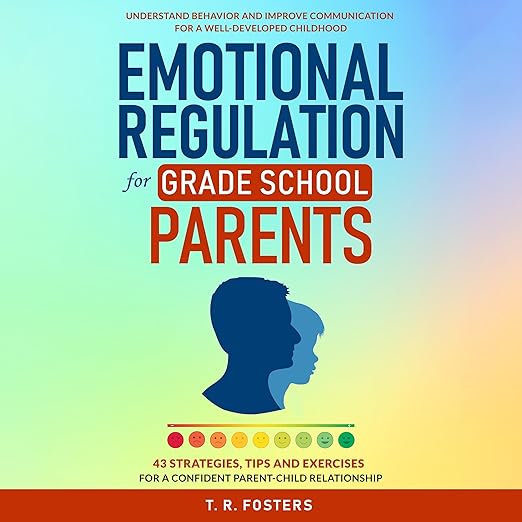
I want to be straightforward about what this audiobook listing hands me and what it withholds. Emotional Regulation for Preschool Parents arrives with a single sentence of publisher copy, no running time, no narrator credit and, at the time of writing, no ratings at all. That is a thin page to make a decision from. What it does give me is a number, and the number turns out to be the most informative thing on it: thirty-nine strategies. Before I hear a word, that tells me the shape of the thing.
My verdict is a conditional one, and I would rather say so than dress up an absence as a recommendation. This is a practical handbook in a genre where practical handbooks either earn their keep in the first week or gather dust, and the deciding factor is almost entirely execution: how granular the strategies are, how they are sequenced, and how well the recording lets you find the one you need at the moment you need it. Those are exactly the things this listing does not let me verify. What follows is my honest read on the promise, the format and the risks.
About the Audiobook
The pitch is narrow and unambiguous. Thirty-nine practical, science-informed strategies aimed at fewer tantrums, at emotional skills built for the long term, and at young children better equipped for the size of their own feelings, with connection and confidence as the pay-off. I would draw your attention to the ordering there, because it is doing real work. Tantrum reduction is the hook, the thing a frayed parent types into a search box at half past six in the evening. But the copy positions the tantrum as the symptom and the emotional skill as the target. That is a coherent position, and to my mind the right way round.
I also note the phrase science-informed rather than evidence-based, and I think the distinction is worth flagging rather than glossing over. Science-informed is a softer claim. It signals a book drawing on developmental psychology and regulation research to build practical advice, not one presenting trial data. That is not a criticism, and for a parent at the kitchen table it may well be the more useful register, but you should know which claim is being made.
The format is where my real interest lies. A thirty-nine strategy book is a reference structure. On a page you would keep it to hand, turn to the relevant entry, and use it as a lookup table for years. Audio flattens a lookup table into a straight line, and that is a genuine loss unless the production compensates. The single thing I would check before buying is whether each strategy carries its own chapter marker, so you can jump to number twenty-two rather than scrubbing through a bar. A parenting handbook you cannot navigate by ear is a parenting handbook you listen to once.
The publisher field simply repeats the author’s name, which tells you T.R. Fosters is publishing this independently. I mention it not as a mark against the book but because it explains the sparse listing, and because independently published audio varies more widely in production quality, in my experience, than trade-published equivalents.
The Narration
No narrator is credited, and on a book of this kind that omission matters more than it would on a novel. Practical parenting audio makes an unusual demand on a voice. You are frequently listening in the car, or with headphones in while tidying, or at an hour when your own patience has run out. The register that works is calm without being soporific, warm without being saccharine, and above all clear enough that an instruction survives being half-heard. Anything performative gets grating fast across repeat listens, and repeat listens are the whole point of a strategy book.
There is a real fork here depending on who reads it. If the author narrates, the recording gains something the genre rewards: a parent’s voice describing a parent’s situation, with the small hesitations that signal lived experience rather than research summary. If a hired professional reads it, you should get cleaner diction and better pacing discipline, at the cost of that intimacy. Both are defensible for this material and I would not argue strongly for either, but you cannot tell from the page which you are getting, and I think that is worth knowing before you commit an evening to it.
Pacing across a numbered sequence is the other technical point. Thirty-nine of anything invites a metronomic delivery where every entry lands with identical emphasis, and by strategy fifteen the listener has stopped distinguishing between them. A good reader varies the weight, slowing for the difficult techniques and moving briskly through the simple ones.
What Readers Say
Here I have nothing to work with, and I am not going to pretend otherwise. There is no rating, no ratings total and no review text attached to this listing. Your decision rests on a single sentence of description, which is exactly the basis I am working from.
I would not read that silence as a verdict. The recording was published at the end of May 2026, the parenting category is crowded, and in my experience independently published titles often take many months to gather their first handful of ratings even when they are good. But an absence of feedback is still an absence, and it shifts the risk onto you. In place of listener testimony, let me offer my own reservations plainly, so you have something to weigh: the thin publisher copy gives no sample of the author’s voice on the page, no runtime means no sense of depth per strategy, and no narrator credit means no way to preview the listening experience. None of those is disqualifying. Together they mean this is a purchase made partly on faith.
Who Should Listen?
Parents and carers of preschool children who want a concrete, do-this-next handbook rather than a theory of childhood are the natural audience, particularly those who already find audio the only format they reliably finish. If your reading time has collapsed into the commute and the washing-up, a strategy-led book is genuinely better suited to your ear than a discursive one, and thirty-nine of them gives you a deep enough bench that a few are likely to fit your particular child.
I would steer away anyone who wants an argued, authored account of emotional development, since this is explicitly built as a toolkit rather than a thesis. I would also steer away anyone who needs to see material on a page to retain it, because a numbered list is precisely the content type that evaporates on a single hearing. And if you make buying decisions on runtime and narrator credit, as many regular audio listeners sensibly do, this page will not satisfy you yet and there is no shame in waiting for it to fill out.
Listen to Emotional Regulation for Preschool Parents free with an Audible trial