Clara’s Verdict
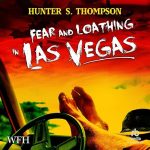
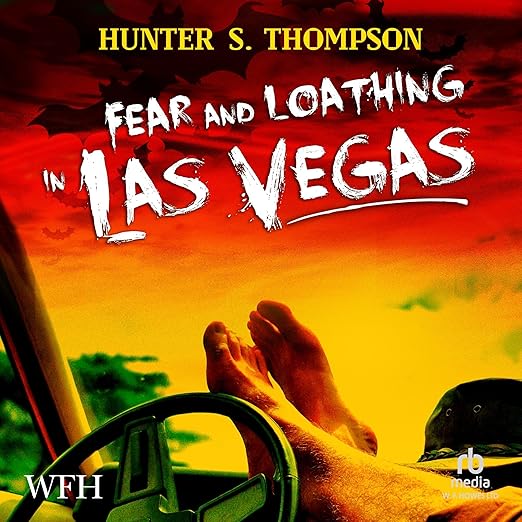
Hunter S. Thompson’s Fear and Loathing in Las Vegas is one of those books that critics and readers have been arguing about since 1971, and the argument has never quite resolved – which is, in some ways, the point. Is it a novel? Journalism? A chemically assisted hallucination rendered in brilliant, self-destructive prose? The answer is yes to all three, and that is precisely what makes it so difficult to categorise and so impossible to forget.
Ron McClarty’s narration for this W. F. Howes edition, running just under six hours, does something interesting: it makes Thompson’s prose feel less like a bravura performance and more like a lived experience. McClarty’s voice is rougher and more world-weary than one might expect, and it suits the material in a way that a slicker, more theatrical reading would not. This is not the histrionic Gonzo of popular mythology – it is something stranger and more melancholy, which is much closer to what Thompson was actually doing.
About the Audiobook
The premise is deceptively simple. Raoul Duke – Thompson’s alter ego – and his attorney Dr Gonzo drive to Las Vegas with a boot full of narcotics, ostensibly to cover a motorcycle race and a national district attorneys’ conference on drug abuse. What follows is a surreal, frequently hilarious, and intermittently disturbing account of two men eating through the American Dream like acid through paper.
The book was Thompson’s response to the end of the 1960s – to the collapse of the counterculture, the brutal suppression of political dissent, the assassination of RFK and King, and the hollowing out of a particular American optimism that he had, against his better judgement, briefly believed in. The excess is not incidental; it is the argument. Duke and Gonzo are not celebrating debauchery – they are conducting a kind of autopsy, and Las Vegas is the body.
Thompson’s sentences are extraordinary: urgent, funny, self-aware, periodically touched with a lyrical beauty that emerges from the chaos with startling effect. The passages about the wave of the counterculture – the feeling that for a moment something genuinely new and humane was possible, and then wasn’t – are among the most affecting pieces of prose he ever wrote. The book is, beneath all the comedy and carnage, a lament.
First published in 1971 from pieces written for Rolling Stone, it remains one of the essential documents of postwar American culture and one of the founding texts of Gonzo journalism.
The Narration
Ron McClarty brings a lived-in, slightly battered quality to the reading that feels right. He doesn’t try to make Duke glamorous – there’s a tiredness in his delivery that captures the hangover-in-real-time quality of the prose, the sense of a man who started something he can’t quite finish or stop. His pacing is well-judged, allowing the funnier passages to breathe without milking them, and the darker moments accumulate weight without being telegraphed. It’s not a showy performance, but for Thompson’s writing, honesty serves better than virtuosity.
What Readers Say
UK Audible listeners currently rate this at 4.2 out of 5 across eleven reviews, and the range of responses is itself illuminating. One listener called it “a classic” and noted frankly that it only works if you’re already in sympathy with the genre. Another described it as “hilarious and irreverent,” following Duke and Gonzo through their succession of convertible cars – “the Red Shark and the White Whale” – with evident affection for the absurdity. A third reviewer was more measured, calling the writing “very good” while finding the overall experience somewhat bleak for their personal reading preferences – an honest assessment that the book itself would probably endorse. One enthusiastic listener noted its place on Amazon’s Top 100 books to read in a lifetime and described Thompson as a journalist whose work Johnny Depp played not once but twice on screen.
Who Should Listen?
This audiobook is for readers who want something that defies easy categorisation – part comedy, part elegy, part polemic, entirely singular. It demands an appetite for darkness and an acceptance that not everything will resolve cleanly or redemptively. If you’ve seen Terry Gilliam’s film adaptation and wondered what the actual prose is like, the answer is: better, stranger, and more formally accomplished than the film suggests, though Depp’s performance captures something of Thompson’s rhythms in ways that are worth experiencing alongside the text.
The audiobook format suits the material in an unexpected way: the spoken quality of Thompson’s prose – his rhythms are those of a man dictating at speed, under pressure – emerges more clearly in reading than on the page. The occasional roughness in McClarty’s delivery only reinforces that sense. It is worth hearing as well as reading.
Not recommended if you prefer your reading experience comfortable. Very much recommended if you don’t.
Find Fear and Loathing in Las Vegas on Audible UK here: Listen on Audible UK