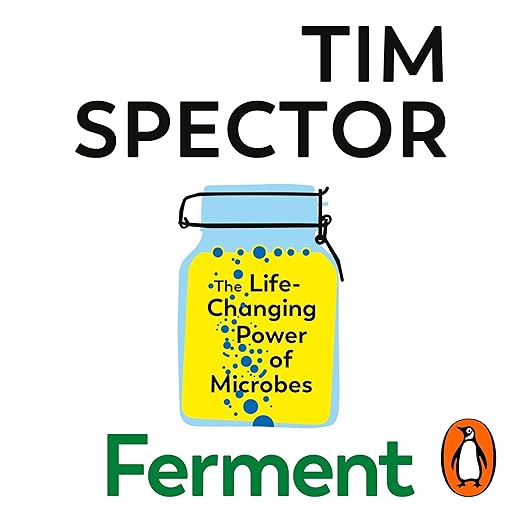
Clara’s Verdict
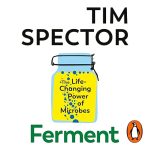
Tim Spector has spent the better part of the past decade translating cutting-edge gut microbiome research into accessible books for general readers, and Ferment is his most focused and practically useful offering yet. At ten hours and fifteen minutes, narrated by Leighton Pugh and published by Vintage Digital, this is an excellent companion to his earlier work – particularly Food for Life – and a genuinely convincing argument for making fermented foods a regular part of your diet.
What Spector does better than almost anyone writing at the intersection of science and lifestyle is hold the complexity of the research without either dumbing it down or drowning the reader in caveats. Fermentation is one of those subjects where the science is more interesting than the fashionable claims made in its name, and Spector knows the difference.
About the Audiobook
Released by Penguin Audio in September 2025, Ferment covers both the science of fermentation – the role of microbes, the transformation of food through bacterial action, the extraordinary diversity of fermented foods across human cultures – and the practical dimensions: how to buy, make, and incorporate fermented foods at home. Spector draws on his own research at King’s College London and on the broader scientific literature to make a case for fermented foods that is based on evidence rather than wellness-industry enthusiasm.
His roster of ferments includes kombucha, kefir, sourdough, miso, kimchi, and coffee – covering both the familiar and the less-known, with an emphasis on demystifying a process that many people find intimidating. The book is not a recipe collection, though recipes appear throughout; it’s more accurately described as a framework for thinking about food preparation in a way that takes the science of gut health seriously.
Spector is also genuinely good on the food industry’s relationship with fermentation – how commercial processes strip out the beneficial microbes that give traditionally fermented foods their value, and how to read labels to distinguish real fermented products from their processed imitations.
The Narration
Leighton Pugh is one of the more reliable narrators working in the science and popular non-fiction space, and he handles Spector’s prose – which is clear and precise but not technical in a way that demands specialist knowledge – with confident ease. The ten-hour runtime contains sections that are denser with research than others, and Pugh paces them thoughtfully, giving the listener time to follow the science without becoming lost. His delivery is warm rather than clinical, which suits a book that is ultimately about the pleasure of food as much as its nutritional dimensions.
What Readers Say
Rated 4.4 out of 5 from 331 reviews. John Brown gave five stars and called it “some good ideas and fermenting tips.” Tania was particularly enthusiastic: “It’s not a recipe book as such although there are recipes. It’s more of an information book on the benefits of fermenting,” giving five stars as someone new to fermentation who found it exactly what they needed to get started. An Amazon Customer gave four stars and praised Spector’s explanations for “taking away the apprehension/fear of fermenting food.” Pip gave five stars for “in-depth information about fermentation and food preparation, backed up by research.” The consistent message is that this is accessible, trustworthy, and practically useful.
Who Should Listen?
Anyone with an interest in gut health, the microbiome, or food preparation will find this essential. It’s particularly suited to listeners who’ve found some of the more evangelical wellness content around fermentation unconvincing and want a scientifically credible account instead. Readers of Spector’s previous books will find this a natural extension of his argument; new listeners will find it an excellent standalone introduction to both his thinking and the science of the gut.
This is the rare health audiobook that will actually change what you keep in your kitchen. Listen to Ferment by Tim Spector on Audible UK – and consider starting your first batch of kefir the week after.