Clara’s Verdict
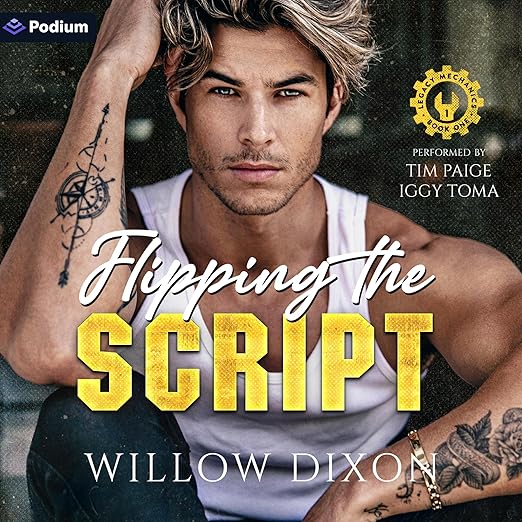
Enemies-to-lovers is one of the most satisfying romance templates when it is executed well, and Willow Dixon consistently executes it well. Flipping the Script – the first book in the Legacy Mechanics series – has the tension, the heat, and the character work to make the premise feel earned rather than formulaic. What sets it apart from similar titles is the attention given to both protagonists’ interior lives: Jesse’s barely-acknowledged need for something beyond his carefully constructed independence, Sebastian’s burnout and the genuine anxiety of having to rebuild a self after the music industry has finished with you at twenty-five. These are recognisably adult concerns wrapped in a romance that is genuinely fun to spend time with.
MM romance is a category that has grown significantly in quality and ambition over the past decade, and Dixon is among the writers who have contributed most to that development. The Legacy Mechanics world – introduced here – has enough texture and enough interesting secondary characters to sustain a series, and the first instalment does what a good series opener should: it tells a complete and satisfying story while leaving you curious about what comes next.
About the Audiobook
Jesse has built the life he wanted: a job he loves, a chosen family of friends, the freedom of being single without the loneliness of isolation. Then Sebastian – his childhood rival, seven years older in experience if not in age, back from a music career he has abruptly retired from – moves home. The old rivalry is immediate and familiar. What is less familiar is the something else that has appeared beneath it: a tension that neither of them is entirely prepared for, and that moves from argument to first kiss without either quite meaning it to.
Sebastian’s burnout is one of the novel’s more interesting elements. The experience of being publicly known and privately lost – of having a persona that the world expects you to maintain while you have no idea who you actually are beneath it – gives his character a complexity that distinguishes him from the standard rivals-to-lovers archetype. Jesse’s own resistance to vulnerability, and the way the antagonism between them gradually becomes a space where honesty is possible, is the emotional engine of the book. Dixon handles the escalation with genuine skill.
The novel delivers all the pleasures of forced proximity, hurt/comfort, and found family dynamics that characterise the genre at its best, and the heat is well-placed rather than perfunctory. This works as a complete standalone while clearly belonging to a world worth revisiting.
The found-family element – the group of friends around Jesse who have become his real family, and the gradual inclusion of Sebastian into that circle – is handled with warmth and without sentimentality. Dixon understands that found families in romance fiction work best when they feel like genuinely independent characters rather than supporting cast, and the Legacy Mechanics world is populated with people you want to spend more time with. That is one of the marks of a series with real legs.
The Narration
Iggy Toma narrates with an energy that handles the dual-perspective structure cleanly, differentiating Jesse and Sebastian’s voices enough to keep the competing narratives distinct without over-performing the distinction. The banter and antagonism of the early chapters requires good comic timing, which Toma delivers – the exchanges between the two protagonists are among the more enjoyable moments of the listen. At eight hours and forty minutes, this is a satisfying length for the format: substantial enough to develop the relationship properly, tight enough not to overstay.
What Readers Say
Rated 4.3 out of 5, with most UK reviewers enthusiastic. One called the transformation “magnificent” and praised both characters as “incredibly well-realised throughout.” Another appreciated the slow-build tension: “I was just waiting for the explosion, and then watching the pushing and pulling between Jesse and Sebastian was excellent.” A more measured response found the transition from enemies to lovers slightly rushed, which is a fair observation that other readers did not share. The majority verdict, though, is that this is the enemies-to-lovers done right: high tension, well-earned heat, and two people worth following into a second book.
Who Should Listen?
For fans of MM romance, particularly the enemies-to-lovers subgenre. If you enjoy low-to-moderate angst, character-driven contemporary romance with genuine wit and well-written heat, this is an excellent choice. Readers who have enjoyed other Willow Dixon titles will find this immediately recognisable in the best way. The Legacy Mechanics series setting – with its found-family dynamics and recurring secondary characters – makes the subsequent volumes worth seeking out. An accessible and satisfying start to a promising series, and evidence that Dixon is a writer worth following wherever the Legacy Mechanics world takes her next.