Clara’s Verdict
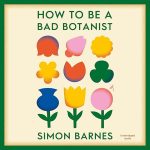
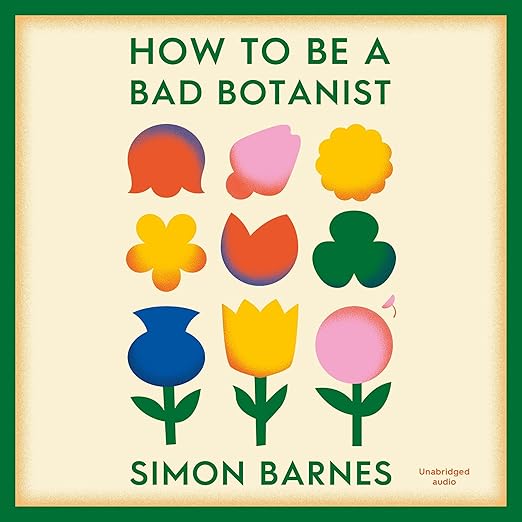
Simon Barnes has made a career out of confessing ignorance and then gently demonstrating that the ignorance was never quite as total as advertised. His earlier book on birdwatching did it beautifully, and How to Be a Bad Botanist does it again, this time turning the same generous, self-mocking eye towards the plant world. Waterstones named it one of their best nature writing books of 2024, and having spent seven and a half hours in Barnes’s company on my morning walks, I can see why. This is not a field guide. It’s an argument – quiet, persuasive, and rather lovely – that the natural world is already available to you, if you’d only stop believing you’re not qualified to look at it.
About the Audiobook
Barnes’s starting point is disarming: he thought he knew nothing about plants. Birds were his thing; plants were merely the background against which birds happened. Then, staring at some sea kale clinging to a shingle beach, something shifted. It all begins with plants. Every habitat, every ecosystem, every bird perch – it starts there.
What follows is part personal essay, part gentle tutorial, part seasonal journal. Barnes takes you through the year, noticing things – a hedgerow in flower, the difference between a willow and a poplar, the extraordinary persistence of certain weeds on urban pavements – and in doing so, he quietly recalibrates what you think observation means. He’s not asking you to memorise Latin binomials or carry a hand lens. He’s asking you to look, and to take some pleasure in what you find.
There is humour throughout, including a delightful extended riff on why grass is actually fascinating and why most people have decided it isn’t. The book was published by Simon & Schuster Audio UK and runs to a generous seven and a half hours – long enough to feel substantial, short enough never to overstay its welcome.
What Barnes does particularly well is make the case that expertise is not the prerequisite for pleasure. You do not need to be able to identify every grass to enjoy a meadow. You do not need Latin to delight in a hedgerow. The book’s title is its thesis: being a bad botanist – knowing very little, noticing a few things, finding them interesting – is genuinely better than being no botanist at all. Waterstones chose this for their best nature writing list of 2024, and it sits comfortably in that tradition of British nature writing that treats observation as both intellectual and spiritual practice.
The Narration
Barnes narrates his own book, which is the only sensible decision for writing this personal. His is an unhurried, slightly professorial voice – the kind that suggests he’s thought carefully about every sentence, then decided the best delivery is one that sounds like he hasn’t. There’s a rhythm to it that suits the subject: measured, observational, occasionally brightened by genuine delight. He’s particularly good at the comic digressions, which land with the kind of timing that suggests he has been telling these stories at dinner parties for years. One reviewer did flag a possible botanical error in passing – marsh mallow apparently confused for marsh marigold – but it didn’t derail the experience for most.
Barnes also writes well about failure – the plants he completely misidentified, the seasons he spent walking past things without any idea what they were – and this self-deprecating streak is the engine of the book’s accessibility. He is, genuinely, a bad botanist. He’s just an enthusiastic and increasingly attentive one, and that combination turns out to be more interesting, and more useful, than expertise presented from the outside looking in.
What Readers Say
How to Be a Bad Botanist holds a rating of 4.4 out of 5 from 53 listeners. The majority response is warm: Ian Wilson described it as “a little gem of a beginner’s guide,” and Anthony called it “a lovely way to look at and explain plants in all manners.” Pollywolly called it “great and very down to earth,” which is precisely the right adjective.
There is a dissenting voice – one listener found it “not very interesting” and gave up early – but this is the kind of book that depends entirely on what you bring to it. If you find the natural world interesting in principle but have always felt unqualified to engage with the plant side of it, Barnes will win you over. If you’re looking for rapid information delivery, this probably isn’t your book.
Who Should Listen?
Perfect for walkers, gardeners who don’t take themselves too seriously, birdwatchers curious about the bigger picture, and anyone who has ever thought “I really should know what that tree is called.” It’s also an excellent choice for people who loved H Is for Hawk or The Wild Remedy and are looking for something in the same register – thoughtful, personal, rooted in close attention to the world outside.
Start listening to How to Be a Bad Botanist on Audible UK – find it here and let Barnes convince you that you’re already a botanist.