Clara’s Verdict
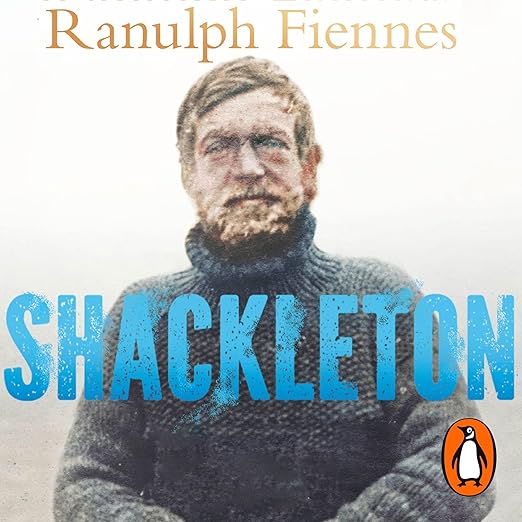
There is a specific kind of biographical authority that comes only from shared experience, and Ranulph Fiennes writing about Ernest Shackleton is the most compelling example I can think of in recent popular history. Fiennes holds the Guinness World Records designation as the world’s greatest living explorer. He has crossed Antarctica. He knows, in a way that no archive-based biographer can quite replicate, what prolonged cold does to a mind, what weeks of extreme physical deprivation do to the bonds between people under pressure, and what it means to make consequential leadership decisions when the margin for error has reduced to nothing. When he writes about the men trapped on the ice after Endurance was crushed, the prose carries weight that is simultaneously biographical and autobiographical.
The Shackleton story has also become something of a corporate mythology in recent decades, with the Endurance expedition recycled in leadership seminars and business books as a template for resilience and team management under pressure. Fiennes is aware of this reception history and is quietly sceptical of it. The book’s value for a contemporary reader is partly in its willingness to complicate the clean leadership narrative that the myth has produced, to show a man who was genuinely heroic in specific and extraordinary circumstances but who also had weaknesses and contradictions that the hagiographic tradition has preferred to obscure.
What this book does that the other Shackleton accounts largely have not is separate the man from the myth he has become. The Endurance story has been told so many times, and so reverently, that it risks calcifying into a corporate leadership parable, a PowerPoint on resilience dressed in fur-lined boots. Fiennes has both the standing and the inclination to look at Shackleton more plainly, acknowledging the complications in his character and the tarnish on the gold alongside the genuine heroism, and the resulting portrait is more interesting and more honest than the hagiographies that preceded it.
The reviewer fatgazbo noted, with some irritation, that Fiennes makes constant references back to his own experiences. This is occasionally true, and occasionally distracting, but it is also inseparable from the book’s central premise: that you write best about what you have also lived. The self-references are the authority, not a digression from it.
About the Audiobook
Published by Penguin Audio in September 2021, the audiobook runs for 11 hours and 51 minutes and carries a rating of 4.7 from a small reviewer sample on Audible UK. The narrator is Jonathan Keeble, a respected voice in British non-fiction audio. The relatively compressed runtime for a full biography reflects Fiennes’s decision to write with selection and focus rather than exhaustive chronology; this is a considered reappraisal rather than a definitive account of every expedition detail. Readers who want the complete blow-by-blow narrative of the Endurance crossing will find Alfred Lansing’s Endurance an essential companion read.
The Narration
Jonathan Keeble brings the controlled authority that British non-fiction audio benefits from, without sacrificing the emotional register that Fiennes’s personal asides require. Rookfarn noted the biography never becomes heavy going, and a significant part of that lightness comes from how Keeble manages the pacing: he does not linger on the heroic set pieces longer than the text warrants, and he handles Fiennes’s dry self-comparisons with a deftness that prevents them from feeling like intrusions. At under twelve hours, the listen moves well, and the combination of Fiennes’s prose and Keeble’s delivery makes the Antarctic passages feel genuinely immediate despite the century of distance between the events and the recording.
What Readers Say
Rookfarn gave five stars and found this account preferable to both Shackleton’s own South and other existing biographies, praising its balance between the famous expeditions and the fuller life context. Fatgazbo offered four stars and a sharp observation about the frequency of Fiennes’s self-references, but ultimately acknowledged the unique qualification he brings. Stumps called it a masterly job of lauding Shackleton’s feats of endurance while being honest enough to balance his heroic status. Huw Jones praised the extra information filling gaps in other popular accounts. The consensus is of a biography that does something specific and does it well.
The small reviewer sample on Audible UK for a book of this quality and provenance is almost certainly a function of the UK platform’s representation of the biography readership rather than a reflection of limited listener engagement. Fiennes’s biographies have substantial readerships in print, and the audio version has been available since 2021, suggesting a listener base considerably larger than the Audible UK review count implies. The quality of the reviews available is high, which is more informative than a large sample of brief five-star ratings.
Who Should Listen?
Ideal for listeners who have some existing familiarity with the Shackleton story and want a more complex, critically engaged portrait. Those coming to the subject for the first time might pair this with Lansing’s Endurance for the full chronological account, then use Fiennes as the interpretive and contextual layer. The 12-hour runtime is manageable across a week of commuting. Listeners who found other polar exploration biographies too reverential will appreciate the more measured assessment Fiennes provides, and those who are already Fiennes readers will find his characteristic voice in full effect throughout. Listen on Audible UK