Clara’s Verdict
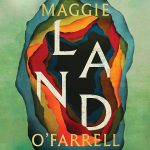
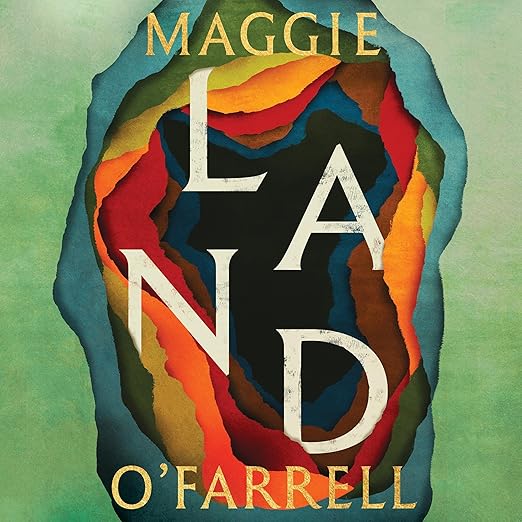
A man and his ten-year-old son are mapping the west of Ireland for the Ordnance Survey in 1865, in a country the Great Hunger has recently emptied, and the father intends those maps to stand as a record of the disaster. That is the premise of Land, and if Maggie O’Farrell had done nothing more than write that book well it would have been enough. She has done something considerably stranger, and I am not certain the listing prepares you for it.
At close to seventeen hours this is a serious commitment, and it is worth every one of them, though I would want any listener to know before starting that the tight father-and-son story described in the synopsis turns out to be the opening movement of something much wider. Dane Whyte O’Hara narrates, and the recording is the best argument I can make for hearing this novel rather than reading it. It is still charting on Audible UK at present, two months after publication.
About the Audiobook
Tinder Press published the audio on 2 June 2026. Sixteen hours and forty-seven minutes, narrated by Dane Whyte O’Hara. The year is 1865. Tomás has his unwilling son Liam beside him on the great project to map the whole of Ireland, a task made harder by a landscape and a population still marked by famine. The soldiers supervising the survey may arrive at any point, and they will expect finished work. Then something Tomás meets in a copse knocks him off course completely, and, in the listing’s words, his life “and those of his family, will never be the same again”. Liam, aged ten, is left terrified by the change in his taciturn father and facing the question of how to finish the survey and get the pair of them home.
That is where the listing stops, its synopsis breaking off just as it begins to describe the book as a story of buried treasure and overlapping something. The something matters. Readers who have finished it describe a novel moving across far more than one generation, with what one calls “time shifting across millennia” and a large cast to go with it. I raise this not as a criticism of the book, which earns its scope, but because a listener choosing between a tense two-hander and a multi-generational novel about a place ought to know which one they are committing nearly seventeen hours to. It is the second.
The praise attached to the listing comes from serious quarters. Ann Patchett is quoted saying “Maggie O’Farrell is a miracle in every sense”, and The Times offers a line I like rather more than most blurbs: “Maggie O’Farrell takes up a bow and arrow and aims right at the human heart”. The epigraph does the same work in fewer words: “You will never understand how the land remembers, how deep the roots grow”.
The Narration
Dane Whyte O’Hara has an assignment with two halves and gets both of them. The first is endurance and shape. A novel of this length, shifting register and period as it goes, needs a narrator who can signal a change of era without announcing it, and who can hold a consistent tone across sessions that will be days apart for most listeners.
The second demand is particular to this book. Land is about a mapping project, which makes it a book about names, and names in the mouth are not the same as names on the page. Hearing Irish place names spoken rather than skimmed changes what the novel’s central act feels like, because there is a difference between reading a word and hearing what it costs a person to say it aloud. O’Hara reads Tomás quietly, which is brave in a book where the father’s silence is effectively the plot, and his Liam is a properly ten-year-old ten-year-old, frightened and practical, with none of the piping-child voice that ruins so many recordings of this kind. He is weakest in the crowded scenes, where the differentiation between minor voices thins out. It matters less than it might, because O’Farrell’s real interest is interior throughout.
What Readers Say
More than five and a half thousand ratings behind an average of 4.5 is a strong return for literary fiction, where readers are generally stingier than genre audiences. The enthusiasm in the written responses is notably unhedged. Scot opens with “This will become a classic novel.” and praises a book in which “the storyline remains very believable and reaches all the high notes of emotion”. Susi Lennox is more precise about what the novel is actually doing, listing “Compelling narratives, elaborately interwoven, brilliant prose, potent landscapes”, and characters who remain present long after the last page.
The most useful review is the four-star one. M. R. J. Murphy, who read Woodham-Smith’s history of the famine as a teenager, writes this:
Those of us boomers whose surname marks us out as Irish will weep at this book.
He then makes the one substantial criticism worth weighing, that “it strains belief that one family could have suffered so many inter-disconnecting disasters”, before concluding that the novel nevertheless goes a long way towards explaining the period. That is a generous and accurate place to land. If you have a low tolerance for accumulated catastrophe within a single family line, consider it your warning.
Who Should Listen?
Sixteen and three quarter hours is a season of listening rather than a weekend, and Land suits people who want to be somewhere for a long time. If you read historical fiction for the texture of a place and a period rather than for incident, if you have any connection at all to Irish family history, or if you simply want to spend a fortnight inside prose this good, start it tonight. The audio edition has a specific advantage in that O’Farrell’s rhythms sit close to speech, and O’Hara brings out a music in them that is easy to skim past on the page.
Two honest cautions. Listeners coming for the taut father-and-son survival story the synopsis promises will find that story delivered and then widened considerably, and some will feel the later stretches lose the grip of the opening. And the famine material is not softened. The misery accumulates and then keeps accumulating. Anyone who wants their historical fiction to console them should choose something else entirely.