Clara’s Verdict
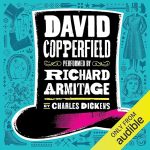
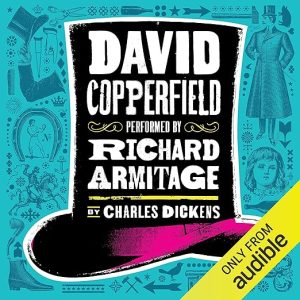
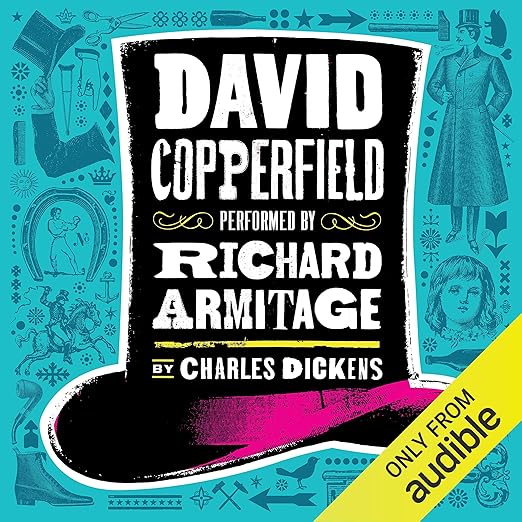
There is a case to be made – Virginia Woolf made it – that David Copperfield is the greatest of Dickens’ novels. I wouldn’t argue with her, though I’d note that the competition is extraordinarily stiff. What I would argue, without qualification, is that Richard Armitage’s performance of this 36-hour audiobook is among the finest pieces of literary narration I’ve encountered in twelve years of reviewing audiobooks. Armitage inhabits Dickens’ world with a completeness that goes beyond mere character differentiation – he seems to understand the book from the inside, and that understanding comes through in every scene.
This is the audiobook for which you clear your schedule. Rated 4.5 out of 5 from listeners, it is precisely the kind of production that demonstrates what the format can do at its best.
About the Audiobook
David Copperfield, first published in serial form between 1849 and 1850, is Dickens’ most autobiographical novel – he described it as his “favourite child.” It follows its narrator from birth through childhood trauma, adolescent adventures, professional struggles, and multiple romantic disappointments to a hard-won maturity. Along the way, it gives us some of the most vivid supporting characters in the English literary canon: the grotesque Uriah Heep, whose unctuous malice Dickens renders with barely concealed fury; the magnificent Mr Micawber, eternal optimist and chronic debtor; the ferocious Aunt Betsey Trotwood; and the fragile, complicated Agnes Wickfield.
The novel is a bildungsroman in the grandest tradition, but it is also something more precise than that: a sustained meditation on memory, self-construction, and the long shadow of childhood experience. Dickens was writing from a place of genuine pain – his own childhood miseries at the blacking factory inform David’s suffering at Murdstone and Grinby’s – and that autobiographical pressure gives the novel an emotional rawness that his purely satirical works sometimes lack.
At 36 hours and 30 minutes, this is a commitment of the kind that audiobooks make easier. The episodic structure – inherited from the original serial publication – means it works well in chapters, and the variety of tone (from high comedy to genuine tragedy) keeps the energy alive across the considerable runtime.
The Narration
Richard Armitage – known to many listeners from his role in The Hobbit and from his earlier Audible Audiobook of the Year performance of Hamlet, Prince of Denmark: A Novel – brings something extraordinary to this text. His voice has the range and control to differentiate Dickens’ extensive cast while maintaining a consistent narrative voice for David himself, and he uses that range with intelligence.
Uriah Heep, rendered in a particular register that is simultaneously obsequious and sinister, is genuinely uncomfortable to listen to – which is exactly right. Micawber gets the grandiloquence he deserves. Peggotty is warm and solid. The younger David, recalling his childhood, is vulnerable without being precious. These are not caricatures; they are characters.
The sustained quality across thirty-six hours is, frankly, extraordinary.
What Readers Say
Rated 4.5 out of 5 from listener reviews. “Absolutely un-put-downable,” wrote one UK listener who noted that the novel addresses “very gritty issues in a weirdly uplifting way.” Another described it as a work that improves vocabulary while being deeply entertaining – a combination that feels characteristically Dickensian.
One reviewer provided a detailed summary of the opening chapters, clearly charmed by Aunt Betsey’s entrance. Another simply: “Love it.” Sometimes brevity is its own eloquence.
The occasional review notes this specific Audible edition’s provenance – Armitage’s name is the draw, and listeners consistently confirm the performance lives up to its reputation.
Who Should Listen?
Anyone with an interest in Victorian literature who has been daunted by the prospect of 36 hours with Dickens: this is your solution. Armitage’s performance transforms what might feel like an obligation into a genuine pleasure. Readers who enjoyed Dickens in other formats will find this a revelation – the performative, theatrical quality of his prose is something audio captures uniquely well.
Also strongly recommended for those who came to Dickens via adaptations (the 2019 film, the various TV versions) and want to experience the source material. Pair with Great Expectations or Bleak House for a deeper dive into the author’s range.
Available on Audible UK. Also check Kobo and Scribd.