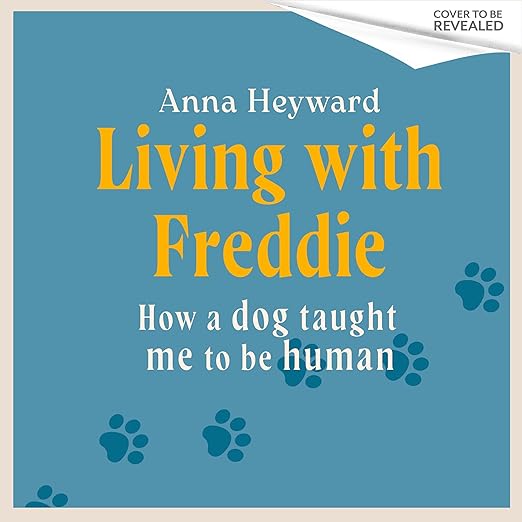
Clara’s Verdict
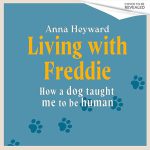
This one is not out yet. Living with Freddie is dated 20 August 2026, so as I write there are no ratings, no listener reviews and no independent verdict of any kind, and everything below should be read with that in mind. What there is instead is a body of advance praise from four named writers, and a premise sharp enough that I can tell you fairly precisely who it will suit.
Anna Heyward adopted a rescued Italian greyhound and discovered that he could not be left alone. What follows, on the evidence of the copy, is not really the story of how she fixed him. It is the story of how far she was prepared to go, and of what changed in her while she was going. Ten hours is a substantial commitment for a memoir built around a single relationship, and the length is the first thing I would want a prospective listener to think about, because it signals a book that intends to sit with its subject rather than move through it.
About the Audiobook
The framing is what lifts this above the considerable pile of books about beloved dogs. Heyward is described as a New Yorker writer and an animal behaviour expert, and the memoir is pitched as an attempt to see the world through a dog’s eyes rather than to describe a dog from the outside. That is a genuinely different proposition, and it is where the expertise earns its place: the book is offering an argument about perception alongside the personal story.
Freddie’s problem is separation anxiety, and the publisher is direct about the shape it took. He was unable to be left alone. The copy notes, pointedly, that some people would have given up and returned the dog to the rescue centre. Heyward instead became obsessed with helping him, and the cost is stated plainly: she put her relationship, her social life and her job at risk. That is the spine of the book, and it is a more uncomfortable spine than the cover of a dog memoir usually promises.
The transformation runs in the expected direction and then doubles back. As Anna observes Freddie’s behaviour, she begins to change. The publisher’s description breaks off mid-sentence at exactly that turn, which is unhelpfully placed, but the direction of travel is clear: this is a book about what sustained close attention to another creature does to the person doing the attending.
Ten hours suggests a properly worked memoir rather than a slim gift book, with room for the behavioural material to be explained rather than gestured at. My reservation, stated in advance since nobody can yet confirm or dispel it, is that a single-relationship narrative at that length has to find real variation to avoid repetition, and books in this category do not always manage it.
The Narration
The reader has not been announced, which is ordinary this far ahead of publication and still a real gap for a book of this type. Memoir is the genre where the identity of the reader changes the product most fundamentally, and the choice here carries particular weight because the material is confessional. Heyward is describing having risked her relationship and her employment for a dog, which requires a reader who can deliver that without either apologising for it or presenting it as heroic.
If the author reads it herself, the book gains the thing this genre trades on, which is the audible sense of someone telling you what happened to them. There is a specific advantage in her case: the memoir mixes personal narrative with expert explanation of animal behaviour, and an author who genuinely holds that expertise moves between the two registers without the seam showing. A professional narrator handles that transition as a change of gear. The person who knows the material simply carries on talking.
If a professional is engaged instead, look for restraint and a resistance to anthropomorphic performance. The greatest risk in dog writing read aloud is the voice that turns fond into sentimental, and a book concerned with seeing accurately rather than projecting would be undone by a reader who projects. The length also demands stamina in a narrow emotional band. If you have the patience, wait for the credit before deciding.
What Readers Say
There is no listener feedback at all, and no rating, because nobody outside the publishing house has heard this. Anyone claiming to know how it lands is guessing. What the listing does carry is advance praise, and I want to be clear about what that is: publisher-supplied endorsement from fellow writers, solicited before publication, which is a different category of evidence from a reader’s verdict and should be weighed accordingly.
That said, the names are worth something and the quotations are specific rather than generic. Elif Batuman describes a touching memoir that leaves “the reader feeling enlarged and enlightened”. Monica Ali calls it erudite and deeply compassionate, and goes further than the others in describing “a profound meditation on our relationship with dogs that will change the way you think and feel about them”, extending that to how you perceive yourself. Tony Parsons, who has written on this subject himself, praises a heartfelt tribute to “the bond between humans and our dogs”.
My favourite of the four is Tony Robinson’s, because it identifies the actual gap in the market: this is “The perfect book for those of us who constantly gaze into the eyes of our beloved dog and don’t really have a clue what we’re seeing”. That is the promise the book is making, and it is a testable one. In place of the listener testimony that does not yet exist, here is my own reservation: advance praise clusters around a book’s ambitions rather than its execution, and none of these four is in a position to tell you whether ten hours of it sustains.
Who Should Listen?
Dog owners who have lived with an anxious animal will recognise the situation immediately, and they are the readers most likely to feel it was written for them. Beyond that obvious group, it should appeal to anyone drawn to memoirs where an obsession reorganises a life, and to readers interested in animal cognition who want the science delivered inside a story rather than in a textbook. The literary endorsements suggest prose worth listening to for its own sake.
Anyone wanting a practical guide to treating separation anxiety in their own dog should look for a training manual, because this is a memoir about one particular animal. Readers who find accounts of animal distress difficult should know that Freddie’s condition is the subject rather than the setup. And a general caution about buying ahead of publication: with no narrator named and no independent response, you would be committing on a description and four endorsements. That may well be enough. It is worth knowing it is what you are doing.