Clara’s Verdict
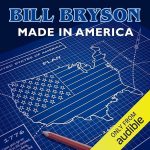
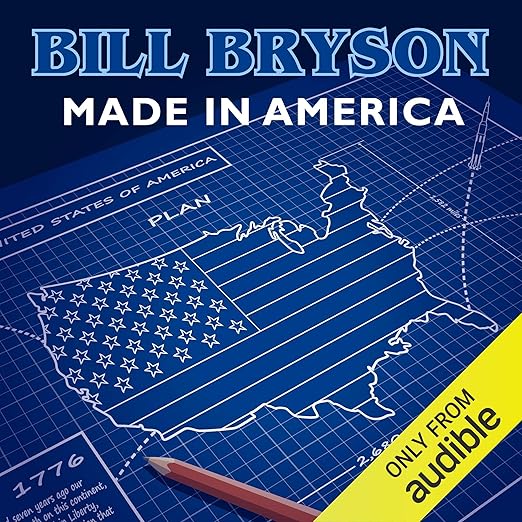
Bill Bryson occupies a rare position in popular nonfiction: genuinely funny, genuinely informative, and possessed of a prose style that makes even the etymology of a breakfast cereal brand feel like urgent reading. Made in America is one of his early works, originally published in 1994, and it has dated in ways that are sometimes illuminating and sometimes merely revealing of its era. The scholarship is impressive; the wit is intact.
The central project is ambitious: a history of American English as a lens onto American cultural history. One reviewer described it as doing for language what A Short History of Nearly Everything did for science, and that comparison holds. The reach is encyclopaedic; the treatment is consistently readable.
About the Audiobook
Released through Audible Studios and running 18 hours and 10 minutes, this edition includes a special introduction written for the audiobook and read by Bryson himself, a detail worth noting for those who want to hear his own voice frame the work. The book is constructed thematically rather than chronologically: Hollywood’s origins, the Wild West myth, American food history, the G-string’s curious provenance, the origins of Kellogg’s cornflakes. Each chapter is essentially a long, deeply researched essay, and the cumulative effect is a portrait of American culture as seen through the lens of its language.
The Narration
William Roberts narrates the main text, handling 18 hours of dense cultural history with reliable consistency. For a book that ranges across American vernacular, slang, advertising jargon, and regional dialect history, the narrator’s job requires both tonal range and restraint. Roberts manages this competently throughout, though he lacks the distinctive personality that would make the performance memorable in its own right beyond the quality of the material itself.
What Readers Say
Four of five reviews rate this four or five stars. The enthusiasts praise exactly what you would expect: the range, the humour, the illuminating oddness of the facts gathered. The one dissenting voice, from listener Deepak, makes a fair point: this is not written in as much of a wry style as many of Bryson’s books and can feel a little dry. This is a genuine observation: Made in America is more scholarly in register than Notes from a Small Island or A Walk in the Woods, and those expecting the breezy travel-memoir Bryson may find this more demanding.
Who Should Listen?
Committed Bryson readers who want the full range of his work, and anyone with a genuine interest in the history of language and American cultural development. This is not the best Bryson to start with if you are new to him: begin with Notes from a Small Island or A Short History of Nearly Everything first. At 18 hours, the patience it demands is considerable, but the chapter on junk food and American consumption patterns in particular reads now with an almost prophetic quality.