Clara’s Verdict
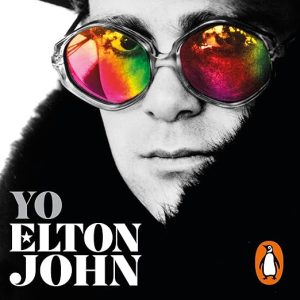
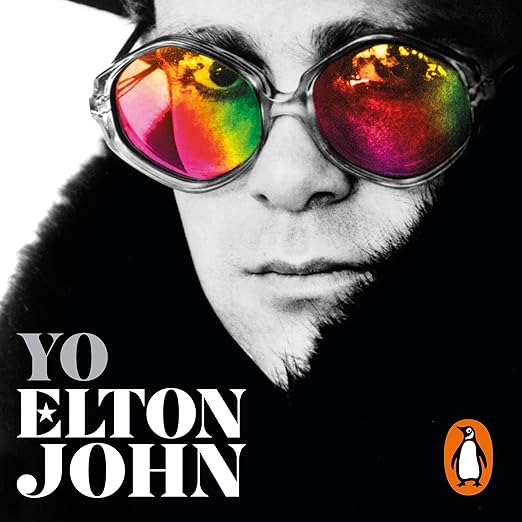
Celebrity memoirs are usually exercises in careful reputation management; I edited enough of them in my publishing years to know the smell. Me is the rarer beast: a superstar with nothing left to hide and a genuine sense of humour about the wreckage. Elton John’s first and only official autobiography covers the life behind the smash-hit film Rocketman with more candour and considerably better jokes than cinema allows, and the audio casting is a masterstroke: Taron Egerton, star of that very film, reads the book, while Elton himself takes the introduction, a new chapter and the epilogue. The Daily Mail called it ‘the rock memoir of the decade’, and for once the cover quote feels like an understatement. Outrageous, moving and never once dull, this is how pop history ought to be told.
About the Audiobook
The arc is extraordinary even by pop standards. Christened Reginald Dwight, he was a shy boy in Buddy Holly glasses growing up in the London suburb of Pinner and dreaming of pop stardom. By twenty-three he was playing his first American gig in bright yellow dungarees, a star-spangled T-shirt and boots with wings, in front of an audience that plainly did not know what had hit it. The music world, as the publisher notes, was never the same again.
What follows has drama to spare: the early rejections endured with songwriting partner Bernie Taupin, the spinning out of control as a chart-topping superstar, a half-hearted attempt to drown himself in his Los Angeles swimming pool, disco-dancing with the Queen, and friendships with John Lennon, Freddie Mercury and George Michael. Running underneath it all is the drug addiction he kept hidden for over a decade. The spine of the book, though, is what came after: getting clean and changing his life, setting up his AIDS Foundation, finding love with David Furnish and becoming a father. It is the honesty about both halves, the chaos and the recovery, that lifts Me above the standard rock confessional and gives the later chapters their unexpected tenderness.
The Narration
Taron Egerton reads the twelve hours and twenty-nine minutes, and the logic of the casting pays off from the first chapter. Having lived inside this story on screen, Egerton knows exactly where the comedy sits in the material and where the bruises are, and he moves between the two without ever grinding the gears. The gossipy set pieces fizz along; the darker stretches are given their full weight without being wallowed in. It is a performance with real affection in it, which suits a book this cheerfully self-mocking.
The framing is the icing: Elton John himself reads the introduction, a new chapter and the epilogue, so the story is handed over and then taken back by the man who lived it, which gives the whole production an official seal that no performance alone could manage. At twelve and a half hours the commitment is moderate for a life this crowded, and the pacing never once lets it drag.
What Readers Say
The headline figures are strong: a 4.7 average from 28 ratings, which for a memoir this widely discussed suggests it satisfies both the devoted and the casually curious. The most detailed response came from a fan who had followed him since the seventies and already seen Rocketman, yet still found fresh information and remarkable anecdotes throughout. They described the book as unsparingly honest, hugely entertaining and frequently laugh-out-loud funny, poignant in places, and were clearly delighted to find him settled and content in the present day; by their own account they raced through it with renewed admiration for a unique career. Most tellingly, they felt his voice seemed to lift straight off the page, everything shared openly, the good and the bad alike.
The briefer responses strike the same warm note, including one buyer whose daughter was thrilled to receive it as a Christmas present. For a book of this profile, a 4.7 backed by that sort of written enthusiasm is about as good as the category gets.
Who Should Listen?
Anyone who owns an Elton John record is the easy answer, but the net stretches much wider. If Rocketman left you wanting the unvarnished version, this is precisely that, with more detail and better punchlines. It rewards listeners who enjoy music history with famous names wandering through every chapter, and it has genuine value as a recovery story, because the account of getting clean after a decade of hidden addiction is candid enough to be useful rather than merely dramatic. Those who prefer their icons mysterious should stay away; after these twelve and a half hours very little mystery remains, and gloriously so. Everyone else should move it straight up the queue.
Listen to Me free with an Audible trial and hear one of pop’s great survivors tell the story entirely on his own terms.