Clara’s Verdict
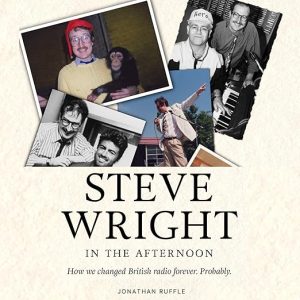
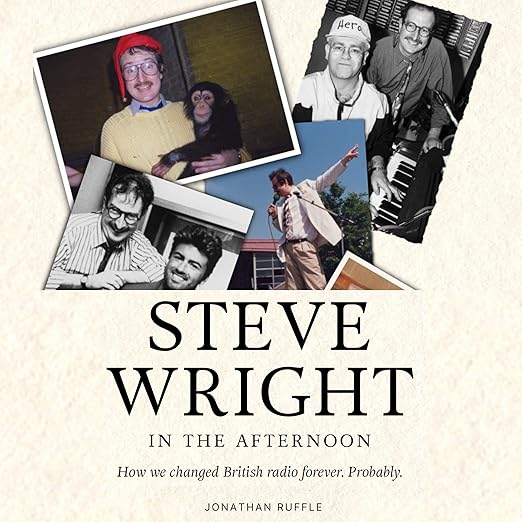
Broadcast memoirs are, as a genre, almost uniformly disappointing – the anecdotes are made safe, the grievances are coded, and the real story of what it felt like to be inside a radio show at its creative peak remains stubbornly off the page. Jonathan Ruffle’s account of his years as a producer on Steve Wright in the Afternoon is a gratifying exception to that rule. Ruffle was genuinely there – in the thick of it – during the BBC Radio 1 years when Wright’s show was the most inventive and anarchically energetic thing on British radio. Seven hours and thirty-nine minutes of insider testimony, read by the author himself in a warm and self-aware voice, makes for a portrait of a creative partnership that was also, quietly, a piece of British cultural history. Released in early 2026, this audiobook arrives as a tribute to Wright’s legacy and lands with exactly the warmth and specificity the subject deserves.
About the Audiobook
In the 1980s and 1990s, Steve Wright and his producer Jonathan Ruffle created something genuinely unusual: a weekday afternoon radio show that blended character comedy, celebrity interviews, audience phone-ins, and carefully engineered energy into something that felt simultaneously spontaneous and exquisitely produced. The show’s “posse” – a rotating cast of in-studio characters – became a fixture of British popular culture. Ruffle was the architect behind much of that apparent chaos, and this memoir provides a genuinely rare account of what it actually takes to produce fifteen hours of original entertainment across fifty weeks a year.
The book is memoir and professional confession in equal measure. Ruffle writes with evident affection for Wright – described throughout as an absolute master of his craft – but there is nothing hagiographic about the approach. He is clear-eyed about the pressures and occasional failures, the near-misses and the moments of unexpected magic. For anyone who listened to the show, this is a vivid restoration of a particular moment in British popular culture; for anyone interested in how live entertainment is actually made at that level, it is a case study in the mechanics and demands of creative production at scale. The insight that it is “hard to produce 15 hours of original entertainment 50 weeks a year” sounds obvious stated baldly – Ruffle’s achievement is to make the reader feel the weight of it.
The book also functions as an elegy. Wright died in 2024, and reading this knowing that adds a layer of poignancy to Ruffle’s celebration of the man and the work they made together. The memories shared here – many of them “never-before-heard,” as the book itself claims – are the kind that would otherwise be lost. That Ruffle has taken the time to set them down carefully and honestly is a genuine act of cultural preservation.
The Narration
Ruffle reads his own work, which is the only sensible decision for a memoir this personal. His voice carries the natural ease of someone who has spent a career in proximity to broadcast professionals, and his timing – even in a narration context – has an instinctive sense of rhythm. The seven-and-a-half-hour runtime is managed well throughout; the pace varies appropriately with the material, slowing for the more personal passages and picking up energy when the show itself is being recreated through description. It never feels padded and rarely flags.
What Readers Say
The audiobook has attracted strong reviews since its release, holding a 4.7-star rating from thirty-eight listeners – an unusually high score for a niche memoir. One reviewer called it “one of the best broadcasting books you’ll ever read,” praising Ruffle’s ability to convey “how intense this world was.” Another wrote that it “really brings Steve’s Radio 1 days to life” and was “a fantastic read” for anyone who loved the programme. A measured review from a listener who was not a Wright fan noted that the book was “a very informative read” – and was impressed enough to seek out further work by Ruffle, specifically the radio drama Bomber. The consensus is that this is essential listening for anyone with a genuine interest in British radio history.
Who Should Listen?
This audiobook is essential for anyone who grew up with Radio 1 in the 1980s and 1990s, for working radio professionals curious about the mechanics of long-form live broadcasting, and for those who want to understand how Wright built and sustained what he built. Ruffle’s affection for his subject is genuine, his insight is hard-won, and his prose is precise without being dry. A fitting tribute to Steve Wright, and a genuinely illuminating professional memoir.
There is also something to be said for the format itself – the podcast or audiobook memoir as a way of preserving what would otherwise be institutional memory. Radio is an ephemeral medium; the shows exist in recordings, but the knowledge of how they were made, what decisions shaped them, what it felt like in the room – that disappears with the people who were there. Ruffle’s book is, among other things, an act of preservation, and a reminder that the craft of live radio entertainment deserves the same historical attention we bring to other performance arts.