Clara’s Verdict
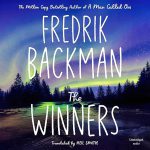
I have been resistant to Fredrik Backman for years, on the grounds that a writer who reliably makes people cry is usually doing something faintly manipulative to achieve it. The My Friends audiobook has largely disarmed me. It runs thirteen hours and seven minutes, and somewhere around the fourth hour I stopped watching for the machinery and simply gave in, which is the highest compliment I know how to pay a book of this kind.
The device at the centre is beautiful, and it is why the whole thing holds together. The publisher’s own framing states it best: in the corner of a world-famous painting, three tiny figures sit at the end of a pier, a secret hidden in plain sight. A quarter of a century before anyone stood in a gallery looking at that canvas, a handful of teenagers had found in one another the only refuge on offer, across a single summer none of them would ever manage to put down. Backman’s real subject is the distance between those two facts, and the novel keeps folding back on itself in order to close it.
About the Audiobook
What Backman is writing about, underneath everything, is what art is for, which is a more ambitious subject than his reputation tends to suggest. The book returns again and again to the idea that a painting can carry a private truth out into public view while nobody looking at it has the faintest idea. That is a proposition about friendship quite as much as about pictures, and the teenagers on the pier are both the subject of the painting and the argument of the novel.
The reception has been formidable. It arrived as an instant Sunday Times and New York Times bestseller, won the Goodreads Choice Award for Best Fiction 2025, was named an Audible Best Listen of 2025 and became a Barnes and Noble National Book Club Pick, which is close to a clean sweep of the general-fiction prize circuit inside a single year. Chris Whitaker called it a stunning, sweeping, extraordinary story of connection, love, and the unbreakable bonds that guide and shape us. Matt Haig, more usefully, described it as the kind of book that can be a friend itself.
Simon and Schuster Audio UK released it on 19 June 2025 and it is still in the Audible UK charts more than a year later, which for literary fiction is close to remarkable. Thirteen hours is a manageable length for the scope Backman is attempting here, and no series obligations attach to it. This is a standalone, no prior Backman is required, and readers who know Anxious People or A Man Called Ove will simply recognise the temperature rather than needing the context.
The Narration
Marin Ireland faces the specific problem every Backman narrator faces, which is that his prose asks you to be funny and devastated in the same paragraph, frequently in the same sentence, and any narrator who telegraphs which one is coming next destroys the effect. Ireland’s solution is to hold a level, faintly wry tone throughout and let the material shift underneath it. She does not soften for the sad passages. She does not brighten for the jokes.
It sounds like an absence of interpretation and it is precisely the opposite. Because she declines to signal, the shifts land as ambushes, exactly as Backman intends them to. The passage about taking life for granted, about sunrises and slow Sunday mornings, about water balloons and the feel of somebody else’s breath against your neck, is delivered almost conversationally, and it is far more affecting for it than any reverent reading could have managed.
Her teenagers are convincing without ever being performed, which is harder than it sounds across a twenty-five-year span where the same people must sound young in one chapter and worn down in the next. If I have a reservation, it is that Ireland’s register stays quite consistent, so listeners who want strong character differentiation will find this a subtler production than they might prefer. It is a reading rather than a performance, and for this particular novel that is unquestionably the correct choice.
What Readers Say
A 4.5 average from more than 82,000 ratings puts this among the most heavily reviewed titles I have covered, and the consistency of the response is striking. People are not simply praising it. They are describing the same experience of it, in nearly the same terms, which is rarer than you might think at this volume.
The story explores friendship, grief, art, and the quiet ways people save one another without always realising it.
Rosie May’s phrasing there is better than most professional criticism of this book, because that closing clause about rescue happening while nobody notices is exactly the register Backman works in. She also praised his gift for creating characters who are flawed, funny, resilient, and deeply lovable, which is a fair account of the cast. Another reviewer, writing as Lin’s Perspective, opened with a line from the novel itself, that art teaches us to mourn for strangers, and said that this was precisely what the book had done for her.
The dissent is mild but it exists and it deserves to be taken seriously. Heidi A. gave four stars and put her finger on the recurring criticism, noting maybe a few implausible coincidences but a really enjoyable read regardless. She is right about the coincidences. Backman engineers his connections, and the closer you look at the plotting the more visible the hand becomes. Whether that troubles you depends entirely on whether you experience the coincidences as contrivance or as the book’s central argument that people are far more connected than they are able to see.
Who Should Listen?
Give this one your proper attention rather than your leftover attention. It rewards a listener willing to sit with it, and it is one of very few contemporary bestsellers I would actively recommend in audio ahead of print, because Ireland’s restraint does something to the sentimentality that the page cannot do unaided.
Skip it if you find emotional fiction cloying, and I say that without any judgement attached. Backman is entirely unembarrassed about feeling and no ironic distance is on offer anywhere. Skip it too if grief in fiction is currently too close to home, since the book sits with loss at length rather than glancing at it in passing. And if you need plot momentum to stay engaged, be aware that this is a novel of accumulation. It circles, it returns, and the shape only becomes clear quite late.