Clara’s Verdict
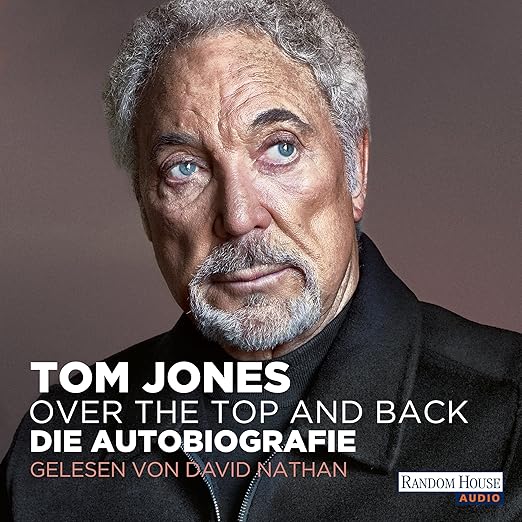
Here is a memoir about a voice, read by somebody else’s. The description says that across six decades and every imaginable genre, “the one constant throughout has been his unique musical gift and unmistakable voice”, and then hands the telling of it to Jonathan Pryce. That is not a failure, but it is the single most important fact about this edition, and what it costs you is the speaking voice, the timing, and the sense of the man himself in the room.
Twelve hours and twenty-six minutes, from Penguin Audio, dated 3 November 2015, standing at 4.4 across 1,001 ratings, and billed as Sir Tom Jones’s first ever autobiography. My view is this: an actor’s reading of a singer’s life is thoroughly defensible, and a chronological narrative of this length genuinely benefits from a trained reader, but anyone buying it in order to spend half a day in Tom Jones’s own company should know in advance what they are getting.
About the Audiobook
The scope is the point. The description lists collaborations running “from Jerry Lee Lewis, Elvis and Sinatra to Robbie Williams, Van Morrison and Jessie J”, across rock, pop, country, blues and soul. It promises the journey from “a poor Welsh coal-mining family to global celebrity status”, the anecdotes behind the singles, the Las Vegas heyday, the fallow years of the 1980s, and a comeback the copy credits directly to “the direction and management of his son, Mark”.
Twelve hours is not a great deal for six decades, and it shows in the shape of the thing. This is a full sweep and not a deep excavation of any one period, and a full sweep read aloud rewards a listener who is content to let a life unroll in order.
One honest oddity about the listing: the description is written in the future tense. “Tom will revisit his past, both personal and professional,” it says, and “He will chart the stories behind the hits”. That is pre-publication copy which nobody rewrote once the book existed. It is harmless in itself, but read it as a promise rather than as a description of the finished text, and judge what is actually delivered from the book and not from the blurb.
The Narration
Jonathan Pryce’s job here is more interesting than it first appears. A celebrity memoir read by somebody other than its subject loses one thing immediately, which is the pleasure of recognition, and gains two in exchange. The first is control: an actor can shape a twelve-hour chronology, vary the temperature between the Las Vegas years and the lean 1980s, and keep a listener oriented across six decades of names. The second is distance. A performer reading about his own triumphs has to negotiate a tone problem with every anecdote, whereas a third party can simply tell you what happened.
The material has one demand that a lesser reader would fumble. This is a book stuffed with famous names, and a roll call of famous names curdles into boasting very quickly in audio, where the ear registers repetition far more sharply than the eye does. Handled with a light touch, that list becomes social history. Handled heavily, it becomes a man reciting the people he has met.
No edition of this book contains the records. If you want the music, that is a separate purchase, and nothing in the description promises archive recordings or musical inserts of any kind. What the audiobook gives you is the account around the music, which for a career of this length amounts to a great deal.
One review is headed “Very well read”, which sounds like praise for the narration until you reach the body, which is “liked all of it”. That is the closest thing to performance testimony anywhere on the listing.
What Readers Say
The listing gets thin here. The rating is solid, but the three review texts on display run to seventeen words between them. Olsen awards five stars and calls it “a good read”. Jane Van Herrewege awards five stars and offers four words of body text. That is the entire extent of the enthusiasm on record.
The four-star review is the only one with any texture, and it is unmistakably about a printed copy: “print very small but overall interesting book”. I find that genuinely useful, because the single substantive complaint in this review set is a typography problem, and a typography problem is precisely what an audiobook does not have. If small print was your reason for hesitating over this memoir, that objection disappears entirely in this format.
What the thin commentary means in practice is that the number is better evidence than the words are. A thousand ratings is a large enough pool to trust as a broad signal of satisfaction, but nobody here has told you why they were satisfied. Take the score as a verdict on the writing and go into the recording with an open mind.
Who Should Listen?
Anyone who grew up with these records will find twelve hours of showbusiness history told in order, and the sheer range of the guest list, from Jerry Lee Lewis to Jessie J, makes it a decent record of six decades of popular music almost by accident. It suits long drives and long afternoons of decorating, and it suits listeners who like a life told from the beginning.
Two reasons to hesitate. If what you want is the man himself in your ears, this edition cannot provide it, and no amount of good acting is a substitute. And if you need a memoir to have a thesis, this one offers a chronology instead, which the description is quite open about. For everybody else, a career this long is exactly the kind of story that improves when somebody tells it out loud.