Clara’s Verdict
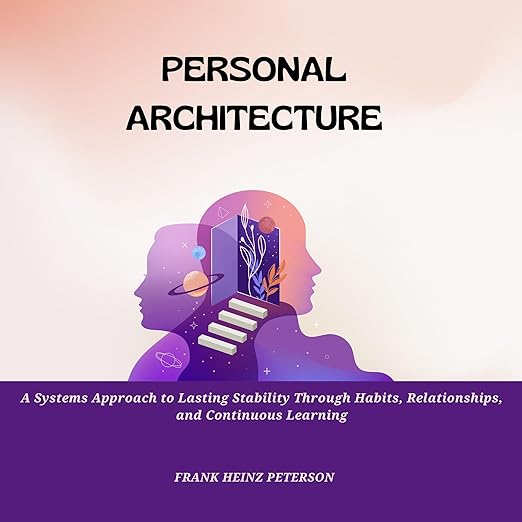
Self-help books that reach for engineering metaphors tend to produce one of two results: either something genuinely clarifying, or something that sounds rigorous but dissolves under scrutiny. Personal Architecture by Frank Heinz Peterson sits, pleasingly, in the former camp. At just over an hour, it makes no attempt to be comprehensive – and that discipline is probably its greatest virtue. Gordon Webster’s narration is measured and intelligent, and the central framework – life as a system to be debugged rather than a problem to be solved emotionally – is presented with enough specificity to be actually useful.
About the audiobook
Peterson’s central argument is that life feels chaotic not because it is inherently disordered, but because most of us were never taught to treat it as a system. Drawing on software engineering, systems thinking, and behavioural psychology, he proposes what he calls the “debugger’s mindset”: a calm, analytical approach to personal challenges that replaces emotional overwhelm with the question, “What is the system telling me, and which variable needs adjustment?”
The framework covers habits, routines, thought patterns, relationships, and environments as interconnected modules within what Peterson terms a “personal operating system.” When one module malfunctions, the whole system feels unstable – but that instability is a signal, not a verdict on your character. The book guides listeners through a process of deconstruction: isolating root causes, identifying friction points, and redesigning daily processes for greater stability and resilience.
What distinguishes this from much of the self-improvement genre is its insistence on structured reasoning over motivational rhetoric. Peterson does not tell you to believe in yourself. He tells you to look at the data and adjust the code. Whether that metaphor resonates will depend on the listener, but for those with a technical or analytical bent, it will feel like a breath of fresh air.
The narration
Gordon Webster reads with a composed, thoughtful delivery that suits the material well. The tone is intelligent and unhurried – this is not a performance designed to pump you up, but a measured presentation of ideas. At one hour and nine minutes, the audiobook demands little time but rewards attentive listening. Webster handles the technical language without sounding robotic, which is a more delicate balance than it might seem.
What readers say
Reader reviews are not yet available for this title. As a recent release from February 2026, it is still building its audience. The concept is distinctive enough to attract listeners frustrated with the emotional vagueness of mainstream self-help, and the brevity makes it an easy commitment for first-time listeners.
Who should listen?
This is best suited to listeners who already have some familiarity with systems thinking or software development and are looking for a framework to apply those principles to their personal lives. It will also appeal to anyone who has found conventional self-help books too vague or too emotionally driven to be actionable. Given its length, it is a natural candidate for a commute or a quiet lunch hour rather than a multi-session project. Those who enjoy the rational self-improvement tradition – from cognitive behavioural approaches to the work of writers like Charles Duhigg – will likely find it a useful addition to their library.