Clara’s Verdict
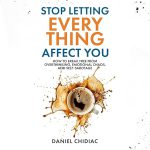
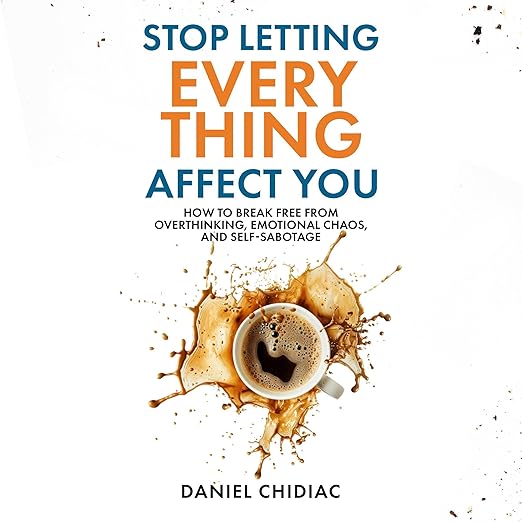
Three hours and forty-four minutes is a short runtime for a book promising eleven separate transformations, and I want to put that arithmetic in front of you before anything else. Daniel Chidiac’s list of outcomes covers overthinking, self-sabotage, boundaries, manipulation, emotional reactivity, toxic relationship patterns and a shift from victimhood to self-empowerment. Divide the runtime by the promises and you get roughly twenty minutes each. That is not a criticism so much as a description of the format you are buying.
Read correctly, this is a primer rather than a programme, and it is a good one. It has climbed a long way up the Audible UK charts, and I suspect the brevity is a large part of the reason. Most listeners do not want a fourteen-hour psychology text. They want something they can finish on a commute and actually apply on Tuesday.
About the Audiobook
The framing is aimed squarely at a recognisable person: someone who overthinks every interaction, gets stuck in emotional chaos and finds themselves caught in cycles of self-sabotage. Chidiac’s central question is why small things ruin an entire day, and the honest answer he circles is that the size of the trigger has almost nothing to do with the size of the reaction. Everything downstream of that follows from it.
The strongest material sits in the middle, where he separates real guilt from manipulated guilt. That distinction does genuine work, because most people who struggle with boundaries are not confused about what they want but about whether they are allowed to want it. He also argues for a form of emotional detachment that stops short of coldness, which is a harder line to hold than the phrase suggests and to his credit he does not pretend otherwise.
What you will not find is clinical apparatus. There are no studies cited at length, no therapeutic modality named, no exercises with worksheets. This is a direct-address self-help book in the motivational tradition, and if that tradition irritates you, nothing in three and three quarter hours will change your mind. If it works for you, the compression is a feature. Published in July 2025, it stands alone with no companion volume required.
The Narration
Here I have to be straightforward with you. There is no narrator named here at all, and that omission matters more for this book than it would for most. A self-help title lives or dies on whether you can stand the voice telling you what to do with your feelings. The argument is delivered in the second person throughout, which means the performance is not decorating the content but supplying it.
What the material demands is a specific and slightly unusual register: warm enough that the harder passages about walking away from people do not sound punitive, but firm enough that the instructions carry weight. Too soothing and the book becomes wallpaper. Too emphatic and nearly four hours of being told to stop taking things personally starts to feel like being lectured by someone who has never taken anything personally in their life.
My advice is simple and I would give it for any title in this category. Play the sample before you commit. Ninety seconds will tell you whether this particular voice can hold your attention through a chapter, and no rating on the page can tell you that.
What Readers Say
The aggregate here, 4.6 from 2,940 ratings, is strong for the category, and the reviews are notable mostly for their brevity, which in a book about not overcomplicating things feels almost deliberate. The most useful of them came from a four-star reader who managed to enact the book’s own thesis in the act of reviewing it:
Superb book with a ton of topics that serve a purpose and are worth remembering. Not complicated or nonsensical – just straight to the point. Just like this review.
That is the fairest description of the book I have encountered. Elsewhere a five-star reader called it “Easy to read and understand” and praised the depth relative to its length, while another offered only “Love the book”, which tells you about enthusiasm and nothing about substance. I would treat the aggregate score here as a reliable signal of satisfaction and a poor signal of rigour. Nobody in this pool is claiming the book is original psychology. They are saying it is clear, quick and usable, and on those terms the consensus looks earned.
Who Should Listen?
This suits the person who has been meaning to address a specific habit, most likely overthinking or an inability to say no, and who wants a compact framework rather than an education. It is well suited to a first listen in the genre, and the runtime makes it genuinely repeatable, which matters more than it sounds. Material like this rarely lands on a single pass. Being able to run it again in a fortnight without surrendering another twelve hours is a real advantage.
Those already well read in cognitive behavioural therapy, attachment theory or clinical psychology should set expectations accordingly. You will recognise most of the terrain and cover it faster than the book does. Anyone in genuine distress deserves better support than any short motivational title can offer, and I would say that about the whole shelf rather than this book in particular.
Listen to Stop Letting Everything Affect You free with an Audible trial