Clara’s Verdict
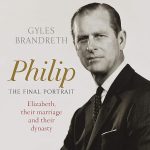
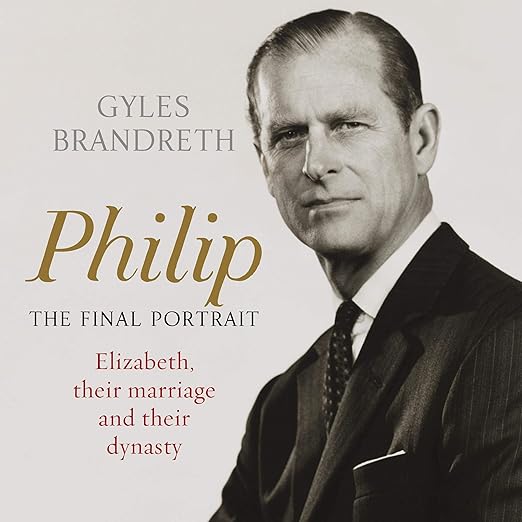
Gyles Brandreth spent more than forty years in Prince Philip’s orbit – not as a courtier exactly, but as a fellow parliamentarian, a family friend of long standing, and a companion in what Philip cultivated as a very specific strand of self-aware, self-deprecating intellectual humour. This intimacy gives the biography something that no professional historian writing purely from archive could manufacture: genuine personal anecdote, the memory of direct conversation, and an author who was physically present at enough royal occasions to form impressions based on observation rather than entirely on secondhand account. What it also gives the book is an unmistakable warmth – some might say softness – that means this is not, and does not claim to be, a forensically critical biography. Brandreth is a friend writing about a friend. He acknowledges Philip’s well-documented failings, but the portrait is affectionate throughout. That is not a disqualification, but it is something to hold clearly in mind when setting your expectations.
The audiobook carries a rating of 4.6, though from a very small Audible UK sample at the time of writing. The print edition has been reviewed extensively, and those assessments across a larger readership are more informative about the book’s lasting qualities.
About the Audiobook
Published by Coronet in April 2021, the recording runs to 17 hours and 49 minutes. The book covers Philip’s extraordinary early life in full: his grandfather King George I of Greece was assassinated; his family was expelled from the country when he was an infant; his father was arrested and sentenced to death before being exiled; his mother ended her life in an asylum. Philip grew up displaced across the houses of European relatives, was sent to Gordonstoun where he found a discipline and direction that suited him, and began a naval career that was genuinely heading toward distinction. Then Elizabeth became Queen in 1952 and everything changed. The sacrifice Philip made in subordinating his career, adopting his wife’s family name, and accepting a role defined primarily by deference and protocol is the book’s central subject. Brandreth is genuinely interested in what this cost, and his personal access allows him to approach that question with a directness that more distant biographers cannot always match.
The portrait of the marriage across seven decades is among the most valuable things in the book – two people of significantly different temperaments, joined young, tested constantly by the demands of an institution neither of them invented and neither could easily escape.
The Narration
Brandreth narrates his own biography, and this is a genuine and significant asset. His voice is warm, assured, and unhurried, with a performer’s sense of timing developed over decades of public speaking, broadcasting, and theatrical experience. When he recounts conversations he personally witnessed or participated in, the narration carries an authenticity that no professional voice artist could replicate – the pauses, the particular emphases, the moments where his own feeling for his subject surfaces in the delivery without becoming sentiment. At nearly eighteen hours, a self-narrated biography requires a voice you are willing to spend extended time with. Brandreth’s is genuinely pleasant company across the distance, even when the material is difficult – the sections on Philip’s childhood loss and isolation are delivered with appropriate gravity without becoming mournful.
What Readers Say
Reviewer Jeremy E. May offered one of the most detailed and substantive assessments, describing Philip in 1952 as a man with ‘a winning personality, great leadership qualities, matinee idol good looks and an impressive naval career’ who was then required to settle into ‘a role of almost servile subjection for the next 70 years,’ denied significant responsibilities and kept on a tight rein. The observation is both kind and devastating. Natalie Kingston wrote that she had never known the extent of Philip’s childhood suffering – the assassinations, the exile, the asylum – and found the revelations genuinely moving. Reviewer lgj offered the most balanced assessment: ‘an easy and affectionate read’ that occasionally falls short of the deeper insight the author’s extraordinary access might have yielded. Michelle Mason found the book confirmed her long-held view that the press had been consistently unfair to Philip throughout his public life.
I should also note the timing of this recording: the book was published in April 2021, while Prince Philip was still alive, and he died later that same month at the age of ninety-nine. Brandreth completed the biography in his lifetime, and the title’s subtitle – The Final Portrait – was already in place before his death, reflecting the author’s awareness that his subject was in the final chapter of a long life. The accidental timing gives the book a particular poignancy. Philip never read it. But Brandreth had already said, in the text itself, everything he wanted his old friend to know.
Who Should Listen?
An ideal choice for listeners interested in the late Queen’s reign, the inner workings of the modern monarchy, or simply the human cost of a life spent entirely in service to duty and to an institution. Those wanting an unflinching critical biography should look elsewhere – Brandreth’s affection for his subject is too persistently present for that. But for a warm, well-informed, and genuinely illuminating portrait of a man who was consistently underestimated and misrepresented throughout his public life, this is well worth the seventeen hours. Listen on Audible UK.