Clara’s Verdict
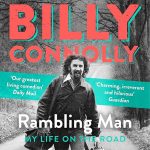
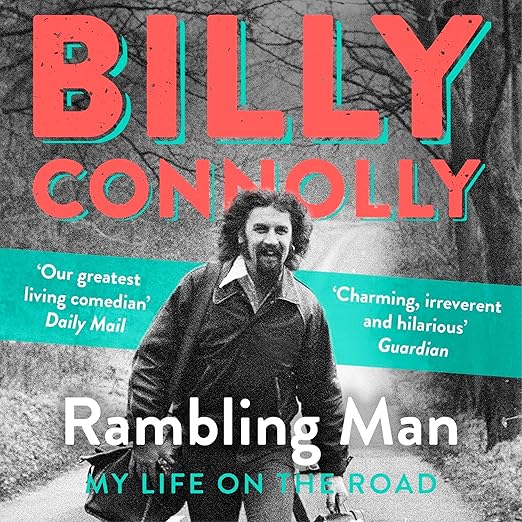
I listened to a significant portion of Rambling Man on a walking holiday in Northumberland, which felt apt. Billy Connolly has been making people laugh and making people quietly envious of his chaotic freedom for fifty years, and this book, narrated by Connolly himself in that unmistakable voice, now thickened slightly by the Parkinson’s that has accompanied his later years but no less expressive for it, is his love letter to the act of going places without a fixed agenda. It is not a travelogue in any conventional sense. It is something looser and warmer: a meditation on curiosity as a way of life.
The caveat one of his own readers offered is worth repeating: if you come in expecting the tight comic construction of Tall Tales and Wee Stories, you may find yourself at sea. This is rambling in form as well as content. But if you are prepared to let Connolly lead you wherever he fancies going, and he has been to more places than almost anyone alive, it is a genuinely charming seven and a half hours.
About the Audiobook
Connolly’s thesis, such as it is, holds that the Rambling Man is not primarily a traveller but a state of mind. The philosophy underlying the book is simple and rather beautiful: real freedom comes from genuine curiosity about people and places, from the willingness to sleep under bridges if that is where the road leaves you, from the banjo played on a boat at four in the morning because why not. He is not nostalgic, exactly, or rather he is nostalgic with such cheerful irreverence that it never curdles into self-pity.
The stories themselves range from the early Glasgow years, when young Billy was building himself out of little more than wit and nerve, through to the magnificent later chapters of a career that took him around the planet multiple times. Riding Route 66 on a trike, building an igloo in the Arctic, playing elephant polo in Nepal and playing it badly, which Connolly treats as a point of pride, eating witchetty grubs in Australia, being serenaded by a penguin in New Zealand. The stories do not always connect. They meander, double back, and occasionally contradict themselves in minor ways. In conversation, this is endearing; in a book, it is occasionally testing.
The reader who noted that some chapters feel dialled in without the energy of his earlier books is not entirely wrong. There is a slight sense in places that this is Connolly giving himself permission to ramble without the editorial pressure of a more strictly constructed memoir. But then he says something so precise, so unexpectedly affecting, that you forgive the meandering entirely. The passages about music, about what the banjo meant to him as a route out of himself, about playing and listening as forms of freedom, are genuinely moving. And there are moments of political observation that remind you Connolly, underneath all the affability, has always been angry about specific injustices and has never been willing to pretend otherwise.
Why Self-Narration Is Non-Negotiable Here
There is really no alternative to Connolly reading his own work, and this audiobook proves it. The timing, that particular Glaswegian timing, the pause before the punchline that is its own kind of comedy, is something no other narrator could replicate. His voice has changed over the years, and listeners familiar with his earlier recordings will notice a slightly different quality, a slower pace, a deeper register, but it suits the reflective, roaming nature of the material perfectly. This is what self-narration can do at its best: put the author’s precise cadences and intentions back into every sentence, and let the listener hear exactly what the speaker means by the words they have chosen.
What Readers Say
Readers have been largely appreciative, awarding the book 4.4 out of 5. "A great book from the Big Yin. Thoroughly enjoyable," one reviewer noted. Another offered the considered dissent that the book "fell short of the target," finding the stories "rambling and without a common thread." That is a fair criticism, and also a description of the book’s deliberate method rather than an accident. Whether that looseness is a feature or a bug will depend entirely on your patience with Connolly’s particular mode of storytelling.
Who Should Listen?
Unreservedly for anyone who loves Billy Connolly and has been waiting for a book that captures his conversational voice in audio rather than demanding they watch stand-up footage. Also for listeners who have spent time in Glasgow or Scotland and want to hear someone who loves and understands that place describe leaving it and returning across a lifetime. Possibly less suited to listeners who want narrative momentum or a clearly structured argument. This is company, not instruction, and it rewards the listener who can settle into its own unhurried rhythm.