Clara’s Verdict
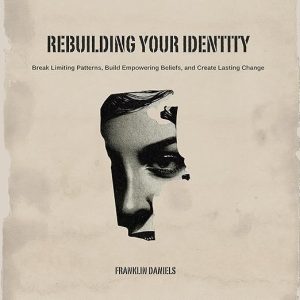
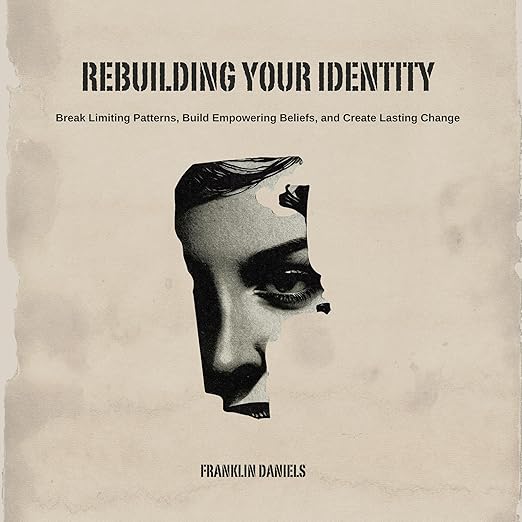
The personal development section of any audiobook catalogue is full of books that promise transformation through habit. Track your habits. Stack your habits. Make your habits automatic. Build the right systems. What is rather less common is a book that asks why habits so often fail, even when the system is correct, and locates the answer not in imperfect technique but in something more fundamental: the story we tell about who we are. Franklin Daniels’s Rebuilding Your Identity is a concise, honest, and practically useful exploration of that idea. At just over an hour, it asks very little of your time and may reward considerably more than you invest.
I will note upfront that the brevity here is a feature and a limitation simultaneously. The argument is genuine and well-made. Those wanting deeper immersion in the neuroscience or psychology will need to supplement elsewhere. For an efficient, focused introduction to identity-based change, it does the job cleanly.
About the Audiobook
Daniels’s central claim – and it is not an original one, though he articulates it well – is that identity, specifically the stories we tell about who we are, is the true engine of sustained behaviour change. Willpower, he argues, is a renewable but ultimately limited resource. When the story we believe about ourselves conflicts with the behaviours we are trying to adopt, willpower eventually loses. The effort becomes exhausting, the habit collapses under stress, and we conclude we simply lack discipline. What Daniels proposes instead is a different starting point: not “what habit should I build?” but “who do I need to become?”
The book works through this argument with clarity and practical application across multiple life domains – productivity, health, finances, relationships, self-confidence. Daniels identifies the mechanisms by which limiting self-stories are formed and maintained through childhood, social conditioning, and repeated experience. He then offers concrete tools for dismantling them: identity awareness exercises that surface unconscious self-definitions, identity-based micro-actions that allow small behavioural experiments without triggering the resistance that major changes provoke, and what he calls empowering identity statements – more rigorous and personally tailored than generic positive affirmations, because they are grounded in specific evidence rather than aspiration alone. The integration strategies are practical rather than abstract, focused on daily patterns and gradual realignment.
Daniels is refreshingly honest that this is not a quick-fix framework. The process of identity reconstruction is realistic and takes sustained time. The book’s value is in clarifying the direction of travel, not in promising an effortless arrival.
The Narration
Gordon Webster’s narration is clean and professionally judged. Self-help audiobooks benefit enormously from narrators who sound grounded and genuine rather than motivationally promotional – the hyper-energised delivery that characterises some entries in this genre is actively alienating to many listeners. Webster avoids that entirely. His tone is steady, warm, and thoughtful, and he gives the book’s key conceptual moments the space to land rather than rushing past them. For a listen of just over an hour, the narration is an asset rather than a neutral factor.
What Readers Say
This is a recent independent release without yet a substantial review base on Amazon. The approach Daniels outlines is consistent with a growing body of evidence and with territory that other writers – James Clear’s Atomic Habits being the most prominent example – have explored with great commercial success. Clear’s focus is more on environmental design and habit architecture; Daniels’s emphasis on identity stories as the underlying driver is a genuinely complementary angle rather than a repetition. Listeners who found Atomic Habits compelling but found themselves still struggling with implementation may find Daniels’s framing offers a useful additional layer of understanding.
Who Should Listen?
Rebuilding Your Identity is a good choice for listeners who have tried habit-based self-improvement systems and found them ultimately unsustainable, or for those at a genuine crossroads who want to think differently about what change actually requires. Its brevity makes it accessible as a focused introduction or as a concentrated supplement to longer works on behaviour and psychology. It works well on a commute, as a single-session morning listen at the beginning of a week in which you want to think deliberately about direction, or as the kind of short, useful audiobook you return to occasionally as a recalibration. Honest, practical, and refreshingly free of the grandiosity that can make the personal development genre feel exhausting.
Listen on Audible UK: Get Rebuilding Your Identity on Audible UK. Also available on Kobo, Scribd, and Storytel.