Clara’s Verdict
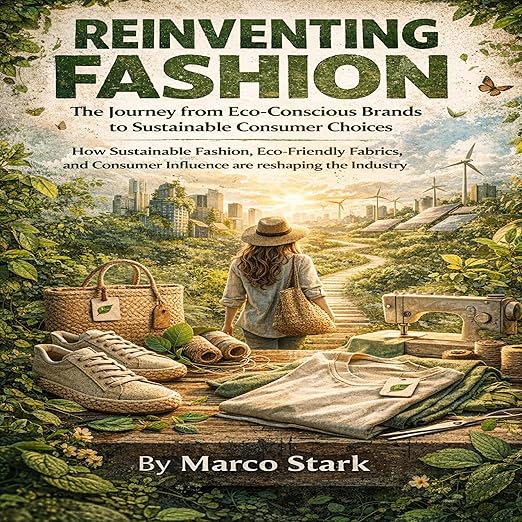
The sustainable fashion conversation has been gathering volume for years, but much of the writing in this space falls into one of two traps: it either preaches to the already converted, or it flattens a genuinely complex supply-chain problem into simple consumer guilt. Marco Stark’s Reinventing Fashion largely avoids both pitfalls. At eighty-one minutes – yes, this is a short listen – it functions as a brisk, practical introduction to the subject rather than a comprehensive treatment. Gordon Webster narrates with professional clarity. The book will not transform your thinking if you are already working in sustainable fashion or have read widely on the subject, but as an accessible entry point for someone just beginning to engage with ethical consumption and circular economy thinking, it does the job competently and without wasted words. Sometimes brevity is the right choice.
About the Audiobook
Stark’s argument is essentially structural: the fashion industry is one of the most resource-intensive sectors in the global economy, and the shift towards sustainability is not optional but inevitable. He covers the transition from conventional to eco-conscious materials, the growth of circular fashion models – repair, resale, recycling, upcycling – the role of technology in developing sustainable textiles, and how consumer choices aggregate into real industry change when enough people make them consistently.
The book is organised around practical questions: what sustainable fashion actually means in today’s market, how brands are genuinely reducing waste versus performing sustainability without practising it, what a conscious purchasing decision looks like in reality, and what the regulatory and commercial landscape looks like going forward. Stark addresses fast fashion’s environmental and social costs directly and without excessive hedging – he names the problem clearly before turning to solutions. The chapter on circular fashion is particularly well handled, drawing on current industry practice rather than aspirational thinking.
The tone is educational rather than polemical, which suits a listener who wants information rather than motivation. At just over an hour, this is necessarily a survey rather than a deep dive; readers wanting more rigorous treatment of any of these threads will need to go further, but Stark provides a clear map of where to look and what questions to ask.
One thing Stark does well is resist the temptation to make sustainability sound simple. He acknowledges the complexity of supply chains, the difficulty of independently verifying brand claims, and the structural limitations on consumer choice – particularly for people on restricted incomes. Sustainable fashion is often presented as a lifestyle choice available to everyone, and Stark is honest that it is, in practice, easier for some consumers than others. This nuance gives the book more credibility than many titles in the genre, and makes its practical recommendations feel grounded rather than aspirational.
The Narration
Gordon Webster delivers clean, professional narration that keeps the material moving without distraction. He has a neutral tone suited to instructional content – clear enunciation, good pacing, no eccentricities that pull attention away from the text. For a short audiobook on a relatively technical subject, this is exactly the right approach. His delivery makes the information easy to absorb in a single sitting, and his clear articulation is particularly useful for the technical terminology that runs through the sustainable manufacturing sections. There is nothing to distinguish his performance as exceptional, but there is nothing to fault either.
What Readers Say
Reinventing Fashion was released in February 2026 and has not yet accumulated ratings on Audible UK. As a newly published title from a smaller publisher, it is building its audience among the growing community of listeners engaged with sustainable business and ethical consumption. The category is expanding rapidly – interest in fashion’s environmental impact has grown substantially over the past decade – and well-structured introductory guides like this one tend to find their readership through professional recommendation rather than mass-market discovery. Fashion educators, brand managers, and sustainability advocates are the likely early adopters here.
Who Should Listen?
Best suited to fashion students, sustainability advocates, brand professionals, and conscious consumers who want a quick, structured overview of where the industry stands and where it is heading. It is not the right choice for someone already working in sustainable fashion or with a deep background in circular economy theory – the treatment is introductory and will not surprise them. But if you want a clear, jargon-light primer on eco-conscious fashion that you can absorb in the time it takes to cross London, this is a well-made and useful hour. It functions particularly well as a shared starting point for classroom discussion, team conversations about brand responsibility, or introductory material for a sustainability project.