Clara’s Verdict
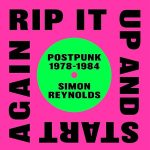
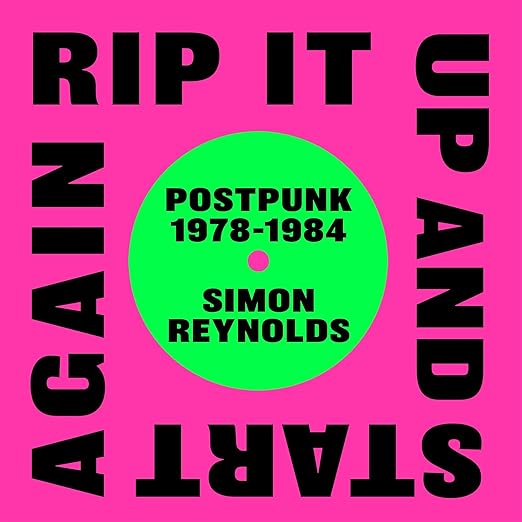
Simon Reynolds’s Rip It Up and Start Again is the definitive account of the six years between punk’s commercial exhaustion and the arrival of mainstream pop in 1984 – and the audiobook edition, narrated by Liam Wheatley, brings this remarkable piece of music journalism to a new audience more than a decade after its original publication. Reynolds’s central argument – that post-punk was not punk’s aftermath but its fulfilment, the moment when the energy and ambition of 1977 was finally converted into something musically and intellectually substantial – remains persuasive, and his coverage of the period is encyclopaedic without ever feeling like a catalogue.
Joy Division, The Fall, PiL, Talking Heads, Gang of Four: each band is analysed with the kind of committed critical intelligence that popular music rarely receives. Reynolds brings the same analytical seriousness to a Leeds post-punk act that a literary critic might bring to a newly discovered novel, and the result is a form of music writing that has barely been matched since the book’s original publication. Part of the Faber Greatest Hits series.
About the Audiobook
Reynolds covers the period 1978 to 1984 with a scope that encompasses British and American post-punk, its Continental European echoes, its connections to experimental art and academic theory, and its eventual absorption into a mainstream pop industry that borrowed the aesthetics while discarding the politics. The book is organised roughly chronologically but makes room for extended analyses of individual bands and scenes – the Liverpool scene, the Postcard Records world of Scotland, the Factory Records ecosystem – that give each chapter the depth of a long essay.
What distinguishes the book from mere music journalism is Reynolds’s insistence on taking the music’s ideological ambitions seriously. These were bands who genuinely believed that form and content were inseparable, that how you made music was a political statement as much as what you said in the lyrics. Reynolds analyses them on their own terms while also assessing where they succeeded and where they fell short. At nearly twenty-four hours, the audiobook is a substantial listen – think of it as a university course in post-punk.
The Narration
Liam Wheatley narrates for the White Rabbit audiobook edition, and his delivery is well-matched to Reynolds’s prose – which can be dense with critical terminology but is never inaccessible. Wheatley reads with the slightly-earnest authority of someone who has clearly engaged seriously with the material, which suits a book that takes its subject matter seriously.
At nearly twenty-four hours, this is a demanding listen, and Wheatley maintains consistent energy and clarity throughout. The challenge of music criticism as audio is real – you cannot stop and think about a description of a bass line the way you can when reading – but Wheatley’s pacing is thoughtful enough to allow the arguments to register before moving on. For listeners already familiar with much of the music under discussion, this is a particularly rewarding experience.
What Readers Say
The print edition has accumulated over three hundred reviews with an average of 4.4/5 from 323 listener ratings, and the critical responses demonstrate the depth of feeling this period inspires. K. Tune described it as making “much more sense of the period” by treating punk as precursor rather than peak – “a new viewpoint that really holds up.” J. Hall noted that the sections you read most avidly reflect the music you love most, which is a perceptive observation about how the book rewards partisan readership.
St. Francis of Assisi (presumably a pseudonym) offered the clearest endorsement: “essential reading for those who were either there or have an interest in that particular period.” The dissenting view, from mister joe, found Reynolds’s metaphorical descriptions of songs “awful” and the writing too journalistically dry – a fair criticism that prospective listeners should weigh against the majority view.
Who Should Listen?
The audiobook format suits this material in one specific and important way: Reynolds writes about music that was intended to be heard, and reading his descriptions of bass lines and drum patterns is inevitably somewhat abstract. Having the text delivered as sound – even without the music itself – restores something of the oral quality of music criticism, and several listeners have reported listening to the relevant records alongside the audiobook, which is perhaps the ideal way to engage with it. A Spotify playlist to accompany each chapter would be a publisher’s dream; absent that, the book rewards listeners who already know the material well.
Essential for anyone with a serious interest in popular music history and the intellectual ferment of the late 1970s and early 1980s. Particularly valuable for listeners who know the music well enough to check Reynolds’s analyses against their own experience – this is a book that rewards argument as much as agreement.
Also worthwhile for readers interested in the intersections between experimental art, theory and popular culture that defined this period. Not a casual listen – this is music criticism at full stretch. Listen on Audible UK.