Clara’s Verdict
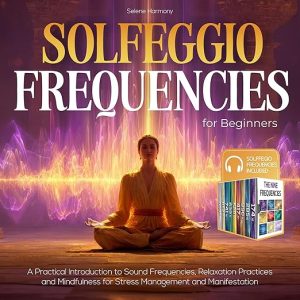
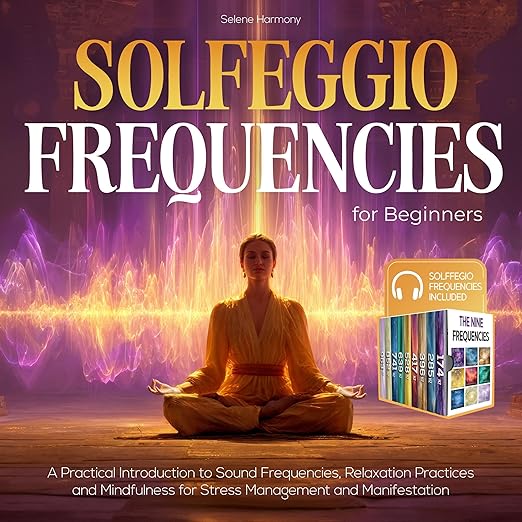
Sound healing sits in territory that makes me cautious as a reviewer: it straddles the border between genuine acoustic research and wellness marketing, and the two are not always easy to tell apart. Solfeggio Frequencies for Beginners by Selene Harmony lands, pleasingly, on the more honest end of that spectrum. It does not overstate its claims. It does not promise to cure anything. What it offers instead is a well-structured, accessible introduction to the practice of intentional listening — and at twenty hours including nine guided meditations and nine immersive soundscapes, it is remarkably comprehensive for a beginner’s guide.
For those who are curious about sound-based relaxation practices but have been put off by the more mystical or impenetrable framing that surrounds them, this is an unusually grounded entry point. The inclusion of a 120-page companion PDF in your Audible Library turns what might otherwise be a gentle audio experience into something approaching a proper course.
About the Audiobook
The book opens with the history of Solfeggio frequencies — their origins in medieval plainchant and their more recent popularisation through the wellness industry — before moving into a clear-eyed overview of what the practice actually involves. Harmony is careful throughout to frame everything in terms of mindful listening and relaxation rather than clinical claims, which feels like the right approach for a subject where the evidence is mixed and the personal experience is often more compelling than the scientific literature.
The nine core frequencies each receive a dedicated chapter, guided meditation, and immersive soundscape: from 174 Hz (grounding and deep relaxation) through 528 Hz (reflection and emotional balance) to 963 Hz (stillness and inner calm). The structure means you can work through the book sequentially as a complete course, or dip in and out of individual frequencies as needed, which is a thoughtful piece of design for something that is meant to be used rather than merely consumed.
The companion PDF — over 120 pages, available in your Audible Library — provides additional exercises and reference material that meaningfully extends the value of the audio. Published in February 2026 by Simbora, this is a recent release with a rating of 4.8 from 15 early listeners, a small sample but notably consistent in its enthusiasm.
The Narration
Rae-Ann Gammon narrates, and she is well chosen for this material. Her voice has the unhurried, clear quality that guided meditation work demands — neither soporific nor overly performative, just calm and present. The guided meditation sections in particular benefit from her measured delivery; there is no sense of a narrator rushing to complete a script, which is exactly what you need when the material is asking you to slow your breathing and pay attention to what you are experiencing.
The soundscapes themselves are well produced. They do not intrude on the spoken sections, and when they occupy the foreground — during the immersive listening portions — they are genuinely atmospheric rather than generic. Whether you engage with them as meditation aids or as ambient background while working, they do what they say on the label.
What Readers Say
Early listeners (rated 4.8 out of 5) have been consistently positive. Reviewers describe it as « reassuring » and note that it blends ancient traditions with modern explanations in a way that feels « grounded and practical rather than vague. » One listener praised the breathing exercises as genuinely helpful for anxiety, calling the binaural beat elements « amazing. » Another appreciated the accessibility: « This book explains exactly what solfeggio frequencies are and why you should use them — if you are stuck in life, stressed out, and just feeling in a rut, this book will tell you how to fix it. » The most common thread across reviews is that the book requires no prior knowledge or belief — it meets you where you are and asks only that you pay attention.
Who Should Listen?
Anyone who has been curious about sound healing or intentional listening but has been put off by the more esoteric presentations of the subject. People dealing with stress, anxiety, or sleep difficulties who are looking for a practical tool they can actually use day-to-day without extensive preparation or equipment. Those already practising mindfulness or meditation who want to explore a complementary acoustic dimension. The structured 120-page companion PDF also makes this genuinely useful for those who want to treat it as an independent study course rather than background listening.
It is also worth noting what the book does not claim. There is no assertion that listening will heal specific conditions, alter brain chemistry, or produce measurable physiological changes. It is honest about operating in the territory of mindful practice and personal experience rather than clinical intervention — and this honesty is, paradoxically, what makes it trustworthy. When a wellness book does not overclaim, you can actually trust what it does claim.
Start your introduction to Solfeggio frequencies on Audible UK — listen here.